



One of Rep. Mike Haridopolos’ (R-FL) top priorities for the space subcommittee in 2026 is making sure robust cooperation between the public and private space sectors continues.
“We don’t have the budgetary ability to do everything and now—unlike 10 years ago—there is a business case to be made,” he said. “It was once exclusively a government operation, and there was no business sense to it. That has changed dramatically. “
The chair of the House space subcommittee told Payload that NASA and the commercial space industry have different strengths and weaknesses—and he’s hoping greater partnerships can help both sides learn from each other.
Keep reading for his predictions about whether lawmakers can pass a NASA authorization bill this year, and what Congress can do to cut red tape for the space community.
This transcript has been edited for length and clarity.
What are the challenges of passing a NASA authorization bill this year?
We are doing a fantastic job in the House. We passed this [in the House Science, Space, and Technology Committee] with bipartisan support. As you watched the committee, you saw how well Democrats and Republicans worked together. [SST] Chairman Dr. Brian Babin, who is a former space subcommittee chair, has intimate knowledge of this policy. The new energy he has provided this committee should be very fruitful.
This is the kind of cooperation we need—and it’s necessary, so that regardless of who is in power, the US space program is moving forward.
Sen. Ted Cruz [the chair of the Senate Commerce, Science, and Transportation Committee] is a strong supporter of NASA, and the space program in general. Since [Babin and Cruz] are both from Texas, I’m extremely optimistic this will make it through the process and give the stability that both NASA and the private sector are looking for.
What are your top priorities for the space subcommittee in 2026?
What we’re really looking to do is continue the partnerships between public and private. The reason we didn’t pass [the NASA authorization bill] until last week is we wanted to make sure language is clear on commercial space.
We don’t have the budgetary ability to do everything and now—unlike 10 years ago—there is a business case to be made. We’re using Falcon rockets from SpaceX to put Department of War satellites in place because we know of all the nefarious things the Chinese are doing.
[Space] was once exclusively a government operation, and there was no business sense to it. That has changed dramatically. We have two huge companies [SpaceX and Blue Origin] and two billionaires [their founders, Elon Musk and Jeff Bezos] who are investing. That’s not just exploration, but they realize there’s a business case to be made.
You’ve recently been vocal about the need to cut bureaucracy for the space industry. What can Congress do to make that happen?
One thing that’s always helpful is the comparative situation. Now that we have these great public-private partnerships, that allows NASA to see how the private sector is innovative, and what they can learn from those private sector companies.
The government has different recommendations and regulations than the private sector because our No. 1 concern is safety. The standards are different. But in general, I think both can learn from the other. The public [companies] can incorporate NASA safety standards, and the folks at NASA can learn the efficiencies being put in place by companies like Blue Origin or SpaceX. I think it’s a win-win scenario.
As people retire, we need to ask ourselves if this can be done more efficiently. NASA is very open to new ideas.
Would you support specific programs to encourage crossover, such as NASA employees spending time working in the private sector, and vice versa?
I’m very much open to those suggestions. I think both can learn from the other. One of the things that really impressed me about [NASA Administrator Jared] Isaacman is he has gone to these different facilities in person—not just the big centers in Alabama, Mississippi, and Texas. He went to JPL and other places. He’s a business person, so he’s always looking for ways to innovate and streamline.
Want more? Next week’s Polaris will include Part 2 of our Q&A with Haridopolos, where we’ll chat about Jared Isaacman’s first 50 days as NASA administrator, and Haridopolos’ take on the Artemis II launch delays.
Congress is Considering a NASA Authorization Bill—Again
Recently, it’s become an annual exercise for lawmakers, and a stated priority for committee leaders past and present. However, past bills have stalled and failed to codify the space agency’s missions.
Report: How to Better Deter Russia in Orbit
While China is making all the headlines in Space Race 2.0, a DC think tank is cautioning policy makers not to forget about the threat posed by Russia in orbit.
Senators Introduce Bills on Space Workforce, Regulations
The NASA Talent Exchange Program Act would boost collaboration between the space agency and industry—by letting staff from each side walk a mile in the other’s shoes.
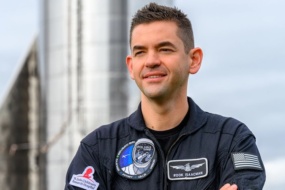
NASA Starts 2026 With Budget Plan, Administrator
NASA is starting off the year hot, with a positive budget proposal—as well as a permanent administrator at the helm, after nearly a year of interim leadership.

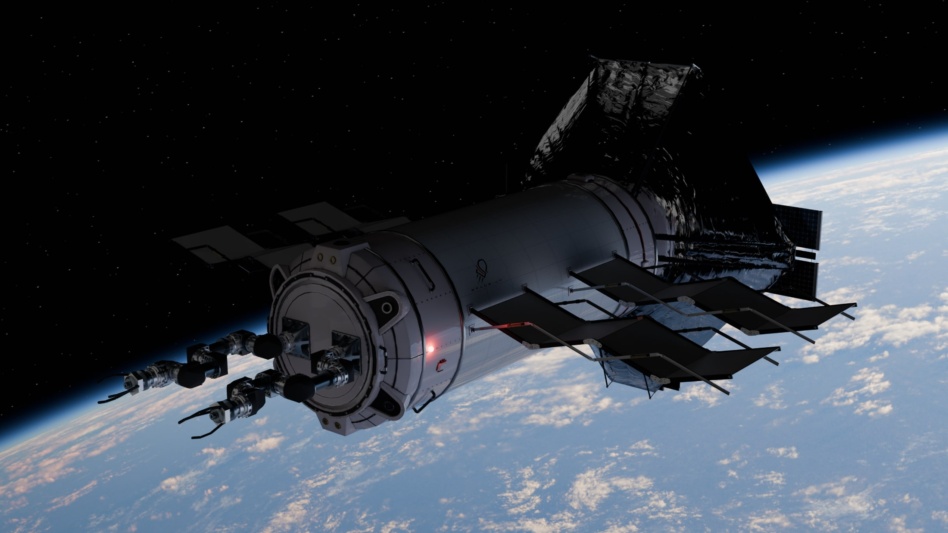
Robots can defuse bombs, do some surgeries, and clean those pesky crumbs the kids left behind after lunch. But getting a bot to work precisely in orbit raises challenges not faced on the kitchen counter.
Spacecium recently showed it can defy space’s swinging temperatures and high radiation. Their recent in-space demo, announced on Tuesday, aimed to prove the next gen of space robot arms won’t just build things, but fuel things.
Diesel droid: Spaceium emphasized that their demo “wasn’t a concept or a ground test.” However, it should be seen as a small step in space fueling. They flew an actuator on SpaceX’s Transporter-15 mission in November that—when tested in orbit—achieved a 0.003-degree rotation accuracy.
Keep reading