



While investors pour billions of dollars into orbital-data-center (ODC) concepts that require new feats of engineering, Satlyt’s virtual ODC network is already flying above us—and growing rapidly.
The startup—with joint headquarters in Nairobi, Kenya, and Sunnyvale, CA—unveiled a $8M seed round today to expand its team and its virtual ODC network.
non sibi ventures led the round, which included additional participation from TLCOM, Antler, Slauson & Co., Launch Africa Ventures, Enza Capital, Demos Capital, BAG Collective, Gaingels, Askya, AXIAN Investment and others. It brings Satlyt’s total funds to “well past $10M,” according to CEO Rama Afullo.
Meet Satlyt: Satlyt was founded in 2024 by Afullo, an alum of SpaceX and Google who spent years trying to convince both companies to invest in in-space edge computing opportunities.
“I was pitching orbital data centers at Google three years ago…I was pitching it at SpaceX [Starlink] right after that…And in both cases, I was getting turned down,” Afullo told Payload.
The pitch was simple. As satellites fly overhead, they gather far too much data to downlink efficiently and affordably. Satlyt’s solution is to inject AI-inference capabilities on board partner satellites—either by pre-programming them before launch, or uploading the software in-flight—to process data in orbit, and downlink only the most necessary data outputs.
In November, Satlyt won a NASA STTR contract with a total value of $4M to design delay-tolerant edge protocols in space. In May the company announced it had notched its biggest in-space success.
Satlyt demonstrated its ability to run AI inference software in space—using Google’s Gemma AI model—and validated that Satlyt’s system “processed imagery, generated an encrypted downlink-ready output, and diagnosed multiple injected software faults,” Afullo said in a post on LinkedIn.
Software vs hardware: With the new capital in-hand, Satlyt is focused on growing its network and increasing its in-orbit capabilities. The company plans to hire new engineers and invest in R&D to increase the pace of its product development.
Afullo told Payload that the long-term vision is to “proliferate across basically every non-SpaceX Starlink satellite,” with the goal of onboarding 30% of all non-Starlink satellites flying in orbit by the end of the decade.
While the network can seem to fly in direct competition to the hardware-focused ODC concepts under development, Satlyt officials see the company’s system as complimentary—giving ODCs the opportunity to tap into a larger customer base, and run their in-orbit data centers with less downtime. Last week, Satlyt proved this business model by signing an MoU, with xOrbita and ODC startup Symphony Space, to explore joint software-defined in-space architecture.
“We run orthogonal to essentially every edge-compute box, every orbital data center because for us…[it’s] additive—it actually makes the network stronger,” Afullo said. “We just run the process through them…So we’re not telling people ‘We will do your compute,’ we’re telling people ‘We will show you how to route your data.’”
Exclusive: EraDrive Lands $13M DoD Award For Autonomy Module
EraDrive won a $13M DoD award, under which the Space Force will buy an undisclosed number of the company’s Era-Node vision-based autonomy modules.
WarpWare Closes Pre-Seed to Bring Agentic Tools to Flight Software
CO-based WarpWare closed its $1.2M pre-seed round today to expand what it calls an AI-enabled engineering platform for space missions.

RATLOG Wants to Cut ~90% of a Rocket Engine’s Parts
The heavy-lift rocket startup debuted on Y Combinator as part of the Fall 2026 batch.

Seraphim Space Investment Trust Doubled its Value in 2026
Seraphim’s major holdings—ICEYE, ALL.SPACE, D-Orbit, HawkEye 360, and Xona Space Systems, which together represent more than 75% of the firm’s portfolio—all had a great year, and that success has trickled upwards.

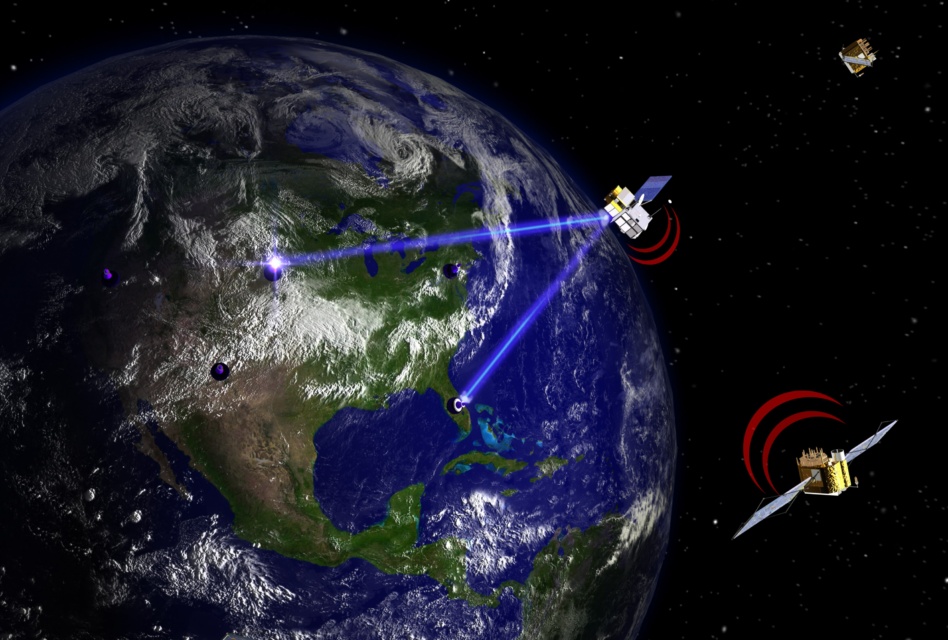
Foundational wants to turn bouncing lasers off satellites into a commercial service.
The London startup emerged from stealth today with an £8.2M ($10.8M) pre-seed round—which it says is Europe’s largest space-tech pre-seed to date.
Investors include early-stage VC firms Inflection, BACKED, and Adjacent, alongside Type One Ventures and Final Frontier, a European fund focused on defense, space, and cyber.
Keep reading