


Hop Aero just cleared its first big financial hop.
The suborbital point-to-point logistics company announced $11M in funding today following its participation in the summer Y Combinator batch. The new money includes funding Hop raised before YC plus money it raised during the program, all on SAFEs, which allow the company to receive money now and provide investors with equity at a later date.
The funding was led by Initialized Capital, a seed stage venture fund that has also backed companies such as AstroForge, Kayhan Space, and Star Catcher.
“We ended up raising more than we initially planned,” Hop Aero cofounder and CEO Matija Milenovic told Payload. “We were really fortunate to be able to turn down a lot of really good funds, so I think it sets us up to be in a great position for our Series A.”
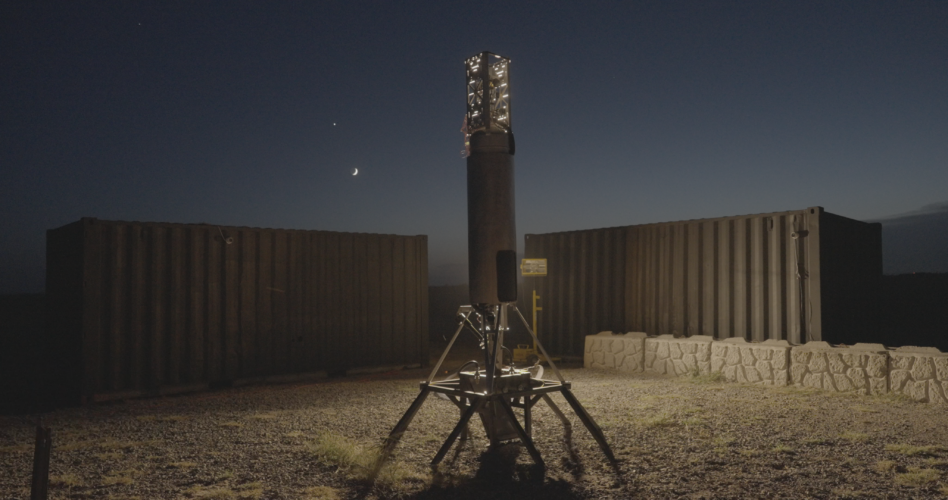
Trial by fire: During its YC batch, Hop Aero put its autonomous suborbital rocket—Rook—to the test.
- Hop designed its engine with its hopOS software, 3D-metal-printed it, and hot-fired it at the Infinity One Oklahoma Spaceport, running four internal designs from conservative to likely-to-explode without blowing any engines up.
- The company then dropped that engine into a roughly half-scale Rook prototype and ran a full static fire—testing the fuel tanks, plumbing, and harnessing together.
- Finally, Hop slid four drones out of the payload bay on a rail, which is a ground demo of the deployment mechanism it is pitching to defense customers.
“Where we have the most demand is being able to take a swarm of autonomous systems, put them in a rocket, [send] them hundreds of miles away into a contested environment, and then deploy them there,” Milenovic said.
None of Hop’s tests have addressed the problem that has kept rocket delivery for cargo on the drawing board for years: setting a vehicle down intact and on target after a hypersonic reentry. The static fire de-risked propulsion and the drone demo de-risked the payload, but the team will still need to stick the landing.
Off the leash: The funds will allow Hop Aero to pursue the development of its full-scale Rook 2 vehicle. The team is eager to let Rook off its leash, with Rook 2’s first flight set for mid-2027. Hop has yet to fly anything untethered.
“We’re going to be moving into our full-scale Rooks,” Milenovic said. “Obviously, it’s a different engine, different propulsion architecture. So we’re going to be just going full speed on de-risking a lot of those elements.”
Hop Aero is also expanding at the Oklahoma Spaceport—undeterred by recent and notable inclement weather. A drought during Hop’s tests raised the risk of a statewide fire ban that would have shut the site down, so the seven-person team compressed its schedule by two weeks, working 20-hour days to finish before any ban could take effect. It plans to pour concrete by the end of the year to support a bigger vehicle.
Exclusive: EraDrive Lands $13M DoD Award For Autonomy Module
EraDrive won a $13M DoD award, under which the Space Force will buy an undisclosed number of the company’s Era-Node vision-based autonomy modules.
WarpWare Closes Pre-Seed to Bring Agentic Tools to Flight Software
CO-based WarpWare closed its $1.2M pre-seed round today to expand what it calls an AI-enabled engineering platform for space missions.

RATLOG Wants to Cut ~90% of a Rocket Engine’s Parts
The heavy-lift rocket startup debuted on Y Combinator as part of the Fall 2026 batch.

Seraphim Space Investment Trust Doubled its Value in 2026
Seraphim’s major holdings—ICEYE, ALL.SPACE, D-Orbit, HawkEye 360, and Xona Space Systems, which together represent more than 75% of the firm’s portfolio—all had a great year, and that success has trickled upwards.

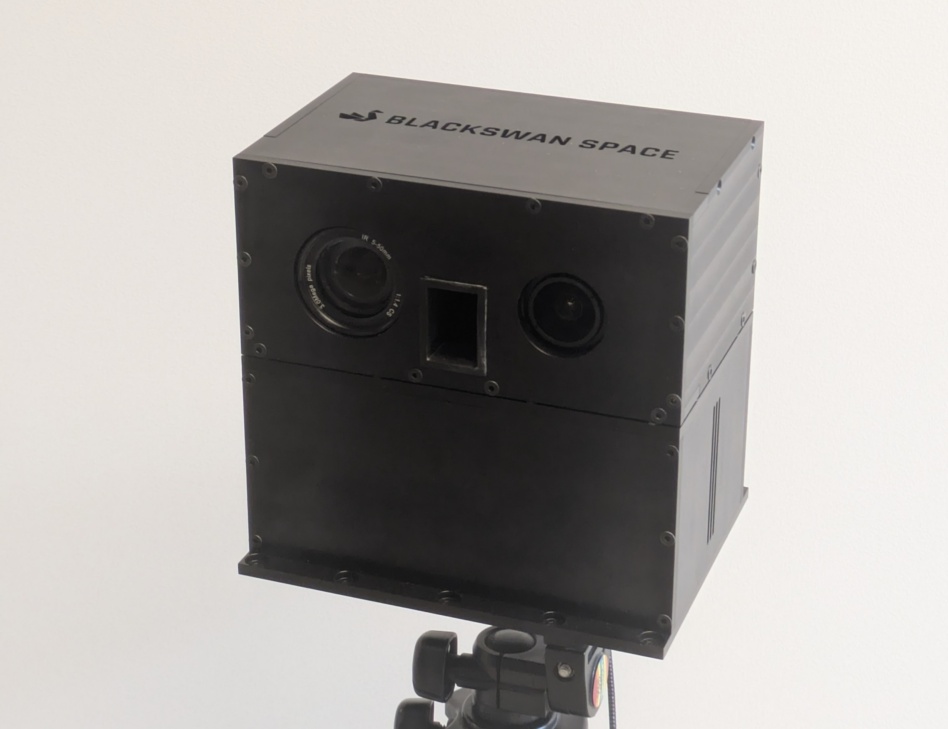
Blackswan Space, the Lithuanian startup best known for its mission design simulation software, closed a €2.5M ($2.8M) seed round to begin sending payloads to orbit, the company announced today.
Iron Wolf Capital led the round, which included participation from Lemonade Stand and NGL Ventures, as well as angel funds from NanoAvionics cofounder Linas Sargautis and Lithuanian serial entrepreneur Tomas Žalandauskas. With the new capital, Blackswan’s total fundraising stands at €3.2M ($3.6M).
Step on the gas: The round comes as Blackswan gears up for its first in-orbit mission. The company has developed a payload—called RPO Kit—which uses vision-based navigation (VBN) techniques to enable customer spacecraft to perform autonomous navigation and RPO maneuvers in orbit.
Keep reading