


The age of robot pilots has arrived—not for your next commercial flight, thankfully, but for satellites on orbit.
Simulation startup Sedaro, headquartered outside DC, has joined forces with San Diego’s Shield AI to place sat maneuvering capabilities in the hands of AI pilots.
Best of both worlds: The partnership aims to combine the two companies’s technologies—Sedaro’s simulation tools, and Shield AI’s “Hivemind Pilot” software—to give satellites self-awareness and control over their own maneuvers.
Sedaro, which simulates every variable from orbital physics to internal power systems, will act as a training ground for Shield’s AI pilots to test in-space operations. The eventual idea is to house both systems on edge computers aboard defense and commercial satellites to allow sats to game out potential maneuvers and conduct operations without needing to communicate with the ground.
“It’s a very innovative, but low-risk approach,” Sedaro CEO Robbie Robertson told Payload. “Simulation is a tool that we can provide in this newer, less mature domain for [Shield AI] to train their pilots, validate their pilots, and then run alongside them on board vehicles to do that sanity check on any decisions.”
AI revolutions: The partnership comes as the DoD and its allies invest in complex, proliferated defense constellations in response to threats from Russia and China, who are flexing their military muscles in space.
As LEO becomes more contested, satellites are increasingly vulnerable from physical and digital attacks. With an AI pilot, satellites can maneuver without waiting on a connection to the ground, and in denied environments.
In the short term, Sedaro and Shield AI hope their partnership can boost protection of the DoD’s Proliferated Warfighter Space Architecture, and future Golden Dome missile defense sats, according to Robertson.
“[The Space Development Agency] built into their architecture…a place for something like this to live, and they have proliferated assets…with a bunch of different functions and payloads that could benefit from being more dynamically tasked,” Robertson said.
In the longer-term however, the joint simulation-and-command software could be used to perform more commercial tasks in orbit, including RPO maneuvers for satellite servicing and refueling.

Exclusive: Tilebox Launches AI-Focused Update
Tilebox announced an update today aiming to make AI agents more effective geospatial-data analysts.
Symphony Space Unveils Adagio-XL ODC Sat
With Adagio-XL, Symphony Space is getting into the orbital data center game.
Orbital Raises $5M Pre-Seed to Build ODC Constellation
Orbital’s ODC concept instead relies on a network of relatively smaller satellites, which can together handle large AI inference workloads, and remain in constant contact with the ground.
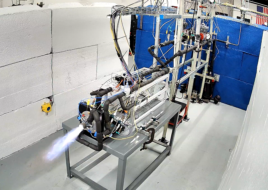
Juno Propulsion Raises $1.4M Pre-Seed for RDE Flight
The $1.4M pre-seed investment round will fund the completion of its first flight-ready rotating detonation engine (RDE)—called Project Iris—ahead of its inaugural demo mission in 2027.

Not all the money made in space is made in space.
As the commercial space sector grows and crosses milestones once reserved for national agencies—landing on the Moon, building space stations, etc.—space companies have become an increasingly attractive partner to consumer brands trying to get their name out. These partnerships can spark new revenue streams for space companies, and a London-based startup is fanning the flames.
This week, Forbes Space opened a new office in Turin—Italy’s aerospace and defense hub—to help the Italian space sector foster partnerships with non-space companies.
Keep reading