


Senators introduced a pair of bipartisan bills last week aimed at streamlining regulations and boosting talent in the space sector.
Cross pollinate: The NASA Talent Exchange Program Act would boost collaboration between the space agency and industry—by letting staff from each side walk a mile in the other’s shoes.
The bill—which was introduced by Sens. John Cornyn (R-TX), Andy Kim (D-NJ), Roger Wicker (R-MS), and Alex Padilla (D-CA)—would create a Public Private Talent Exchange Program at the agency. The program would allow NASA staff to work in industry—and allow commercial employees to work at NASA—for rotations lasting between three months and two years, with an option to extend another year.
However, this isn’t the bill’s first rodeo. It’s been introduced before in both the House and Senate going back to 2023, but never made it out of committee.
Streamline: Senators also introduced the Satellite and Telecommunications (SAT) Streamlining Act, which would make it easier for satellite operators to apply for and secure FCC approval. The bill would give the agency one year to improve the FCC’s application process. The aim is to both entice companies to base operations in the US, and to boost access to broadband for rural areas.
The bill, which was introduced by Sens. Ted Cruz (R-TX) and Peter Welch (D-VT), has also been considered by Congress before, when Cruz introduced the bill solo in 2024.
Early support: The bill has already won praise from policy and industry groups alike.
- The Progressive Policy Institute commended senators for “coming together to help make the satellite industry more globally competitive through regulatory streamlining.”
- The Satellite Industry Association also supports the bill, saying that “standardizing the regulatory review process to prevent unnecessary licensing delays will help ensure continued American innovation, industry investment, and US leadership in the global space economy.”
Next steps: Both bills will need a hearing, and a favorable vote, in the Senate Commerce, Science, and Transportation Committee to have a chance at passage.
Senate Tees Up NASA Reauthorization, Deputy Hearings
The Senate Commerce, Science, and Transportation Committee is gearing up for a busy week.
Bill Spotlight: Methane Monitoring Science Act
Two lawmakers introduced a bill that would task NASA to improve the nation’s ability to detect cow farts—and all other forms of methane leaks.

Rep. Mike Haridopolos On Cutting Red Tape, Passing NASA Bill
“We don’t have the budgetary ability to do everything and now—unlike 10 years ago—there is a business case to be made.”
Congress is Considering a NASA Authorization Bill—Again
Recently, it’s become an annual exercise for lawmakers, and a stated priority for committee leaders past and present. However, past bills have stalled and failed to codify the space agency’s missions.
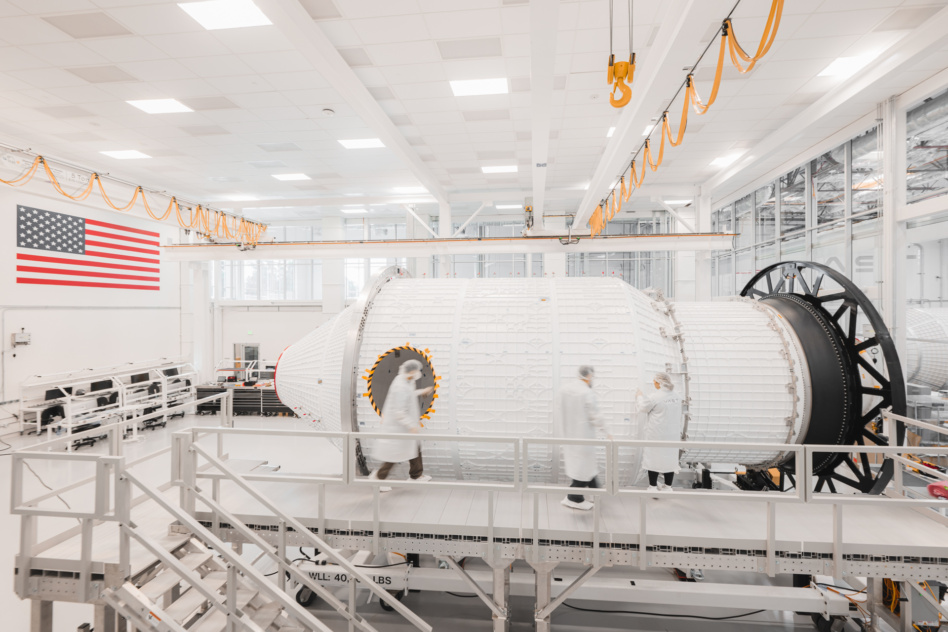
Vast has delayed the launch of its commercial space station until next year, the company announced on Tuesday.
Haven-1, which was expected to launch in 2026, will now launch no earlier than Q1 2027—and it could be significantly longer before the station gets its first crew.
The station is expected to be able to host a max of four commercial astronauts for missions lasting up to two weeks. SpaceX’s Dragon capsule will bring astronauts to the station (and provide the station’s life support and power)—and Vast CEO Max Haot said crewed flights won’t start until the launcher is confident in the station’s safety.
Keep reading