


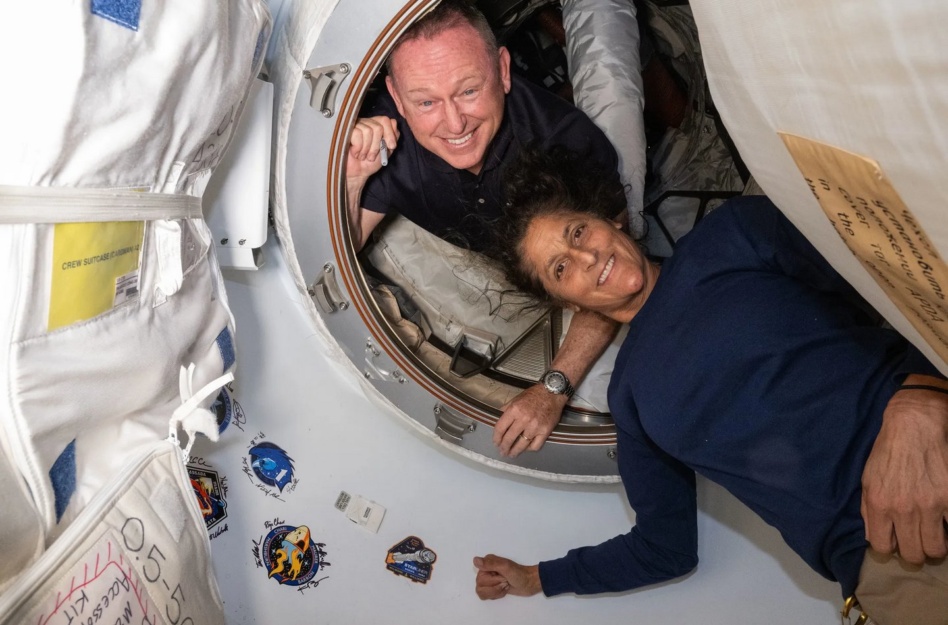
The astronauts who headed to the ISS aboard Starliner over a month ago for a week-long mission finally have a hopeful return-by date to look forward to, NASA and Boeing officials said Wednesday.
The reason: They’re parked in someone else’s spot.
SpaceX’s Crew-9 is expected to replace Crew-8 on the ISS in a direct-handover in August, and to do so, Starliner will need to move.
What’s the hold up: Engineers at NASA’s White Sands, NM test facility have been trying to recreate the conditions that led to a few of Starliner’s thrusters failing in its approach to the ISS. They are expected to wrap up these tests by next week, according to Steve Stich, program manager for NASA’s commercial crew program.
While they haven’t yet recreated the exact flight conditions on the ground, in part due to delays brought on by Hurricane Beryl, engineers believe that the source of the thruster failures may lie in the thermos-like atmosphere created by Starliner’s “doghouse” thruster housing.
Additional maneuvers beyond previous uncrewed flight tests also may have overheated the propulsion system to the point of failure, which drove Butch Wilmore to take manual control of the spacecraft for over an hour before switching back to automated docking with the ISS.
“You could tell that the thrust, the control, [and] the capability was degraded,” Wilmore told reporters.
Because this was a test flight, NASA and Boeing want to gather as much data as possible before they give Starliner the green light to return home. At the outset of their time on the ISS, the crew’s stay was limited by the 45-day lifespan of Starliner’s batteries, but engineers now believe that the risks of remaining in orbit longer are minimal.
Happy to be here: Boeing and NASA also stress that, if needed, Starliner can return to Earth at any time. The spacecraft can return home safely even with degraded thrusters, and the crew already took to Starliner as a safe-haven—ready to make like a tree—when a defunct Russian satellite broke up in LEO last month.

Voyager and Icarus Team Up on ISS Robotics Demo
The pages of the ISS manifest are starting to look a lot like those of a sci-fi novel.
LambdaVision Taps Starlab for Post-ISS Manufacturing Plans
LambdaVision is preparing for its post-ISS future.
Vast Delays Haven-1 Launch to 2027
Haven-1, which was expected to launch in 2026, will now launch no earlier than Q1 2027—and it could be significantly longer before the station gets its first crew.
Voyager Details its Plans for In-Space Manufacturing
Voyager Technologies secured a patent from the US government covering its unique process of manufacturing crystals in microgravity to support the future of optical communications.

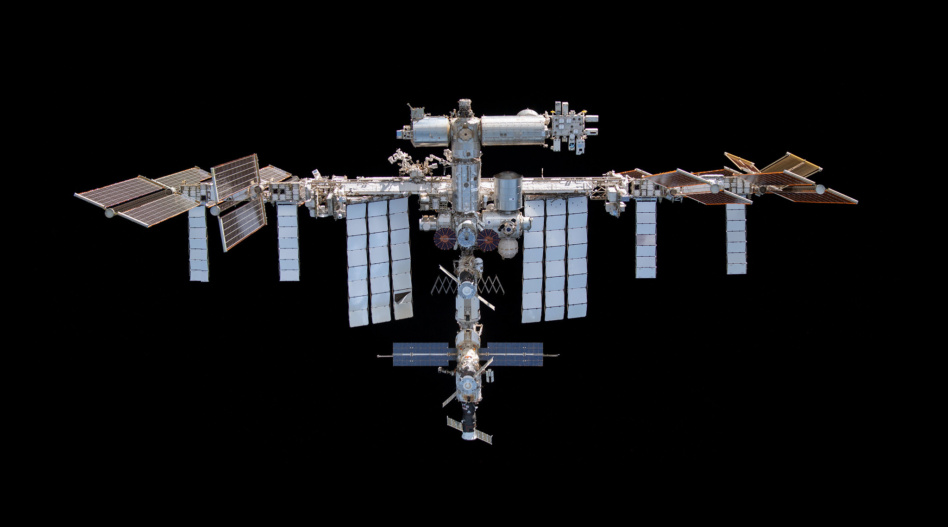
Lawmakers raised concerns on Wednesday about the US leaving a leadership vacuum in LEO after the ISS is retired in 2030.
To try to get ahead of the problem, members of the House Science, Space, and Technology Committee passed an amendment to the NASA Reauthorization Act of 2024 that would require the space agency to report back on the risk posed by a potential gap in US access to LEO, plus how to prevent it.
More details: The amendment from Rep. Kevin Mullin (D-CA), which passed by voice vote, would require an answer from NASA within ~9 months of the bill passing. In remarks promoting the amendment, Mullin expressed concerns that a gap in LEO could put R&D at risk if commercial space stations aren’t ready to pick up the mantle after the ISS crashes into the sea.
Keep reading