


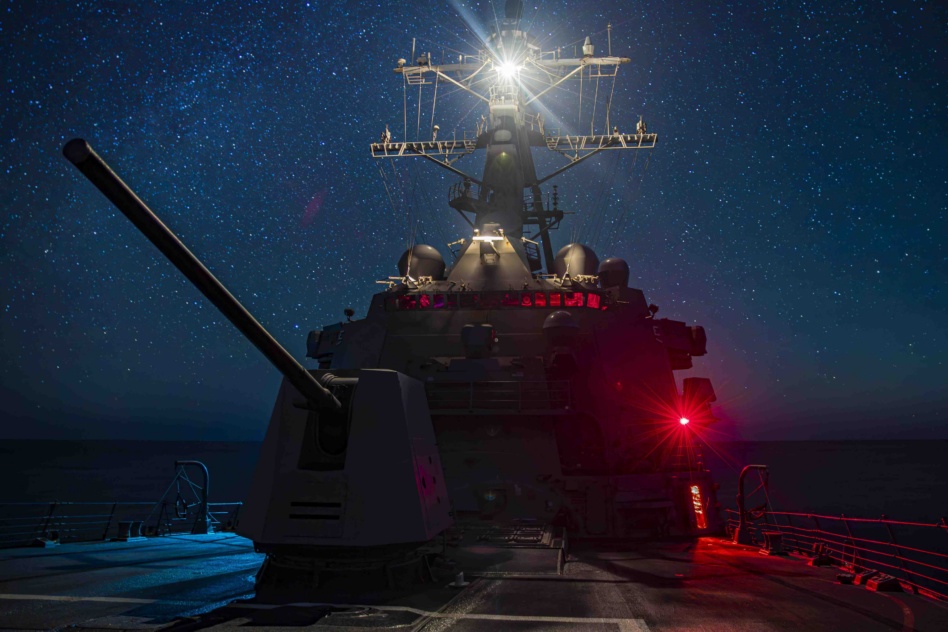
Satellites protect Navy ships by giving them domain awareness. Some officers think the Navy can return the favor.
The pitch: Putting SDA tech on ships would provide better service—and be harder to hit than terrestrial counterparts, panelists at the Navy League’s Sea-Air-Space conference said Monday.
“We have terrestrial space capabilities, and those are targets. So if you have maritime assets that are dynamic, maneuverable, harder to target—that can bring a lot to the fight,” said Rear Adm. Karrey “DeWayne” Sanders, deputy commander of Navy Space.
Beyond hardening assets against threats, seaborne space monitoring could also allow the military to view its satellites from new angles, Sanders argued.
“We have 70% of the world covered by water, and we have ships that navigate all over that,” Sanders said. “Just imagine what they can bring to space domain awareness.”
To-do list: Turning ships into mobile sat-trackers would mostly require upgrading existing platforms—a project the Navy has already embarked on, Sanders said. Still, he didn’t rule out developing all-new capabilities or vessels.
However, moving SDA off of solid ground will require more than just hardware, pointed out Gurpartap “GP” Sandhoo, acting director of the Space Development Agency. Since SDA is the Space Force’s job, expanding capabilities offshore (instead of off-planet) would require some policy changes.
The rub: Integrating domains requires officers to be able to think at different “speeds of fight,” Sandhoo said. Sea and land battles may occur over the course of days, weeks, or months, but battles in space can take place in minutes. Space’s increasingly important battlefield role in the fight means it’s critical to figure out that gap in timing, according to Space Command’s Deputy Director of Global Space Operations Rear Adm. Tracy Hines.
“We think sea, air, land, cyber, but space is fundamental to all those domains. No one does anything without space,” Hines said.

Europe’s Space Defenses Fall Just Shy of Weaponization
Europe doesn’t have any weapons in space—but that doesn’t mean the region is comfortable flying around in orbit defenseless.

Fortastra Raises $30M Series A to Fund its Next Security Spacecraft
The US military has weapons in space, and—with the orbital arsenal expanding—security is becoming a top priority.

Colorado Springs, Huntsville Team Up on Golden Dome
“It’s a transformed relationship between Colorado Springs and Huntsville,” Rep. Jeff Crank (R-CO) told Payload. “When I took office, I don’t think it was a bad relationship, but it was one where both communities were kind of looking over their shoulder at the other. That wasn’t good for America, and I don’t think it was good for Colorado Springs or Huntsville either.”
HawkEye 360 Turns its RF-Sensors to Orbital Targets
The DoD wants to better understand what’s going on in orbit. HawkEye 360 ($HAWK) has the inside scoop.

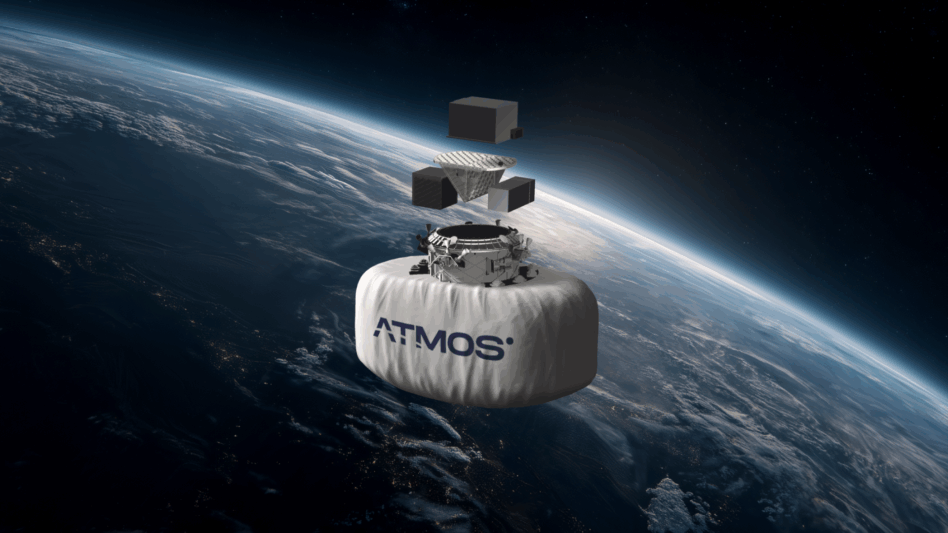
ATMOS Space Cargo has closed a €25.7M ($30.2M) Series A to continue development of its orbital reentry vehicles, the company announced today.
Balnord and Expansion Venture Capital led the round for the European space transport company. Keen Defence and Security and the European Innovation Council also participated in the Series A, with the latter offering grant and equity funding through its accelerator program.
Threefold goals: ATMOS has laid out three priorities that the funding will support:
Keep reading