


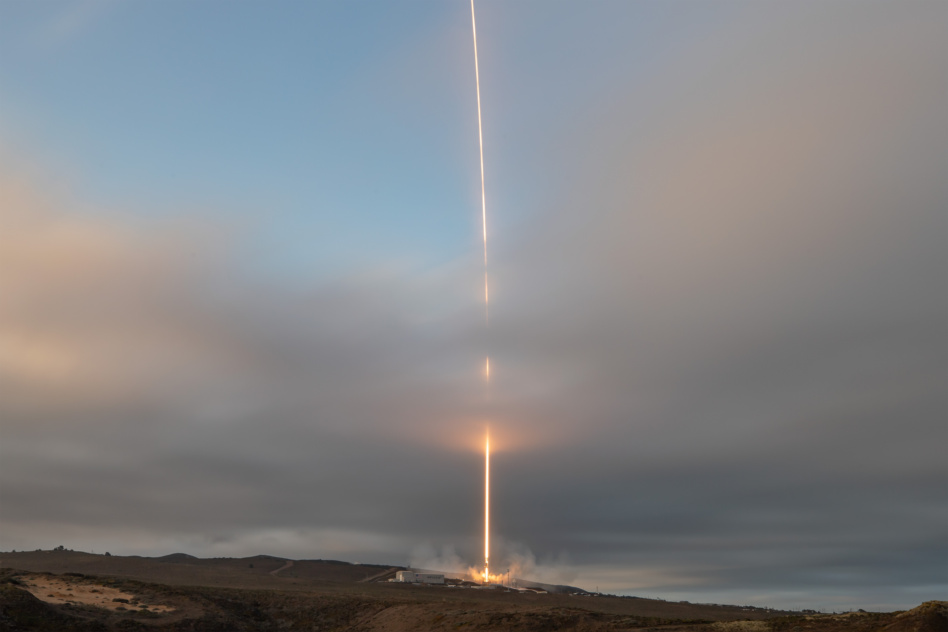
Traffic at US military launch sites is approaching max capacity.
The nation needs another launch site capable of hosting heavy and super heavy launches to keep up with the growing demand, according to a study cited by Air Force Secretary Troy Meink during his testimony in front of the House Armed Services Committee this week.
Space jam: Meink talked about the growing challenge to find space to launch amid the geographical limitations at Cape Canaveral Space Force Station and Vandenberg Space Force Base.
The DoD is working to prepare for the rising number of US launches, including investing billions in upgrading sites to host additional launchers.
- In 2024, Congress allocated $1.3B for construction at launch facilities and supporting infrastructure through 2028.
- In its FY2027 budget request, the Space Force asked for $2.2B to boost launch infrastructure investment.
The money would be used to modernize existing facilities at the ranges in Florida and California in support of government launches by new entrants—including Firefly Aerospace, Stoke, and Relativity—but the situation is coming to a head.
Supply and demand: The two ranges hosted 175 launches in 2025—and the FAA said US launches could nearly triple in the next 10 years.
As commercial operators prepare to increase the size of their launch vehicles and the cadence of their flights, quick fixes such as leaning on state-run launch sites—at Wallops in Virginia, and Kodiak in Alaska—will no longer be tenable. To support all these new launch capabilities, and keep US military access to space resilient, another military-run site is needed.
“We’re going to have to increase the capacity,” Chief of Space Operations Gen. Chance Saltzman told lawmakers during his testimony this week. “Connected to that is the geographic resiliency that you might need to have separate launch locations and not be so tied to just the two specific launch ports that we have. So, we’re looking heavily and we’re now analyzing alternatives to support other launches.”

RATLOG Wants to Cut ~90% of a Rocket Engine’s Parts
The heavy-lift rocket startup debuted on Y Combinator as part of the Fall 2026 batch.
Reflect Orbital Buys Two Skyroot Aerospace Launches
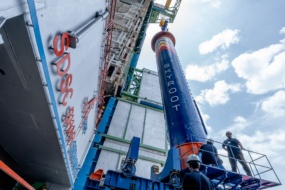
Reflect Orbital announced the purchase of two launches today from Indian launcher Skyroot Aerospace.
Europe’s Space Defenses Fall Just Shy of Weaponization
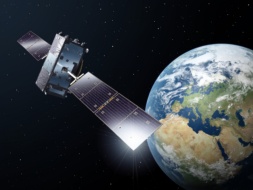
Europe doesn’t have any weapons in space—but that doesn’t mean the region is comfortable flying around in orbit defenseless.

Fortastra Raises $30M Series A to Fund its Next Security Spacecraft
The US military has weapons in space, and—with the orbital arsenal expanding—security is becoming a top priority.
Europe has made huge strides increasing public funds to grow its space economy, but to some in the industry, enough is not enough.
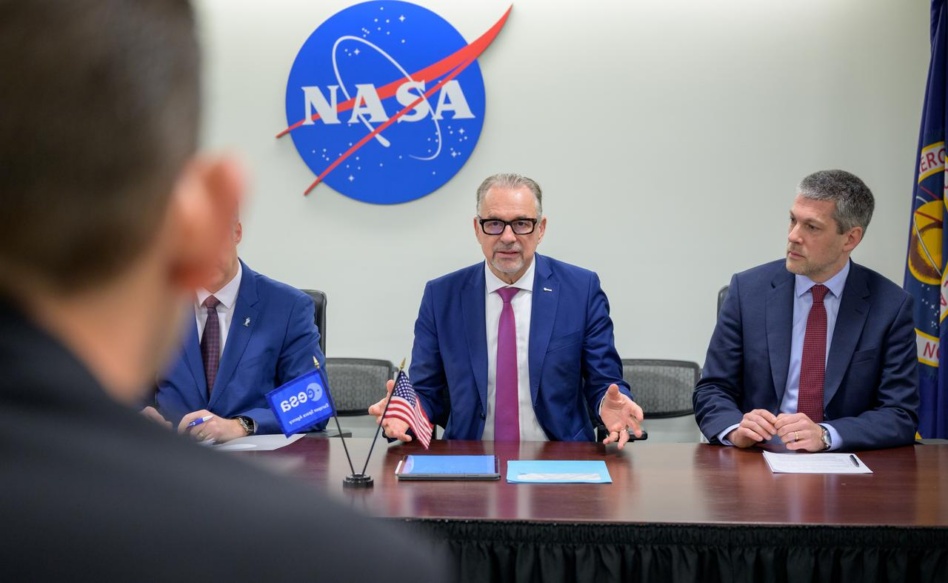
“If we’re not making big changes, we will never catch up. We will always run behind [the US],” ESA Director General Josef Aschbacher told Politico at the GLOBSEC forum yesterday.
His rationale—laid out in a detailed op-ed published Monday—hinged on the idea that if Europe wants sovereign space exploration capabilities, it has to act now—before the EU finalizes its Multiannual Financial Framework for 2028-2034.
Keep reading