



The explosion of Blue Origin’s New Glenn rocket last week produced shockwaves similar to a small earthquake, sending seismic waves up to about 220 km away. But, according to Blue Origin CEO Dave Limp, the explosion looked worse than it is.
After assessing the damage to the launch pad and the surrounding infrastructure, Limp posted on X on Monday that Blue Origin “will fly again before the end of this year.”
The good news: It’s an incredibly aggressive timeline, but one that’s informed by the fact that much of the infrastructure at LC-36A remains usable.
“The propellant farm, oxygen, liquid hydrogen, and LNG [liquified natural gas] tanks are all in good shape,” Limp said. “The water tower is also good. The big support tower is damaged, but it can be repaired in place rather than torn down and replaced. The booster ‘Never Tell Me The Odds’ and the three GS-2s [second stages] that were on site, in the integration facility, also look good.”
Blue Origin’s timeline also benefits from the company already developing a new concept of launch operations, which eliminates the need for a transporter-erector. So, no need to refurbish that hunk of metal.
Limp went on to say that Blue would continue to launch the 7×2 variant of New Glenn, rejecting speculation that Blue might use the mishap to immediately transition to the larger New Glenn variant under development.
Helping hands: A potential return to flight this year is positive news for NASA’s lunar plans, which hinge on Blue Origin’s ability to fly regular flights to the Moon in support of a moon base and future Artemis landings.
- Last week, NASA awarded Blue Origin an initial $188M contract for two missions to deliver LTVs to the Moon’s South Pole by 2028.
- New Glenn was also scheduled to launch its Blue Moon Mark 1 Endurance lander before the end of the year.
NASA has offered any help the launcher needs to help stick to that schedule—and NASA Administrator Jared Isaacman seems confident that the 2028 timeline for the LTV missions gives Blue ample room to make it happen. Following the explosion, Isaacman traveled to Florida to assess the damage, and to speak with Blue Origin employees alongside Limp and company founder Jeff Bezos, highlighting that the space industry thrives in moments like these.
“We are not going to sit on our hands and wait for the capabilities necessary to achieve the nation’s most pressing objectives. We are going to take an active role,” Isaacman posted on X. “NASA is committed to helping the Blue [Origin] team recover, continue to advance their lunar lander, and get New Glenn back to launching as soon as safely possible.”
Skyrora Shifts Orbital Launch Timeline to 2030
First-mover advantage isn’t all it’s cracked up to be—at least, that’s the thought process for UK launcher Skyrora.
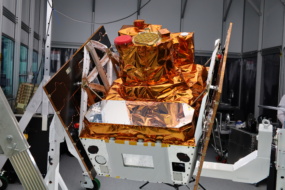
Transporter-18 Tests the Building Blocks of Orbital Data Centers
Few rideshares come with a theme, but SpaceX’s Transporter-18 had one: getting power to compute in orbit.
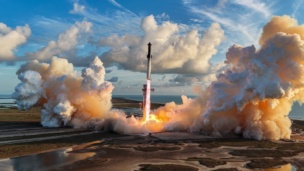
Starship Reaches Orbit on 14th Test Flight
After reaching orbit, Starship deployed 26 V3 Starlink sats over about 30 minutes using its ‘Pez dispenser’ system.

Exclusive: Meridian Space Spins Out from SpinLaunch
“Meridian will carry forward the satcom infrastructure business… SpinLaunch will continue to build on its vision for a lower-cost approach to launch, with further applications in hypersonics to support the Golden Dome program and in the lunar economy,” Meridian Space CEO Massimiliano Ladovaz told Payload.


The House’s annual defense authorization bill would eliminate the two offices within the Pentagon designed to speed up space acquisition.
The chair’s version of the House FY27 National Defense Authorization Act would axe the Space Development Agency (SDA) and Space Rapid Capabilities Office (RCO). The bill is far from a done deal. Members of the House Armed Services Committee will meet on Thursday to mark up the bill, which will also need to be considered and approved by the full House and Senate.
On the chopping block: SDA was established in 2019 as an independent agency. Since then, it’s been working to quickly field commercially built satellites in tranches to boost comms, tracking, and missile-defense capabilities for the military. The office most recently launched Tranche 1 of the Proliferated Warfighter Space Architecture transport layer in October, before announcing in March a strategic pause for launching missions while the office worked out some kinks.
Keep reading