


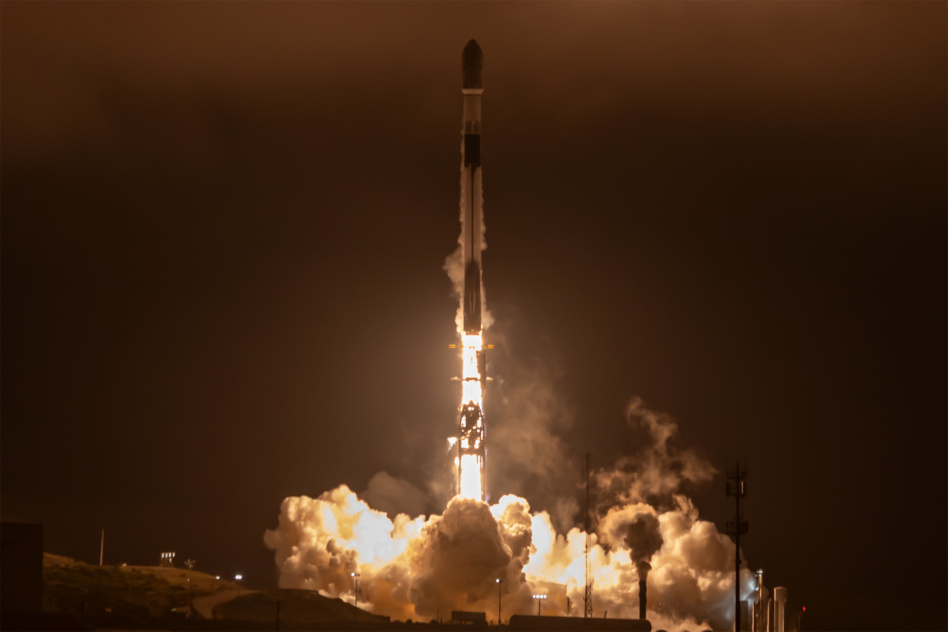
SpaceX’s ($SPCX) Transporter-17 rideshare mission launched humanity into a new nuclear space age this morning when it lifted off from Vandenberg Space Force Base at 3:12am, carrying 81 payloads to LEO.
One of those satellites, City Labs’ Betavoltaic Orbital High-Reliability sat—or BOHR—is carrying America’s first commercial nuclear-powered payload: a small betavoltaic battery, which uses tritium to provide power to the tech demonstration independent of the sat’s conventional solar arrays.
Going nuclear: As a tech demonstration, BOHR is validating City Labs’ ability to keep a payload up and running in the absence of solar power, but the mission represents more than just a feat of engineering.
“The innovation here is not just in the technology. It’s in the regulatory part,” City Labs CEO Peter Cabauy told Payload. “Nuclear has been done for decades. NASA’s been able to do it, other government agencies around the world have done it, but to really take it to the next step [and] to scale up, it’s got to be commercial.”
In September, City Labs received FAA authorization to fly BOHR, establishing a pathway that future space nuclear missions could follow. City Labs’ regulatory approval benefited from the relative safety of its tritium power source, which has been used in terrestrial applications for decades in applications ranging from exit signs to personal watches.
And flying in LEO is just the first step. City Labs’ ultimate goal is to scale up its offering—by using tritium to power radioisotope heating units for future CLPS payloads. The goal is to provide a source of power—independent of solar energy—to allow lunar missions to survive the lunar night, and operate in permanently shadowed regions of the Moon’s surface.
Best of the rest: The other 80 payloads on board Transporter-17 represent a cross-section of the global space industry.
First time flyers include:
- Tumbleweed’s Oasis Alpha satellite aims to demonstrate the company’s “Pods” that will carry microgravity research payloads to orbit and back on future missions.
- Three cubesats (TOM-1, -2 and -3) from Zentrum für Telematik e.V., to demonstrate the ability to create 3D images of volcanic ash clouds.
- ISISPACE’s GRITSS cubesat—the Geodetic Reference Instrument Transponder for Small Satellites—which aims to advance research about the Earth’s size, shape, and gravitational properties.
- MAVERIC, a research satellite from the University of Southern California to test imaging capabilities for future RPO missions.
- SPEAR, a three-sat constellation from NearSpace Launch, which aims to demo a range of national-security capabilities, including comms and SDA.
Passengers returning to space who are looking to grow their in-orbit presence include:
- Planet Labs’ Pelican-11 is a tech demonstration sat for the second generation of the company’s EO constellation.
- R5-S9, the latest research cubesat from NASA, this time in partnership with Sandia National Laboratories, is carrying a range of demo payloads including low-cost laser comms.
- The 26th satellite from FOSSA Systems, which will form another link in the company’s growing secure RF comms and IoT constellation.
- Four ICEYE satellites.
- The first three operational FireSat’s of Earth Fire Alliance’s constellation, built by Muon Space. The three sats follow a prototype launched in 2025.
Enjoy it while it lasts: Since 2021, SpaceX’s Transporter missions have provided a vital pathway to orbit for the global space industry, especially new entrants looking for a cost effective trip to orbit. In total, the rideshare missions have launched 1,800+ payloads in the past five years, but the good times may be coming to an end.
SpaceX has reportedly stopped accepting reservations for Transporter missions after 2029, prompting concerns that SpaceX is doing away with the rideshare program in favor of launching its own Starlink satellites, as well as for its subsidiary xAI.
At a time when launch demand has far outstripped supply, and efforts to stand up competitors to SpaceX remain dwarfed by SpaceX’s own launch cadence, the cancellation of rideshare missions would reverberate across the industry. It’s unclear if SpaceX’s pause on reservations is part of a shift in its business model, but without Transporter missions, much of the space industry will find itself stuck on Earth.
Update: This article was updated to include more information about the payloads on Transporter-17.
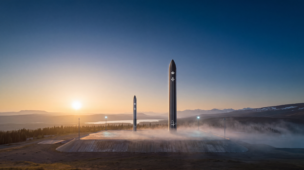
Reaction Dynamics Targets 2031 for Borealis Medium-Lift Launch
In the contest to build up commercial launch capabilities in Canada, Quebec-based startup Reaction Dynamics has entered a new weight class.
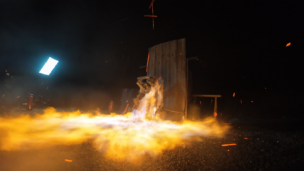
RATLOG Wants to Cut ~90% of a Rocket Engine’s Parts
The heavy-lift rocket startup debuted on Y Combinator as part of the Fall 2026 batch.
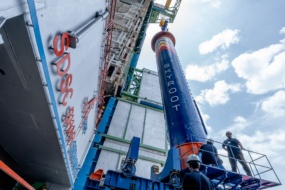
Reflect Orbital Buys Two Skyroot Aerospace Launches
Reflect Orbital announced the purchase of two launches today from Indian launcher Skyroot Aerospace.

DOT Proposes Changes to Part 450 Licensing Rules
On Tuesday, Transportation Secretary Sean Duffy announced five proposed FAA rules aiming to streamline and modernize commercial space launch and reentry regulations.

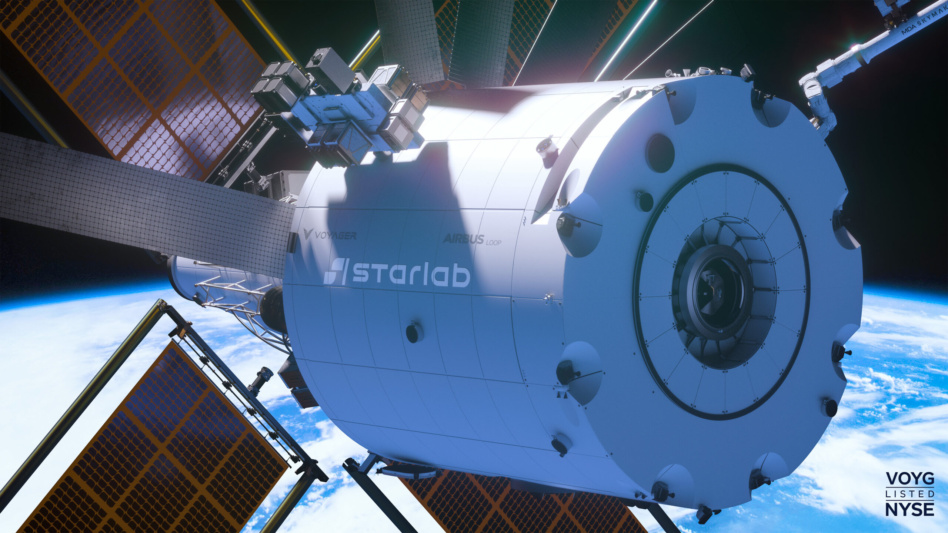
NASA is officially moving forward with its original plan to support stand-alone replacements to the ISS, after industry proved its ready to take on human habitation in LEO.
The space agency released a draft request for proposals on Monday, while indicating that it intended to award early development contracts to at least two station builders. The agency will later hold another competition to award a final design contract to one or more companies.
Prove it: This spring, NASA announced that it was considering pivoting away from its plan to support a private, stand-alone space station model after the ISS was decommissioned, arguing that the market was not strong enough to sustain commercial stations. Instead, the agency put forward a plan to buy a core model that would attach to the ISS, where commercial CLD providers could dock.
Keep reading