


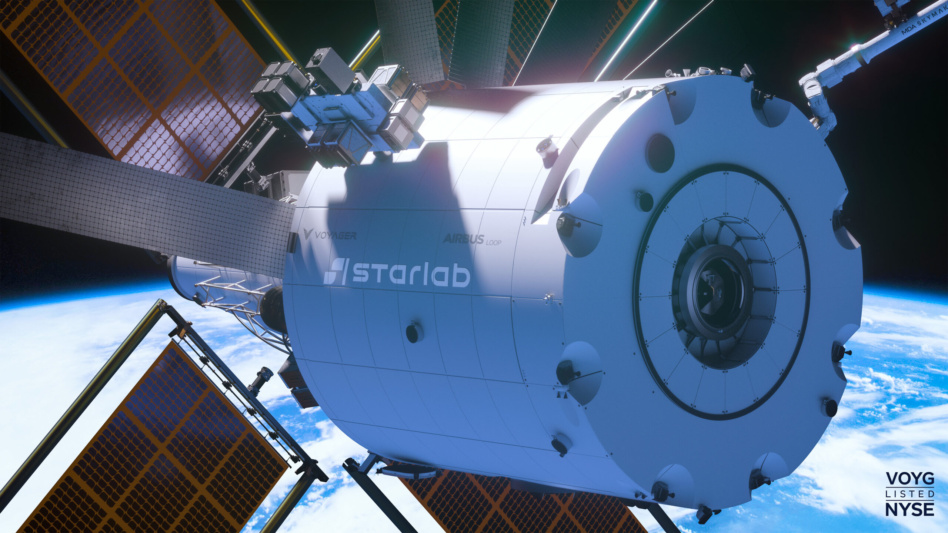
NASA is officially moving forward with its original plan to support stand-alone replacements to the ISS, after industry proved its ready to take on human habitation in LEO.
The space agency released a draft request for proposals on Monday, while indicating that it intended to award early development contracts to at least two station builders. The agency will later hold another competition to award a final design contract to one or more companies.
Prove it: This spring, NASA announced that it was considering pivoting away from its plan to support a private, stand-alone space station model after the ISS was decommissioned, arguing that the market was not strong enough to sustain commercial stations. Instead, the agency put forward a plan to buy a core model that would attach to the ISS, where commercial CLD providers could dock.
CLD companies immediately pushed back, arguing that the market was ready for commercial stations. At the time, NASA Administrator Jared Isaacman told Payload that no final decisions had been made—and it was on industry to prove that the agency was wrong.
Industry apparently did just that. According to a NASA release, companies have shown that they have the capital to get the job done—and predicted that more capital and commercial opportunities would be incoming with NASA’s support of commercial stations.
“NASA’s review reflects what we’ve been hearing from industry throughout this process. Industry believes it can meet the timelines and that a viable commercial marketplace exists where NASA is one customer among many,” Isaacman said in the statement. “We’re focused on supporting those efforts, enabling the capabilities that make this transition possible, and doing all we can to ensure the United States maintains a continuous human presence in low Earth orbit.”
What’s next: Industry feedback on the draft RFP is due to NASA at the end of this month.. Companies will have opportunities to engage with the agency in both group and one-on-one formats during the next two weeks.
NASA also said it intends to publicly release a list of companies interested in competing for the project, to facilitate teaming between commercial partners.

UKSA Taps ClearSpace for Country’s First Debris Removal Mission
The UK Space Agency is dressing up as a waste-management company for Halloween.
NASA Signs Space Nuclear Pact, Says Moon Base Is Ahead of Schedule
Isaacman gave updates at the White House’s “Science: A New Golden Age Summit.”
Exclusive: Xona Ramps Up Production Ahead of Pulsar Launch
With FCC approval in hand and six sats ready for the pad, Xona is turning to its next challenge: building the next 250.
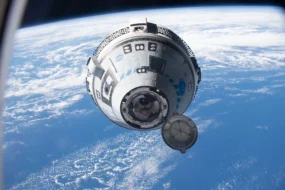
Starliner Targets Uncrewed Flight NET December, Crewed Follow Up in 2028
NASA and Boeing officials announced Monday that they have upgraded and redesigned Starliner following a dicey crewed test flight in 2024, which left NASA astronauts Butch Wilmore and Sunita Williams stuck on ISS for nine months.


Ravee Optics has closed a $6M seed round to fund the development of its ultra-compact laser communications terminals.
BIG Global Investment JSC led the round, which also included participation from CincyTech Fund VI and JobsOhio Growth Capital Fund.
Why it matters: Satellites are gathering more data than ever, but the phone lines are starting to jam. RF thoroughfares are being pushed past their limit, and a huge share of the data gathered on-orbit never makes it back to Earth.
Keep reading