



The UK Space Agency is dressing up as a waste-management company for Halloween.
Yesterday, the agency announced its selection of ClearSpace, the in-orbit servicing startup with offices in the UK, to act as the prime contractor for UKSA’s first active-debris removal (ADR) mission launching NET 2029.
Under the contract worth ~£61M ($81M), ClearSpace will attempt to remove two UK-registered defunct satellites from LEO using giant robotic claws. The mission will require ClearSpace to demonstrate new capabilities including in-orbit inspection, proximity operations, and the capture and relocation of unprepared objects.
One man’s trash: While the space industry has recently made strides in many of the underlying capabilities for a full-fledged debris removal mission—including in-orbit inspection, and docking for life extension missions—the industry has yet to actively remove debris from the orbital freeways, according to officials at UKSA.
The ClearSpace mission aims to be the first, and the UK is positioning itself to lead a global effort to rid space of potentially harmful debris as the number of satellites in orbit grows.
“By backing this world-first mission, we will protect the satellites that underpin modern life,” Liz Loyd, the UK’s parliamentary under-secretary of state (minister for space, cyber and regulatory reform), in a statement. “This is our space strategy in action: giving British firms the support and clear direction they need to turn bold ideas into cutting-edge innovation, strengthen our world-class satellite sector, and drive economic growth across the country.”
Treasure island: However, the mission isn’t all about sweeping clean space debris. By backing the ADR mission, UKSA is funding emerging capabilities targeting a much more lucrative market: in-orbit servicing. If successful, the mission will give the market confidence that ClearSpace can inspect, approach, and handle an unprepared spacecraft in orbit.
Once flown, ClearSpace will have a clear pathway to performing debris-removal missions for the UK and international governments, as well as in-space servicing missions for commercial satellites.
“This mission is about much more than removing debris,” Alice Bunn, international director of UKSA, said in a statement. “The technologies being developed through ADR will help establish the UK’s position at the forefront of a new generation of space services, while supporting a sustainable future for activities in space.”
NASA Signs Space Nuclear Pact, Says Moon Base Is Ahead of Schedule
Isaacman gave updates at the White House’s “Science: A New Golden Age Summit.”

Europe’s Space Defenses Fall Just Shy of Weaponization
Europe doesn’t have any weapons in space—but that doesn’t mean the region is comfortable flying around in orbit defenseless.
Skyrora Shifts Orbital Launch Timeline to 2030
First-mover advantage isn’t all it’s cracked up to be—at least, that’s the thought process for UK launcher Skyrora.

Foundational Raises £8.2M for Satellite Laser Ranging
Foundational emerged from stealth today with Europe’s largest space tech pre-seed round.

What started as a pilot just got picked up for Season 3—now in HD.
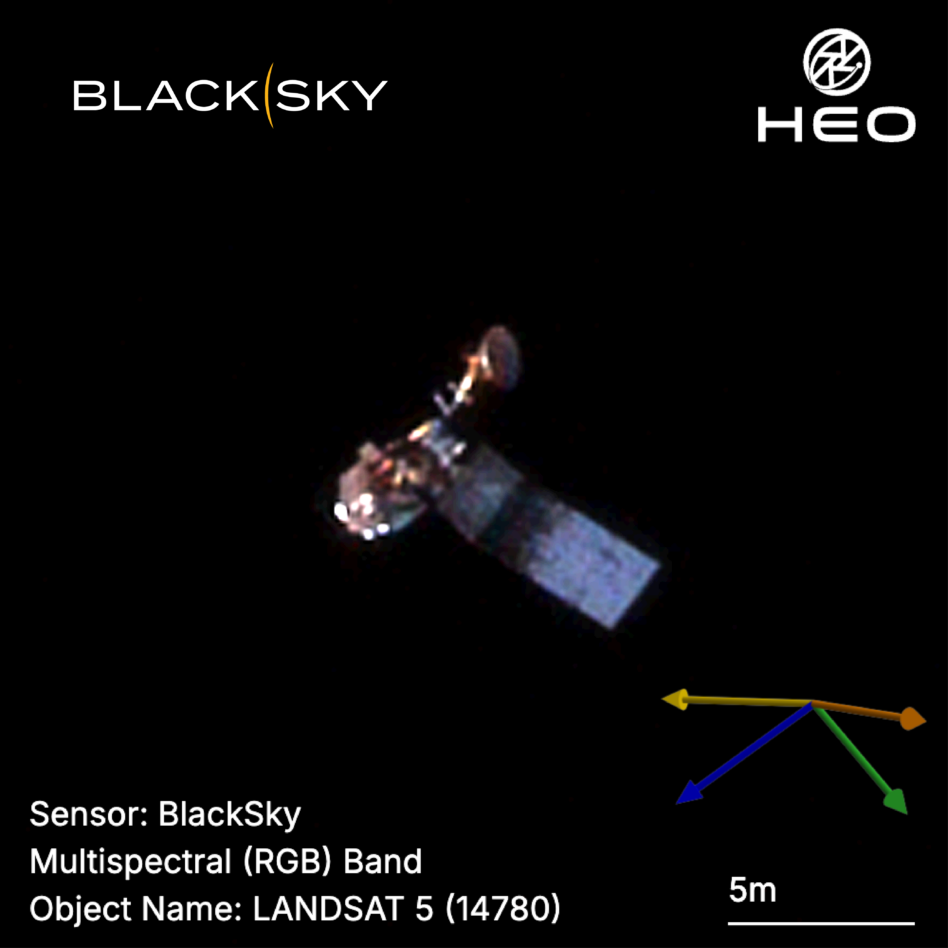
BlackSky Technology ($BKSY) inked a seven-figure deal to extend its partnership with Australian non-Earth imaging (NEI) provider HEO for another year. The expanded partnership will help advance low-latency NEI.
As the number of objects in orbit grows, so does operators’ hunger to know where those objects are—and what they’re doing. Ground-based radar and telescopes can track a satellite’s position, but are limited by the level of available detail. HEO puts eyes in the sky instead—borrowing time on cameras already in orbit to photograph other spacecraft up close.
Keep reading