


What started as a pilot just got picked up for Season 3—now in HD.
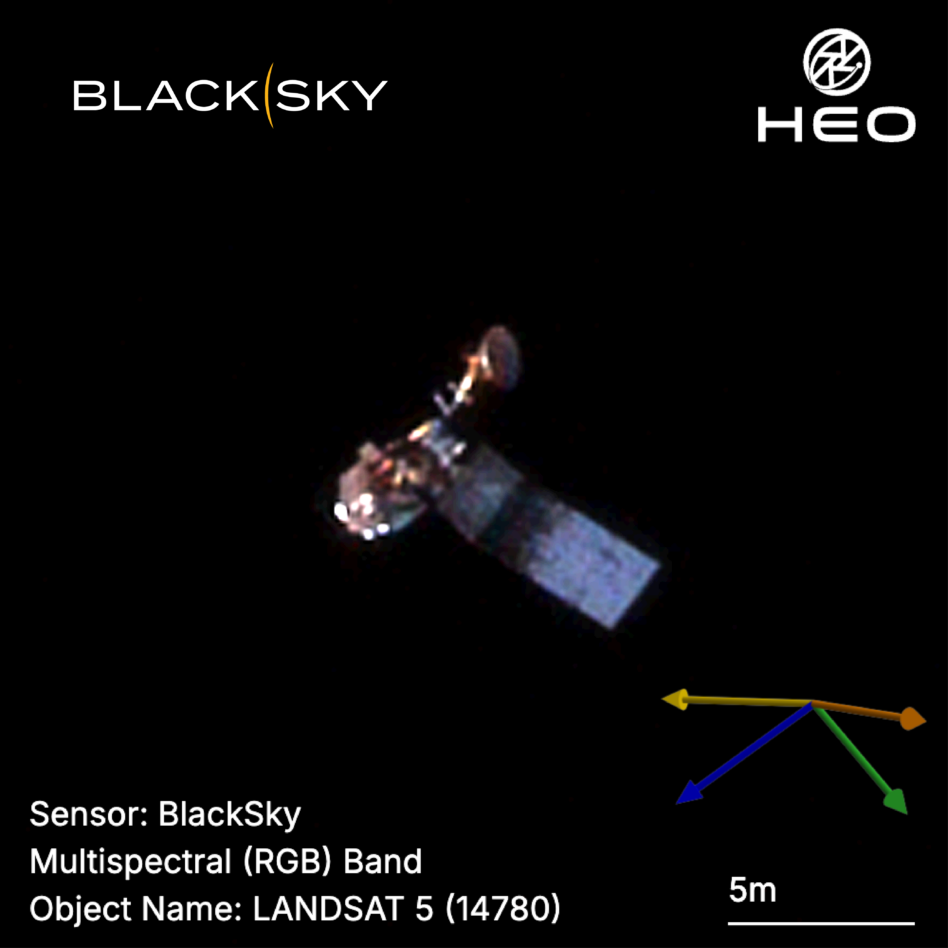
BlackSky Technology ($BKSY) inked a seven-figure deal to extend its partnership with Australian non-Earth imaging (NEI) provider HEO for another year. The expanded partnership will help advance low-latency NEI.
As the number of objects in orbit grows, so does operators’ hunger to know where those objects are—and what they’re doing. Ground-based radar and telescopes can track a satellite’s position, but are limited by the level of available detail. HEO puts eyes in the sky instead—borrowing time on cameras already in orbit to photograph other spacecraft up close.
With the renewed partnership, HEO can tap into BlackSky’s latest Gen-3 imagery to provide better, faster, and more frequently updated space domain awareness (SDA) data.
BlackSky CEO Brian O’Toole said in a statement that the expanded deal reflects NEI’s evolution “from a specialized proof-of-concept, into a critical component of mainstream space domain awareness.”
Previously on: The HEO-BlackSky partnership is entering its third year, evolving from what the companies describe as a short-term, six-figure pilot to a seven-figure annual contract. Over the years, the two companies have fully automated the tasking-to-delivery pipeline.
HEO Inspect customers—including international defense and commercial operators—can generate rapid analytics reports, identify satellite subsystems, flag anomalies, and map an object’s pattern of life.
Meanwhile, BlackSky doesn’t need to give up any Earth-imaging time. HEO tasks the satellites when they’d otherwise sit idle, such as over open ocean or on Earth’s night side.
Expanding the cast: With BlackSky’s Gen-3 sats in the mix, HEO customers get sharper and more frequent looks at objects in orbit.
- Gen-3’s 35-cm imagery—up from Gen-2’s one-meter resolution—reveals finer detail on satellite subsystems, damage, and configuration changes.
- HEO can now task BlackSky’s full Gen-2 and Gen-3 fleet, which means more opportunities to catch a target.
- BlackSky is still building out its Gen-3 fleet, so HEO’s pool of cameras will keep growing without needing to build spacecraft of its own.
Coming up next: The renewal comes weeks after HEO closed a $25M Series B to push its imaging network into GEO. HEO already operates 50+ sensors on orbit, through a mix of partner cameras, and its own hosted payloads. When discussing the fundraise, HEO CEO and cofounder Will Crowe told Payload that HEO plans to grow the network through new sensor deployments, and more satellite-operator partnerships.
“We are entering an era where we must inspect, understand and maintain the infrastructure we put in orbit,” Crowe said in a statement today. “That requires more frequent access to high-resolution imagery, without building a dedicated spacecraft for every mission.”
ArbaLabs Launches AI Verification Demo On South Korea’s Nuri Rocket
“In short, tons of companies are looking at the latest and greatest physical AI deployments,” ArbaLabs CEO Ashley Reeves told Payload. “Nobody is really thinking about putting some checks and balances on what these AI models are doing.”

HawkEye 360 Turns its RF-Sensors to Orbital Targets
The DoD wants to better understand what’s going on in orbit. HawkEye 360 ($HAWK) has the inside scoop.

Nebex Partners with Thrusters Unlimited to Unlock $700M for Mexico’s Space Ecosystem
The capital will fund EO, telecoms and other strategic capabilities, according to Nebex.
Transporter-18 Tests the Building Blocks of Orbital Data Centers
Few rideshares come with a theme, but SpaceX’s Transporter-18 had one: getting power to compute in orbit.

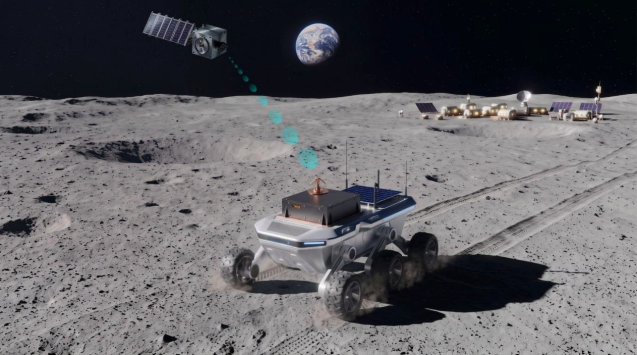
Today’s Moon explorers won’t have the luxury of GPS-like tech for navigation. But JAXA is trying to change that for future lunar visitors.
The space agency tapped Japanese space startup ArkEdge Space for two projects designed to improve navigation on the Moon. These awards build on work the startup is already doing with the Japanese space agency, including designing a constellation of small satellites around the Moon to enable navigation.
MoonQuest: Under the first contract, ArkEdge will conduct a study on adding a Lunar Augmented Navigation Service (LANS) receiver on the pressured crew rover being developed by JAXA to be used during the US-led Artemis program.
Keep reading