


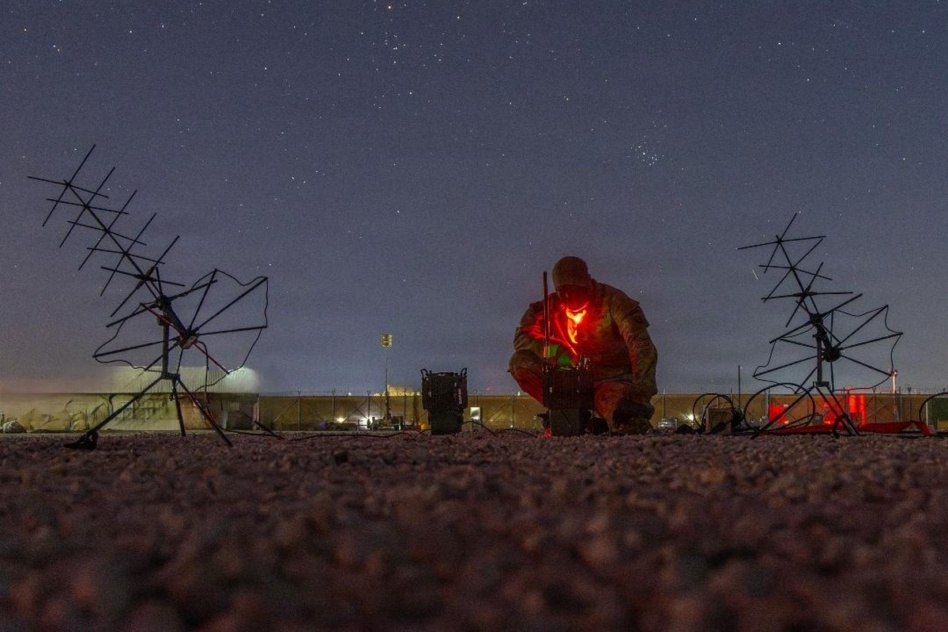
Modern warfare relies heavily on space-based technologies, and the US Army is making moves to tightly integrate those capabilities with the rest of its military might.
The Army established the Space Operations Branch last week to consolidate its broad space capabilities into the hands of a smaller force of specifically trained soldiers.
“Space integration is absolutely critical,” Lt. Gen. John Rafferty, commanding general of the Army’s Space and Missile Defense Command, said in a statement.
The new branch, he added, “provides the Army with the professional structure to deliver space-based effects directly to our soldiers and units at the tactical edge, enabling commanders to fight and win in a contested, multidomain environment.”
Why now: The announcement comes after the Army spent years leveling-up its space-capabilities, but those decisions have landed the Army in a disjointed setup.
The Army says it relies on “hundreds of thousands of space-enabled systems,” that are currently spread broadly, even though it is the “largest user of space capabilities” in the joint force.
The establishment of a Space Operations Branch is intended to relieve this “operational pressure,” on the Air Defense Artillery, Signal Corps, and Military Intelligence Corps, which had previously supplied soldiers on temporary missions requiring use of space assets.
In January, the Army put out the call for Army soldiers to be trained as Tactical Space Operations Specialists (Army acronym: 40D MOS), and last week’s announcement places those new soldiers in a branch all of their own.
The things they carry: The new Space Operations branch will be capable of staffing and deploying satcom and missile-warning systems to help soldiers use space assets for terrestrial missions.
Critically, these soldiers should expect to be embedded in tactical forces near the front lines. In January, Sgt. Maj. John Foley (Ret.), who was then leading US Army Space and Missile Defense Command, said these new soldiers should expect to “operate in deep-enemy and extended-deep areas,” to provide space-based capabilities within teams fighting overseas.
The Space Operations Branch will consist of Army Space Operations Officers and an initial force of 1,000 enlisted 40D MOS soldiers. The Army expects the group could grow to 1,500 by 2032.

Exclusive: EraDrive Lands $13M DoD Award For Autonomy Module
EraDrive won a $13M DoD award, under which the Space Force will buy an undisclosed number of the company’s Era-Node vision-based autonomy modules.

Europe’s Space Defenses Fall Just Shy of Weaponization
Europe doesn’t have any weapons in space—but that doesn’t mean the region is comfortable flying around in orbit defenseless.

Fortastra Raises $30M Series A to Fund its Next Security Spacecraft
The US military has weapons in space, and—with the orbital arsenal expanding—security is becoming a top priority.
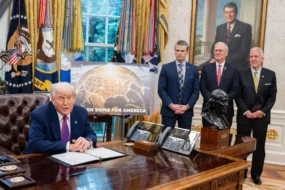
Colorado Springs, Huntsville Team Up on Golden Dome
“It’s a transformed relationship between Colorado Springs and Huntsville,” Rep. Jeff Crank (R-CO) told Payload. “When I took office, I don’t think it was a bad relationship, but it was one where both communities were kind of looking over their shoulder at the other. That wasn’t good for America, and I don’t think it was good for Colorado Springs or Huntsville either.”

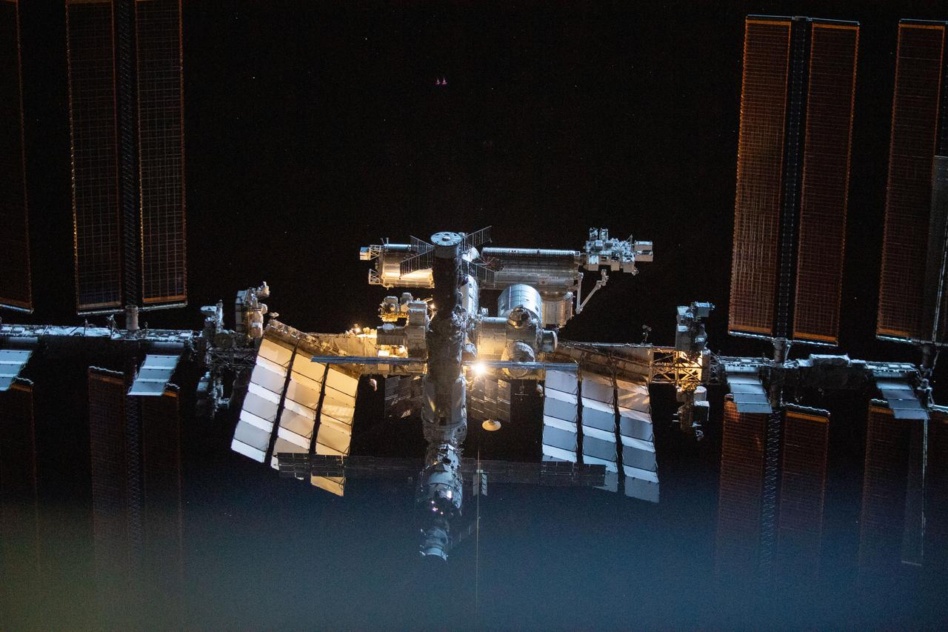
Time is running out to keep the ISS in orbit, as the chair of a NASA advisory committee warned last week that risk margin for regular operations “is now reduced to an alarming level.”
And the worry extends to parts, too: the supply chain for the decades-old spacesuits is wearing thin, according to Susan Helms, a former astronaut who chairs the Aerospace Safety Advisory Panel.
“It is increasingly difficult for NASA to ensure the ISS risks remain manageable for day-to-day operations, with enough contingency margins,” Helms said during a June 22 meeting of the panel.
Keep reading