


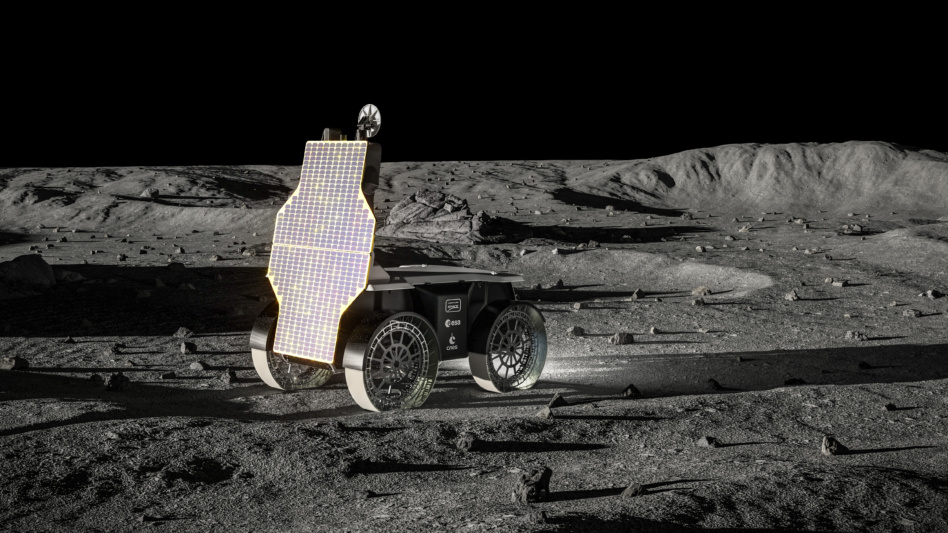
Venturi Space France is developing a lunar rover—named Mona Luna—to support future ESA and CNES missions to the lunar South Pole.
The rover will share many components designed for US-based Venturi Astrolab’s FLIP and FLEX rovers—including hyper-deformable wheels, electrical systems, and high-performance batteries. One key difference? This project will be 100% European made.
Boldly going: Mona Luna is targeting a 2030 launch aboard an Ariane 64 rocket, which will bring the rover to the lunar surface aboard Europe’s Argonaut lander.
- Mona Luna will be equipped with three high-performance, solar rechargeable batteries, theoretically enabling the rover to survive multiple lunar nights.
- The rover will also be designed to drive autonomously across the lunar surface, hitting a top speed of 12.4 mph (20 km/h), and carrying up to 1,650 lbs (750 kg) of payload mass.
The rover is designed to support many science missions for ESA and European space agencies, including transporting payloads across the Moon’s surface and mining lunar resources such as Helium-3. Long-term, however, the company wants to go beyond scientific missions and has designed the rover with economic viability in mind.
In their feasibility studies, ESA and CNES said the rover could also be used in an emergency to carry an astronaut in trouble.
Hard landings: At the vehicle’s unveiling at the Paris Air Show this week, it was billed as a tangible example of Europe’s efforts to achieve technological independence at home—and on another world.
Venturi Space will be coordinating the end-to-end development of the vehicle from Toulouse, France, but it could pull in work from its offices in other countries—including electrical systems built in Switzerland, and batteries developed in Monaco.
Venturi isn’t the first European company with Moon-high dreams. This month, ispace’s TENACIOUS micro rover—developed in Luxembourg—perished inside the company’s RESILIENCE lander, which crashed into the surface of the Moon at high speed.
For ESA, whose member states approved the European Resilience from Space resolution at a council meeting last week, resilience clearly means trying again and again.

Europe’s Space Defenses Fall Just Shy of Weaponization
Europe doesn’t have any weapons in space—but that doesn’t mean the region is comfortable flying around in orbit defenseless.
Skyrora Shifts Orbital Launch Timeline to 2030
First-mover advantage isn’t all it’s cracked up to be—at least, that’s the thought process for UK launcher Skyrora.

Foundational Raises £8.2M for Satellite Laser Ranging
Foundational emerged from stealth today with Europe’s largest space tech pre-seed round.
Blackswan Space Raises €2.5M Seed to Fund RPO Kit Demo
The round comes as Blackswan gears up for its first in-orbit mission of its RPO Kit payload.

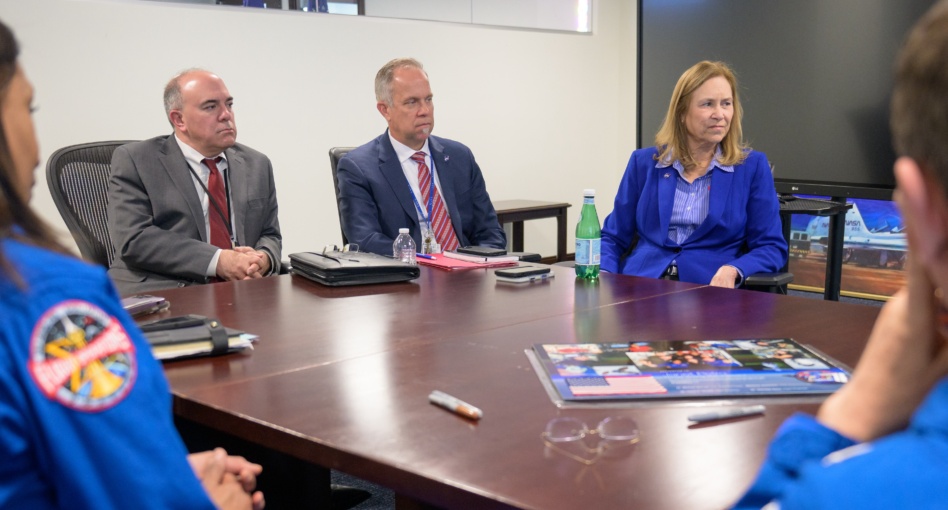
NASA is planning to cut more than 5,000 jobs without Congressional approval, and insiders fret that institutional knowledge is being lost ahead of critical missions.
Just RIFfing: Last week, the US space agency began offering early retirement, deferred resignation, and in some cases incentive payments of up to $25,000 each to induce workers to leave the agency.
Acting administrator Janet Petro told employees in an internal email, viewed by Payload, that making changes “before all the details of our future structure and funding are known” gives employees time to “make informed choices” because “waiting for complete certainty would have left little time for planning.”
Keep reading