

The FCC has issued an experimental license for AstroForge’s asteroid hunting spacecraft to communicate with ground stations on Earth, which the company says is the first time the agency has approved a privately-backed mission beyond the Moon.
The license was “our last gate to fly,” AstroForge CEO Matt Gialich told Payload, after a seven-month sprint to build a spacecraft when a previous vehicle failed a vibes test.
Now, the company is targeting an undisclosed asteroid that will be 7M miles from Earth when the mission launches no earlier than January, as a rideshare with Intuitive Machines second lunar lander.
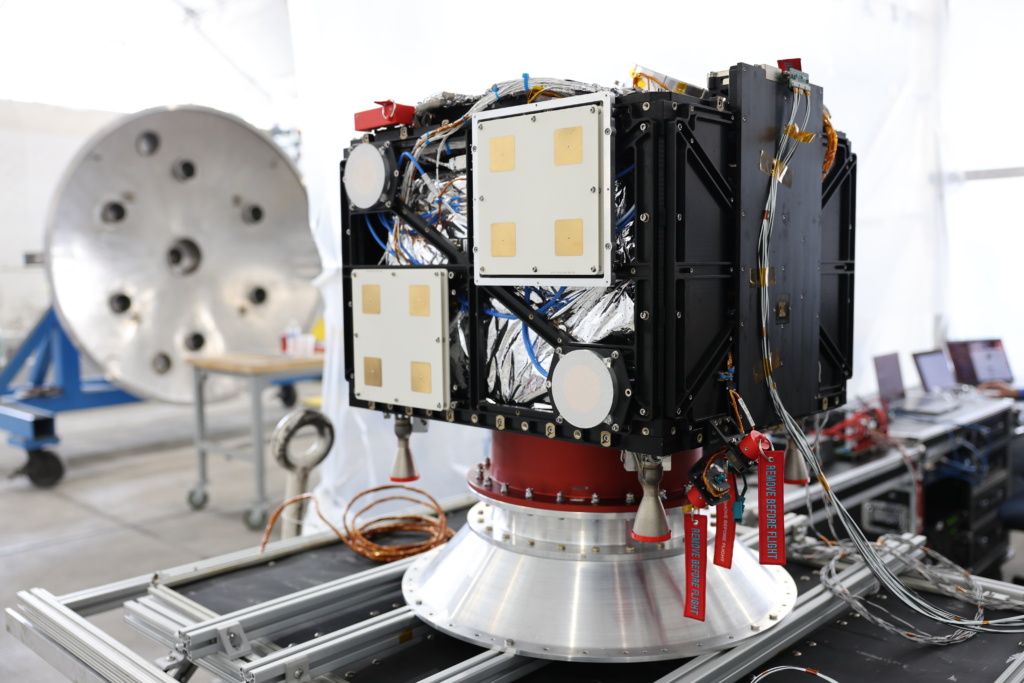
AstroForge raised a $40M Series A in August to mine platinum-group metals from asteroids in the solar system. Its newly-licensed spacecraft, Odin, will image the target asteroid, with plans for a follow-up mission to land on the asteroid in 2026.
Deep thoughts: Industry’s farthest incursion into space today stops at the Moon, just 340,000 km from Earth. To get FCC approval for their mission to go ~20x farther, AstroForge had to jump through several novel hoops:
- NASA JPL’s Spectrum Management Office had to determine what bands they could use without interfering with civil deep space missions.
- NASA also produced an analysis of potential interference that included the Voyager mission—”It was kind of cool to be like, here’s us and Voyager on the same chart, like we made it this far as a company to at least get NASA to put us on a plot with Voyager,” Gialich said.
- Radiation tolerance was a major point of engineering analysis, given the long travel times outside the protection of planetary magnetic fields.
- Some application questions just didn’t apply, like a request for orbital debris parameters, which Gialiich said “was always funny, because our perigee and apogee are infinity by definition.”
Ground round: They also had to round up a group of ground stations across the globe with 30 meter dishes capable of talking to distant spacecraft. “I was actually surprised by how many commercial entities were offering that band for us,” AstroForge cofounder and CTO Jose Acain said.
Regulators, mount up: While the license was granted in the FCC’s experimental category, Gialich and Acain said they were impressed with the agency’s ability to approve their mission in less than a year. “You really got the sense they were trying to work with us to find a solution here,” Gialich said.
Rocket Lab CFO Adam Spice Predicts More M&A Deals on the Horizon
Iridium shareholders voted overwhelmingly to approve the company’s acquisition by Rocket Lab. According to Rocket Lab CFO Adam Spice, there’s more M&A on the horizon.
Hubble Network Raises $200M Series C at $1.6B Valuation
The round follows a $70M Series B in September 2025, and brings Hubble’s total financing to $300M to date.
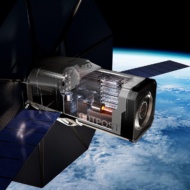
Exclusive: Outpost Launches In-Space Manufacturing Service
Outpost will be the first user of the Space Factory platform. The company plans to use the module to produce StarFiber, its next-gen metal fluoride optical fiber, on a mission NET 2028.
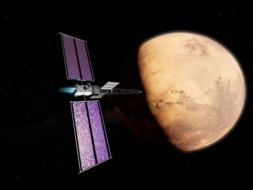
TRL11 Will Build Imaging Tech for SR-1 Freedom
TRL11 has received a NASA contract to provide imaging systems for the Space Reactor-1 (SR-1) Freedom mission to Mars.
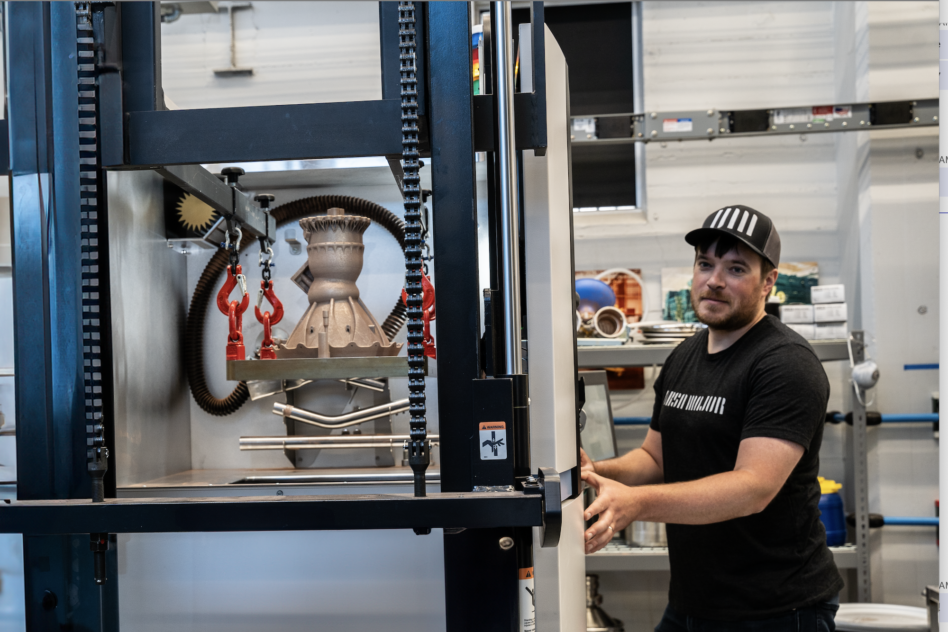
The push to expand US advanced defense manufacturing continues in Ohio, where engine specialist Ursa Major won a $4M grant from America Makes, a non-profit run out of the National Center for Defense Manufacturing and Machining.
Ursa will use the money plus an additional $1M to purchase a Velo3D Sapphire XE Metal 3D printer to begin printing flight-qualified engine components at its Youngstown facility after three years of commercializing a NASA-developed copper alloy.
The end goal is to produce 50 to 100 liquid-fueled rocket engines a year, Ursa Major COO Nick Doucette told Payload.
Keep reading