


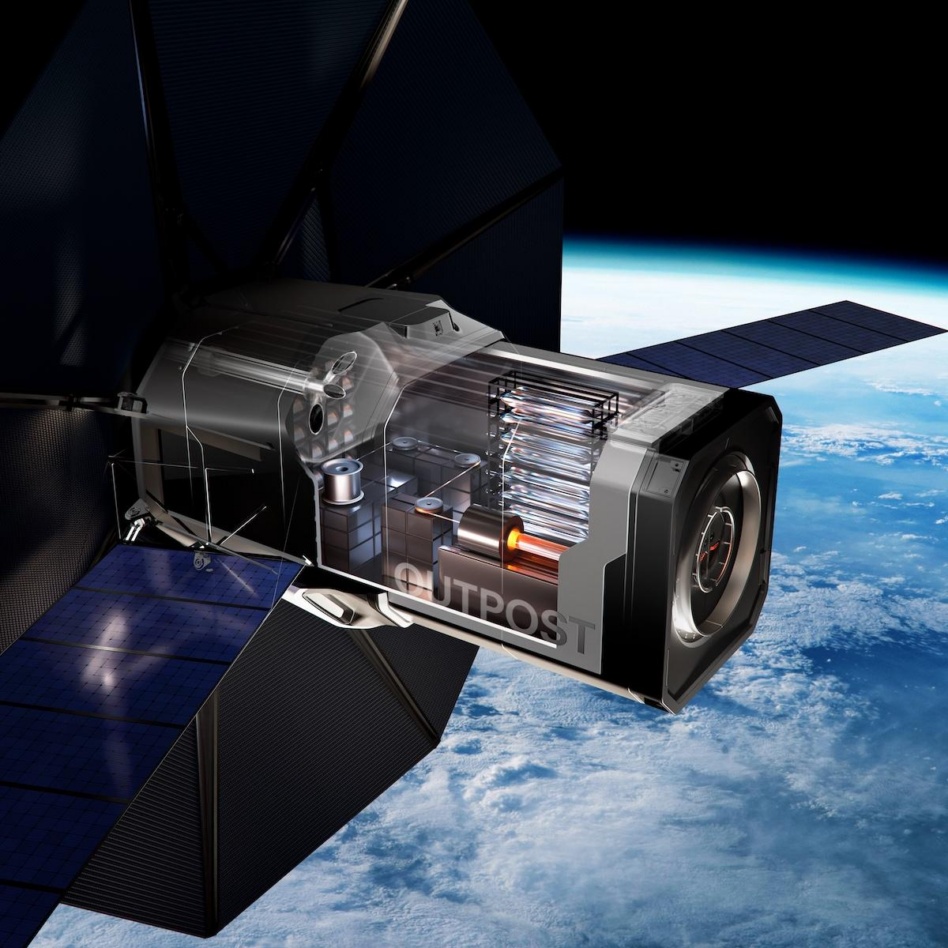
Outpost Technologies Corporation, the reentry startup building shipping-container-sized Earth return vehicles, announced a new program today—called Space Factories—that will offer customers a way to manufacture goods in orbit, without needing to build bespoke hardware of their own.
Each of the Space Factories is a standardized module that will give in-space manufacturers a way to produce products in space, including pharmaceuticals, semiconductors, and advanced crystals, and get them back shortly after production wraps.
“No company should have to become a spacecraft company just to find out whether their product is better when it’s made in space,” Outpost President and cofounder Amir Blachman said in a statement. “We’re designing and building the hard, expensive infrastructure: the vehicle, the power and thermal systems, standardized manufacturing modules, the reentry and recovery; and we operate it as a service.”
First user advantage: Outpost will be the first user of the Space Factory platform. The company plans to use the module to produce StarFiber, its next-gen metal fluoride optical fiber, on a mission NET 2028.
The idea is to take advantage of the microgravity environment on-orbit to produce optical fibers that can “achieve dramatically lower signal loss than the silica fibers that carry today’s data and telecommunications traffic,” according to the announcement.
When making optical fibers on Earth, gravity can introduce defects that lower performance compared to the made-in-space alternative. Outpost’s goal for the demo is to validate Space Factory’s ability to produce StarFibers, opening the door for customers to produce other critical materials—such as pharmaceuticals and semiconductor crystals.
Outpost VP of Commercial Partnerships Ryan Reel told Payload that he expects many of the first customers to be in the pharmaceutical and life sciences industries, as those processes are “much more mature and ready to go into that automation stage and to the free flyer environment.” But in-space production of other materials isn’t too far behind.
Together, Space Factories and CarryAll are attempting to take over some of the production work happening on the ISS, and when it deorbits in the early 2030s, on CLDs—where having an astronaut present makes production harder and more expensive, Reel said.
“A lot of the material manufacturing [in space] requires high energy, and may have off gassing or other properties that limit the ability to actually do the work on the ISS because it may harm the astronauts,” Reel said. “Any type of pilot to scale manufacturing—I don’t see that as occurring in the ISS or these CLDs.”
Long time comin’: For Outpost CEO Jason Dunn, the announcement is the product of over a decade of work. Dunn, who previously founded Made In Space, first produced optical ZBLAN fibers using the company’s hardware on the ISS. The six-year process of getting its hardware back to Earth drove Dunn to found Outpost to provide the market with a reliable Earth return method, and now, he’s turning those lessons learned into a highly scalable manufacturing process.
Space Factories will fly inside Outpost’s shipping-container-sized reentry vehicle, CarryAll, in a separable module that houses customer payloads. Space Factories can manage production, pressurization, and thermal conditions, as well as gather data through production, and they’re being designed to range in scale from about the size of a shoebox to the entire CarryAll vehicle—which will offer 16 m3 of production capacity on the Block 2 variant, and up to 33 m3 on the Block 3 variant, according to Reel.
Fortastra Raises $30M Series A to Fund its Next Security Spacecraft
The US military has weapons in space, and—with the orbital arsenal expanding—security is becoming a top priority.
Exclusive: Xona Ramps Up Production Ahead of Pulsar Launch
With FCC approval in hand and six sats ready for the pad, Xona is turning to its next challenge: building the next 250.
ArbaLabs Launches AI Verification Demo On South Korea’s Nuri Rocket
“In short, tons of companies are looking at the latest and greatest physical AI deployments,” ArbaLabs CEO Ashley Reeves told Payload. “Nobody is really thinking about putting some checks and balances on what these AI models are doing.”

Nebex Partners with Thrusters Unlimited to Unlock $700M for Mexico’s Space Ecosystem
The capital will fund EO, telecoms and other strategic capabilities, according to Nebex.

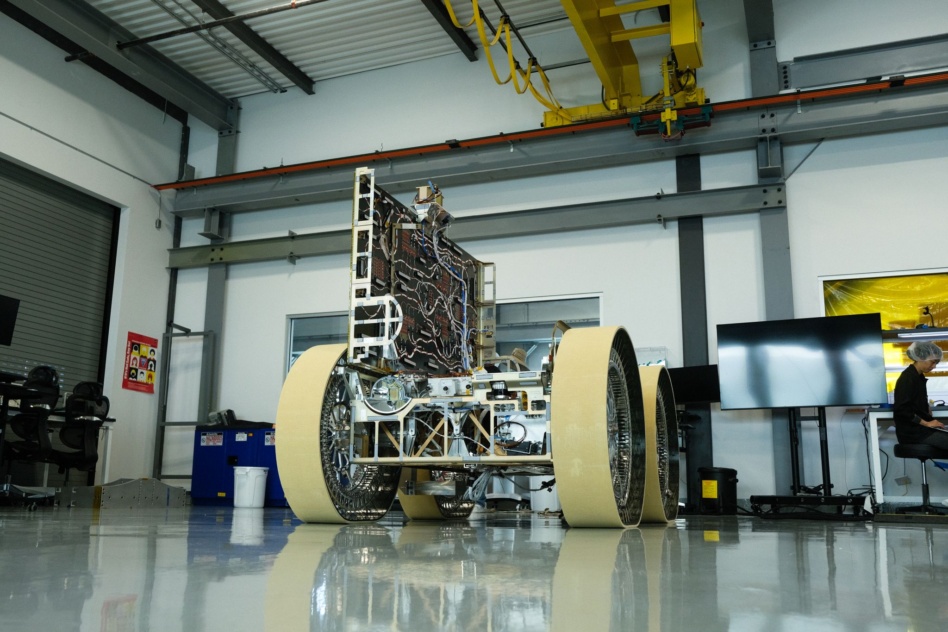
A new partnership between Astrolab and Interstellar Mapping is one giant leap for mapkind.
Interstellar Mapping will support Astrolab’s mission to hunt for water on the lunar surface later this year as part of NASA’s mission to build the Moon Base, the companies exclusively told Payload. It’s Interstellar Mapping’s first time working on a US commercial rover mission.
Hide and seek: Under the partnership, Interstellar Mapping will study what’s lying underneath the lunar surface, specifically looking for “hydrogen-bearing volatiles,” aka the water and ice that will be crucial to the Moon serving as a strategic gas station for missions to Mars and beyond.
Keep reading