



Hubble Network, the Seattle, WA-based startup building a constellation of asset tracking sats using Bluetooth technology, announced a $200M Series C yesterday at a $1.6B valuation.
Smith Point Capital led the round, which included additional participation from Seraphim, Carthona Capital, Earthshot Ventures, RPM Ventures, and Y Combinator. The round follows a $70M Series B in September 2025, and brings Hubble’s total financing to $300M to date.
Constant connection: The new capital will grow Hubble’s constellation in both size and scope. Hubble operates just six satellites in orbit today, but plans to deploy 54 more by the end of 2029.
Each of its next-gen sats—the first two of which are expected to launch next year, according to CEO Alex Haro—will include 10x more Bluetooth-detecting antennas. The upgrade will allow each sat to track the location of 10M+ devices on Earth, enabling the total constellation to one-day support the precise tracking of “hundreds of billions of devices,” Haro told Payload.
With the additional satellites, Hubble Network will move from a revisit rate of twice per day to near-constant connection, allowing consistent, asset tracking on a global scale.
Hubble also announced yesterday that it’s moving out of the closed-beta test of its space-based asset tracking service, and into general availability.
Can you hear me now? The service works by altering the way that Bluetooth devices send their signals, so any Bluetooth device can participate without needing new hardware. A firmware update will enable Bluetooth transmissions to send a small amount of data very far (ie: to satellite), instead of sending a lot of info over a short distance (i.e. the new Taylor Swift songs to your AirPods).
The service allows any Bluetooth-connected device to tap into the satellite network, enabling low-cost asset tracking an order of magnitude cheaper than other cellular-based options. While cellular tracking chips can cost as much as $50 and rely on batteries that can quickly drain, Bluetooth chips can cost less than 50 cents and boast battery lives measured in years.
When paired with Hubble’s network of 100M+ ground-based Bluetooth-detecting gateways, the total system aims to offer customers constant tracking of their assets anywhere in the world—using satellites in remote regions and ground gateways in dense urban hubs. And the more robust next-gen satellites will also support the transmission of more data than mere location, allowing customers to track not just where their assets are, but what condition they’re in.
“Detections like smoke and temperature. For agricultural [use cases] it’s things like CO2, humidity, moisture,” Haro said. “There’s all sorts of really interesting stuff that can happen when not only can you sense where things are, but you can also measure the environments around them.”
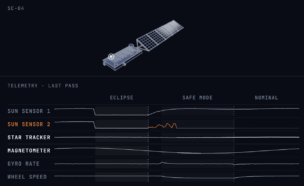
Exclusive: In Orbit Aerospace Pivots From Re-entry Vehicles to Spacecraft Autonomy
In Orbit has won new government contracts for its onboard AI system, which the company says can run a spacecraft’s operations without waiting on ground control.
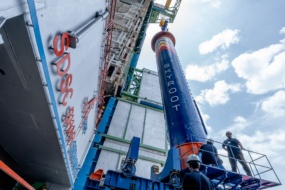
Reflect Orbital Buys Two Skyroot Aerospace Launches
Reflect Orbital announced the purchase of two launches today from Indian launcher Skyroot Aerospace.
Balerion Surpasses $200M Goal for Fund II
Dallas-based Balerion Space Ventures has surpassed its $200M target for its second fund, the firm announced Thursday.

Exclusive: Kapta Space Raises $24M Series A to Build Moving Target Radar Payload
Seattle-based Kapta Space announced a $24M Series A to build next-gen radar payloads designed to track moving targets.

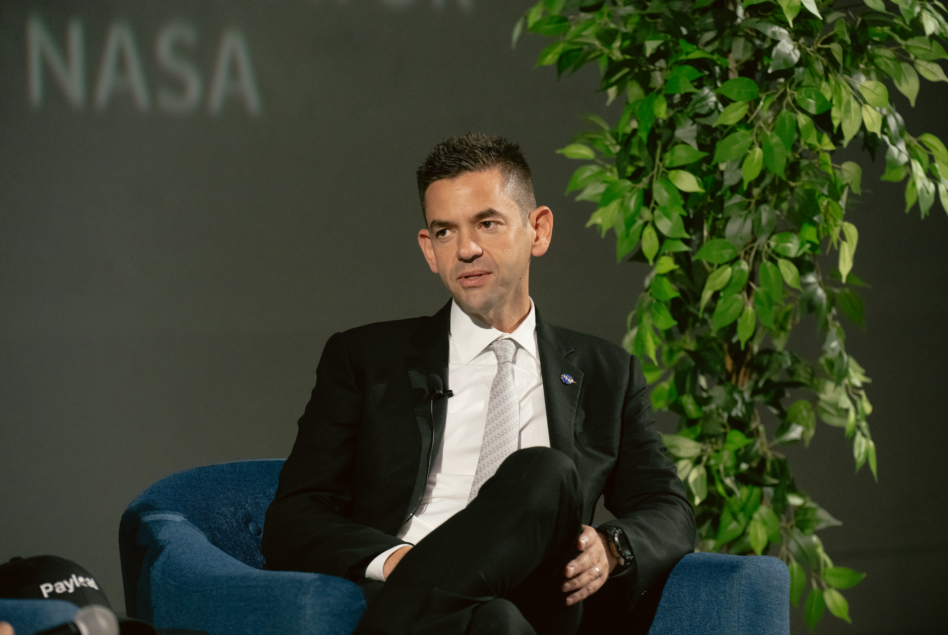
HOUSTON, TX—NASA will give an update early next month on the timing of its upcoming missions to return humans to the Moon, NASA Administrator Jared Isaacman said Wednesday at Payload’s Off World.
“There’s a lot of ingredients—so many ingredients—that need to come together for that landing, and we owe everybody an update,” he said. “There’s going to be an Artemis acceleration update…sometime in early October. Maybe it might even coincide with the [ISS] Crew 13 launch.”
Here are some of our other top takeaways from his remarks:
Keep reading