


Last week, we covered Europe’s newfound efforts to fund greater defensive—and offensive—capabilities in orbit. This week, we’re starting to get a sense of when those capabilities might be ready to fly. Spoiler alert: It’s sooner than you probably think.
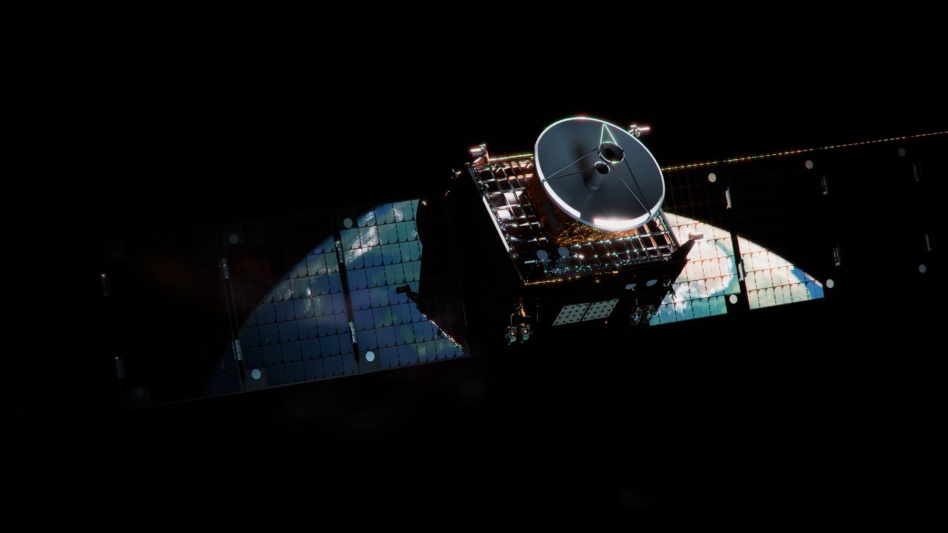
On Wednesday, Swiss propulsion startup PAVE Space announced its plans to launch a demo mission of its IBEX spacecraft—designed as a highly maneuverable platform to host commercial and defense payloads—as early as February 2028.
The mission will pave the way (pun intended) for future missions to conduct on-orbit “reconnaissance, co-orbital denial—acting like a bodyguard—jamming, and capture or neutralization of a hostile spacecraft,” according to the announcement.
Rapid fire: For a company that was founded in 2024, PAVE’s launch timeline is an aggressive signal that Europe is clamoring to field in-space security capabilities—like, yesterday. While the recent example of Russia’s close maneuver against an ICEYE sat operating over Ukraine helps to explain the urgency, the pressure has been building for some time.
“Initially, IBEX was not even a product; it was just an in-orbit demonstration for [our] kick stage,” PAVE Space cofounder and CEO Julie Böhning told Payload. “Once I talked about that within Europe—with the MoDs—they suddenly [said], ‘Wow, this is exactly what we need to protect our assets in space’…So, it’s been a year that we’ve been working on this IBEX product line.”
The top-down directive for action from European primes and MoDs carries the unexpected consequence of bolstering Europe’s startup ecosystem, according to Böhning.
“As a startup, if you want to make something big happen, and if you want to see your ambition come true, you have no other choice than moving fast. I think this is really why the MoDs are more and more turning to younger companies,” Böhning said. “This is really the great synergy I see between MoDs and startups.”
And PAVE has the data to back up its speed.
Böhning told Payload that PAVE took just four months to design, test, and deliver its first hardware intended for space: an onboard computer that launched on SpaceX’s Transporter-18 rideshare in October, flying as a hosted payload on a D-Orbit ION vehicle. This mission—called GRAZE—has already completed 21 test campaigns, including tests of a three-part avionics redundancy architecture, and navigational capabilities.
The GOAT: PAVE’s next mission will attempt to validate the full IBEX spacecraft for the first time. PAVE has already booked the flight on an undisclosed US launcher, and is signing the customer that will fly onboard that mission—an unrevealed defense prime.
- IBEX has a total payload capacity of 300 kg.
- It boasts a delta-V of 780 m/s when carrying 100 kg of payload.
- The spacecraft’s reaction-control system runs on a storable propellant, giving it the ability to loiter in orbit for years then maneuver quickly.
While the spacecraft is just a platform, it’s intended to form a basis for defense operators to conduct a wide range of on-orbit defense missions—from remote recon to up-close capture, depending on the payload.
PAVE ultimately intends to join up IBEX with the company’s LYOBA heavy kick-stage to offer customers the ability to go from LEO to GEO in under 24 hours. PAVE plans to launch a follow-on commercial mission of IBEX in late 2028, and expects to launch LYOBA for the first time on a mission in 2029.
Long-term planning: While the near-term missions aim to position PAVE as a “white-label, neutral, dual use” operator, according to Böhning, its ambitions lie far beyond Earth orbit. Böhning explained that the company’s long-term focus is to build highly maneuverable capabilities that can help allied nations move their assets anywhere between the Earth and the Moon.
“Space will also be a way to redefine—completely—the power of different countries,” Böhning said. “This comes, of course, with a lot of defense for our assets today—telecommunication, navigation, or Earth observation—but for tomorrow: it’s who owns the resources…the more industrial [space] becomes, the more you need to defend it.”
Neighborhood watch: PAVE isn’t the only startup building protection capabilities.
- Recently, both Astroscale UK and OSMOS X received funding to develop and study in-space defense capabilities, respectively.
- UK startup Shield Space put together a coalition to pitch the UK government on a commercially-led, space-based carrier strike platform. The company also plans to launch its own RPO demo in late 2027.
- Lodestar Space—with offices in the US and UK—has had a demo payload flying on a Momentus Vigoride sat since March, and plans to launch another to GEO in 2027, according to cofounder and CTO Thomas Santini. Lodestar plans to “field full bodyguard capability for defence customers from 2028 onwards,” Santini said.

Exclusive: Orbital Taps Orca Aerospace for Onboard Autonomy Software
Satellite autonomy startup Orca Aerospace announced a deal worth up to $20M with LA-based Orbital to put its software on Orbital’s planned data-center fleet.

Redwire Wins $20M DARPA Contract for Second VLEO Demo
A group of otters is called a bevy, and DARPA just ordered another round.

Orbital Matter, EnduroSat Announce an In-Space Manufacturing Mission in 2028
Orbital Matter announced it would partner with EnduroSat for mission in 2028 to deploy a 5 kW solar array with its 3D printing capabilities.

Starfish Loses Contact with Otter, Cutting SSPICY Short
Starfish’s Otter spacecraft has joined the graveyard it was sent to inspect.

MERRITT ISLAND, FL—CesiumAstro plans to build and deploy a new constellation—called Synchronicity—consisting of 737 satellites. The company made a downpayment on it Thursday, closing a $730M financing round.
Janus Henderson led the equity round, which included additional participation from Insight Partners, Sands Capital, Sumitomo Corporation of Americas, Woven Capital, Incharge Capital, Magnetar, AV, and NewSpace Capital.
The round included a $100M debt facility provided by the Export-Import Bank of the United States and JPMorgan in addition to $630M in equity financing.
Keep reading