


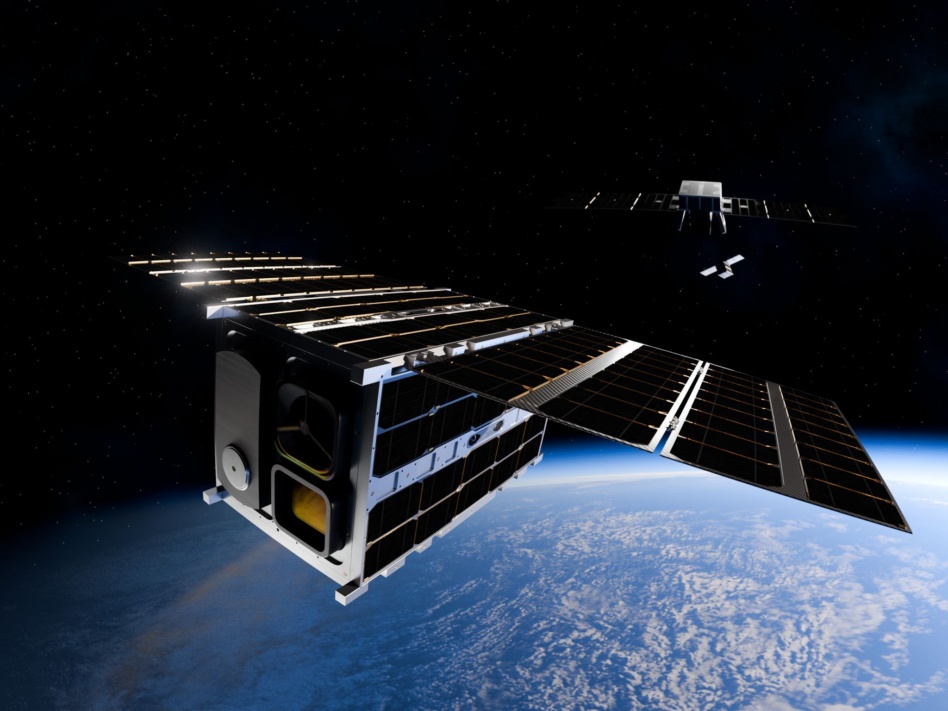
Space is a warfighting domain—one in which private companies are increasingly finding themselves at the center of international conflicts. But while some companies have been drafted into the fray, others are eager to join the fight.
Shield Space, the UK-based orbital security startup developing autonomous guidance systems and space-control capabilities, launched a new coalition today in an attempt to give UK and NATO forces a commercially led defense force in orbit.
The UK Space Superiority Coalition brings together space companies across the UK—including AstroAnalytica, Goonhilly, Magdrive, Mutable Tactics, Optera, Third Planet Orbital, and others—in an effort to build a space-based carrier strike force to give western militaries more options to respond to threats on orbit.
Nuts and bolts: The timing of the announcement—in the same month as a Russian satellite got up-close-and-personal with an ICEYE sat operating over Ukraine—couldn’t be better. Shield Space cofounder and CTO Dan Molland told Payload that the situation highlighted just how few options western militaries have to combat threats on orbit.
“The reason we created this coalition is so we can deliver a space-based carrier strike, which is all about deploying entire swarms of interceptors, so you can actually create a deterrent,” Molland said. “Ultimately, the biggest thing you can tell from Russia’s activity is that they’re just obviously not deterred.”
The goal of the coalition is to create an interoperable system so that future threats on orbit can be responded to in-kind, and the coalition named six priorities of its proposed strike force, including:
- Autonomy, guidance, and RPO;
- Propulsion and spacecraft platforms;
- SDA capabilities;
- Battle management, command, and control;
- In-orbit servicing and sustainment operations;
- And … “effectors.”
While space-defense companies have been cagey with Payload in the past on the specifics of the “effectors” they’re building, Shield Space was open about how it must include as many options as possible—though the coalition will initially target non-kinetic capabilities.
“The way that we think about it in the military is more spectrum from reversible, degradable, deniable effects all the way through to ASATs, DA-ASATs, and then nuclear effects on the right,” CEO Graeme Ritchie told Payload. “We’re trying to design some of those effectors…in a sustainable way…but the key to that is also communicating to the adversary that they exist—demonstrating to the adversary, and communicating our red line.”
Put me in, coach: The coalition’s first proposed mission is dubbed Project SPEAR: a commercially led demo to integrate members’ technologies into one system that can sense and respond to threats on-orbit, and create a deterrence against future aggression.
Project SPEAR has yet to be greenlit by the UK government, but the coalition built the mission to satisfy the country’s goal of meeting the “Control of Space” requirement set out in the UK’s 2026 space strategy.
“We’re pulling this coalition together [to show] what a mission could look like in terms of how we could demonstrate a sandbox of protect and defend operations,” Ritchie said. “[We’re] trying to show the government: you’ve got the ecosystem, you’ve got all the capabilities, you’ve got all the people. This is how you can do it.”

OSMOS X Tapped to Lead EDF-backed Tactical Capture Consortium
The Europeans are gearing up for a fight in orbit.

Exclusive: DoD Taps Orbital Operations for Cryogenic Spacecraft Demo
The Long Beach, CA, startup has won up to $35M from the DoD under a prototype Other Transaction Agreement to fly a full-scale, in-orbit demo of Astraeus—its cryogenic-maneuvering vehicle.

European MNOs Join Forces to Explore Joint MSS Spectrum Bid
Deutsche Telekom, Telefónica, Orange, and Vodafone plan to establish ground network infrastructure across Europe, and partner with an as-yet undetermined satellite operator for the D2D connection.

Exclusive: EraDrive Lands $13M DoD Award For Autonomy Module
EraDrive won a $13M DoD award, under which the Space Force will buy an undisclosed number of the company’s Era-Node vision-based autonomy modules.


NASA and the Department of Agriculture signed an agreement on Saturday to cooperate on EO and geospatial analytics to improve the data available to American farmers.
The MoU is the second this month signed by the space agency to boost collaboration among government agencies.
She thinks my tractor’s spacey: NASA Administrator Jared Isaacman and Secretary of Agriculture Brooke Rollins signed the MoU at the University of Alabama in Tuscaloosa—the latest stop on NASA’s Inspiration Tour.
Keep reading