


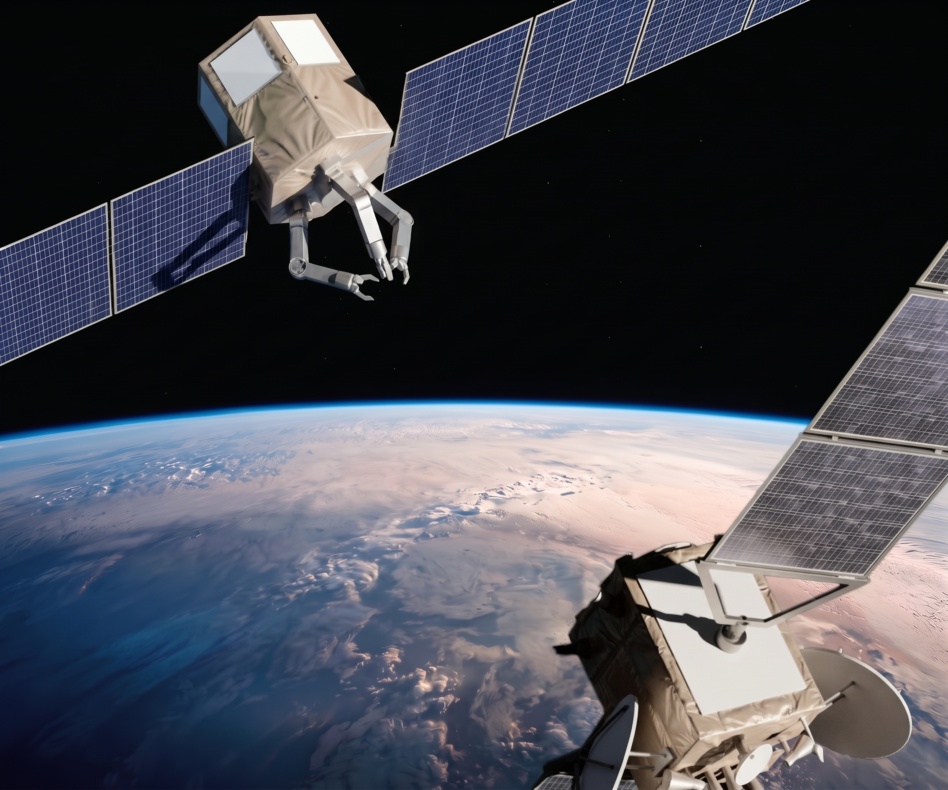
The Europeans are gearing up for a fight in orbit.
This week, the European Defence Fund tapped French OTV startup OSMOS X to lead a coalition studying how countries can respond to threats in orbit. The 30-month study is backed by ~€4.5M ($5M).
The coalition brings together seven organizations across Europe, including France’s ArcSpace and CNRS; Germany’s KINETIK Space; Poznań University of Technology in Poland; and Politecnico di Milano in Italy.
Now, more than ever: The coalition won’t initially send anything to space—a preliminary design review is set to be its final deliverable. But the capabilities it’s studying are in high demand. Last week, European defense ministries watched as a Russian satellite got within 50 m of an ICEYE sat gathering intel over Ukraine.
While it’s not clear what the Russians were doing so close to ICEYE’s satellite, the situation highlighted just how unequipped the Europeans are to respond to similar threats in orbit.
“The defense fund is exactly aligned with a purpose to prove to the world that the European Union is capable—they have the capacity to do something: to observe, to listen to, and to act,” OSMOS X CEO Arnaud Masson told Payload.
The goal is to create a spacecraft that is capable of approaching, capturing, and even manipulating adversarial spacecraft with in-space welding, to deal with the immediate threat without causing debris.
Masson explained the coalition is targeting the ability to attach things like jammers or propulsion systems to non-cooperative spacecraft, breaking adversaries’ ability to spy on allied satellites, or forcing them into non-threatening orbits.
Arms race: While OSMOS X has yet to fly in space, the company expects to fly its first demonstration mission before the end of next year, where it will validate its high-power propulsion system that’s targeting 12,000 mps of total delta-V.
The propulsion system will form the backbone of the proposed defense spacecraft, and OSMOS X officials hope that once that the study is complete, nations across the continent will start ordering in bulk.
However, the coalition isn’t targeting a highly proliferated defense force. On the contrary, OSMOS X believes that it can achieve complete coverage of GEO with just four satellites.
“The scenario that we are targeting today: two vehicles per year, two-year lifetimes. [This] means four vehicles always in space, [and] with this number of vehicles, we can go to any position [in GEO] in less than two days,” Masson said.

Exclusive: DoD Taps Orbital Operations for Cryogenic Spacecraft Demo
The Long Beach, CA, startup has won up to $35M from the DoD under a prototype Other Transaction Agreement to fly a full-scale, in-orbit demo of Astraeus—its cryogenic-maneuvering vehicle.

European MNOs Join Forces to Explore Joint MSS Spectrum Bid
Deutsche Telekom, Telefónica, Orange, and Vodafone plan to establish ground network infrastructure across Europe, and partner with an as-yet undetermined satellite operator for the D2D connection.
Exclusive: EraDrive Lands $13M DoD Award For Autonomy Module
EraDrive won a $13M DoD award, under which the Space Force will buy an undisclosed number of the company’s Era-Node vision-based autonomy modules.

Seraphim Space Investment Trust Doubled its Value in 2026
Seraphim’s major holdings—ICEYE, ALL.SPACE, D-Orbit, HawkEye 360, and Xona Space Systems, which together represent more than 75% of the firm’s portfolio—all had a great year, and that success has trickled upwards.
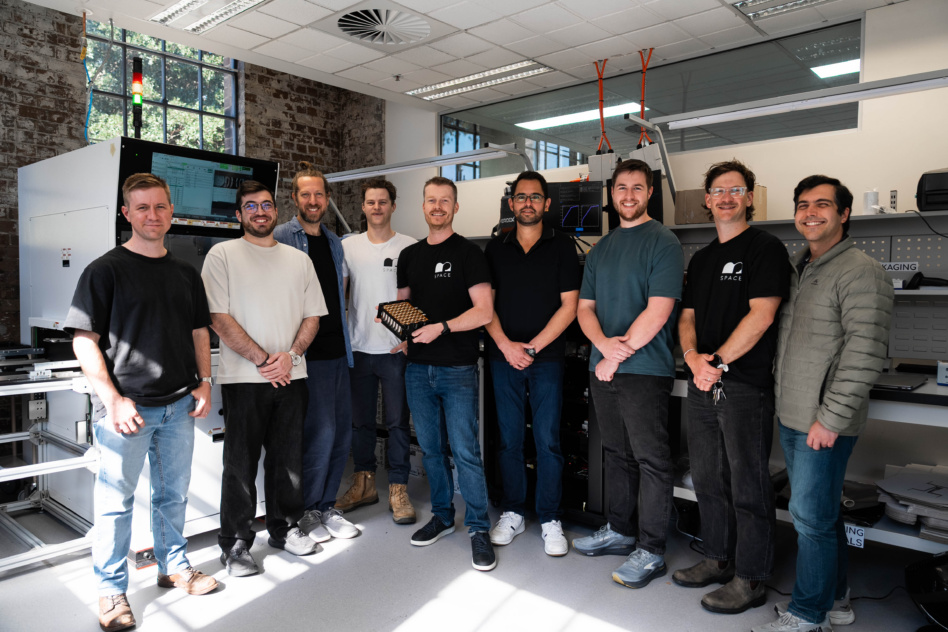
Australian startup MP Space raised an AUD $23M ($16.1M) seed round to expand its satellite battery manufacturing capacity, and begin building other pieces of satellite power systems, the company announced on Monday.
Blackbird VC led the round, which included additional participation from Seraphim Space, Systemiq Capital, Speedinvest, and MFV Partners.
Meet MP: MP Space was cofounded in 2024 by two ex-Tesla engineers—CEO Jay Manley and CCO Sam Paterson—with the aim of manufacturing low-cost, high-performing power systems for space applications. Manley explained that the company is trying to provide a new option to satellite operators who currently only have two choices: buying batteries and power systems from an expensive, slow-moving supply chain, or building them in-house.
Keep reading