



A group of otters is called a bevy, and DARPA just ordered another round.
Redwire ($RDW) announced yesterday that it landed a $20M DARPA contract as part of the agency’s Otter program, which funds air-breathing electric propulsion (ABEP) tech with the long-term goal of building a new DoD capability for sats to fly between 90 km and 250 km in altitude.
DARPA’s focus on low-altitude spaceflight comes at a time when tensions on-orbit are reaching new heights. As militaries around the world invest heavily in increasing their ability to maneuver in space, the DoD is focused on undercutting the competition.
Flying in VLEO brings added complexity, including increased atmospheric drag, which can spell the early end to low-flying missions. With ABEP tech powering these low-flying sats, however, DARPA and Redwire hope to open a new trajectory for spaceflight—one that benefits exponentially from the increased proximity to the ground.
“These innovations are building a new class of maneuverable, energy-efficient spacecraft capable of supporting persistent operations in critical orbital regimes, ultimately equipping national security space missions with distinctive operational advantages—from rapid orbital agility to enhanced tactical responsiveness,” Spence Wise, Redwire’s SVP of missions and platforms, told Payload in a statement.
Lowering the bar: The contract follows a $44M Phase 2 award Redwire won in November 2025, also under the Otter program. The new $20M will fund a precursor mission on a scaled-down version of Redwire’s SabreSat spacecraft, before DARPA rolls out the full demo.
The subscale mission—targeting a launch in late 2027—will fly for less than a day in VLEO to test the ABEP system on-orbit for the first time. DARPA has not released a date for the full-scale mission.
“This flight test allows us to gather data that cannot be fully recreated on the ground, learn faster, and reduce risk for the full Otter mission,” Wise said. “Redwire is not simply building one spacecraft. We are creating the platforms, models, and digital infrastructure needed to make VLEO operational at scale.”
High expectations: DARPA isn’t the only backer of Redwire’s VLEO tech. The company is a prime contractor for ESA’s Skimsat mission, which aims to bring VLEO capabilities to the continent, and is targeting a first flight NET 2027.
The cross-Atlantic efforts are being developed in parallel, but not every subsystem is transferrable, given the regulatory environment.
“We’re creating efficiencies across the two programs where permitted, subject to applicable laws governing cross-border collaboration and export-control requirements,” Wise said. “One area where we see opportunity is in applying our enterprise digital engineering tools across both efforts, within those boundaries.”

Tumbleweed Raises €6.9M to Build its Own Reentry Vehicle
Vienna-based startup Tumbleweed is attempting to build an anti-gravity machine.
Exclusive: Stellar Alpina Unveils Monarch Orbiter and Morpho Lunar Lander
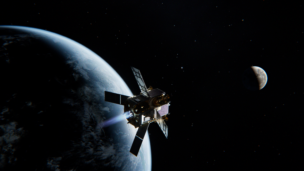
The Swiss startup is unveiling two new vehicles: a high-performance orbiter, Monarch, and a lunar lander, Morpho.

Europe Begins Funding Offensive In-Space Capabilities
If the best defense is a good offense, then announcements in the European space sector this week are signaling that the region is preparing to move the ball upfield.
Shield Space Launches UK Space Superiority Coalition
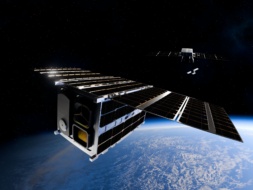
The UK Space Superiority Coalition brings together space companies across the UK in an effort to build a space-based carrier strike force.
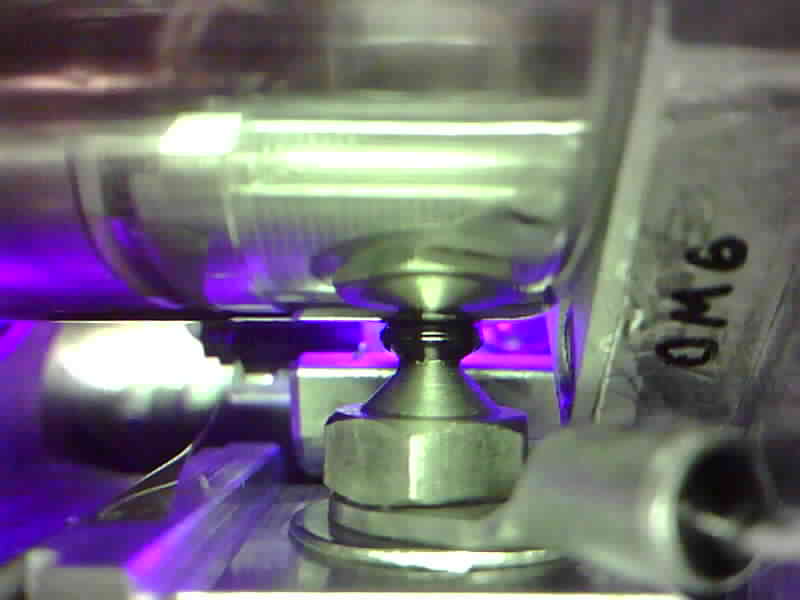
Following off the success of its latest demo, in-space manufacturing startup Orbital Matter announced today that it would partner with EnduroSat for another mission in 2028, this time to deploy a 5 kW solar array with the help of Orbital Matter’s 3D printing capabilities.
The demo aims to validate a new method to create large structures in orbit. Instead of folding bulky solar arrays into tight configurations to fit into launch vehicles, the companies plan to 3D print support structures in space to facilitate large solar-array deployments.
“Basically, [folding] means that you need to design and develop all the space systems—all the spacecraft—mostly for the launch, and not for operations in orbit,” CEO Jakub Stojek told Payload.
Keep reading