


Space markets surged this year, fueled by robust VC investments in private markets and back-in-vogue space SPACs in the public markets. The good year for space investments is part of a broader bull market, where the prospects of a soft landing have sent speculative stocks soaring.
Global Venture Capital Funding

Of the 15 largest space startup funding deals this year, five came from US startups, five were raised by Chinese companies, four were from European firms, and one was from an Australian business.
China: China’s funding has focused on launch and LEO satcom startups as it furiously builds out the infrastructure of its commercial space program.
Shanghai Spacecom Satellite Technology raised $943M for Thousand Sails, its Starlink-esque ~12,000 sat megaconstellation in LEO. The group launched three batches of 18 satellites this year.
Europe: MinoSpace, D-Orbit, and The Exploration Company secured the largest European raises of the year. The Exploration Company’s $160M funding is particularly noteworthy as it’s Europe’s most significant commercial effort to develop a crewed space capsule.
US Venture Capital Funding

Space deals: US space funding was spread among various sectors in 2024. Micro geo-satellite manufacturer Astranis raised $200M; rocket startup Firefly nabbed $175M; orbital transfer vehicle maker Impulse raised $150M; and in-space manufacturer Varda secured $90M.
Outside the big names, the deal volumes were high—a healthy sign for the industry, although several companies likely had to raise at down rounds.
Spaceflight funding: The first large rocket funding round didn’t happen until Firefly’s November raise, underscoring the overall slow year for the sector. While 2023 saw Axiom, Firefly, Voyager, Sierra, and Stoke receiving big raises, 2024 saw more rocket startups announcing they were ‘exploring their options’ than closing rounds.
- Astra was taken private, wiping out nearly all its equity
- ABL Space pivoted to missile defense after a pad fire destroyed its latest rocket
- Relativity is reportedly struggling with liquidity and has been unable to find additional investment.
All three rocket startups were once valued at over $1B.
Sentiment: Investor enthusiasm for funding in space businesses has been high this year. However, some investors say that despite the heavy interest, finding a good business to invest in has been a struggle. Investors have sharpened their pencils, having a higher conviction of where opportunity lies…and where it doesn’t.
Public Markets
Here we go again. Space SPACs are raging again, with valuations surging by triple digits—and, in several cases, eliminating steep declines from the past few years.
Easing inflation, lower interest rates, and the prospects of deregulation and a refocus on space during the Trump administration have contributed to the surge. And while we’re here, a little sprinkling of market euphoria, short squeezes, and determined retail investors helped as well.
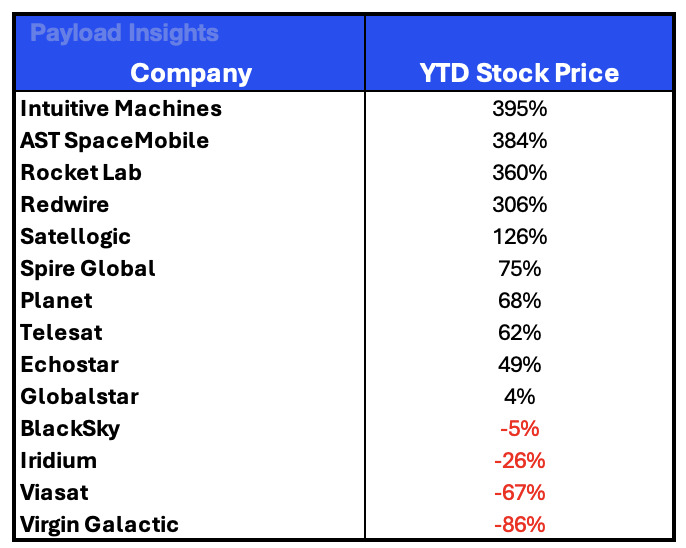
Intuitive Machines, AST SpaceMobile, Rocket Lab, and Redwire have led the way this year, with investors applauding development progress, large contracts, and rosier sub-sector outlooks. The four highest-performing companies saw their market caps balloon this year to:
- Rocket Lab: $12.2B
- AST SpaceMobile: $6.8B
- Intuitive Machines: $1.8B
- Redwire: $800M
The article was updated to include Apex’s $95M raise
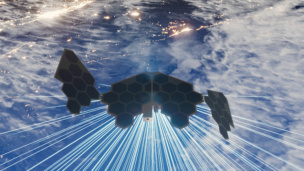
Exclusive: Meridian Space Spins Out from SpinLaunch
“Meridian will carry forward the satcom infrastructure business… SpinLaunch will continue to build on its vision for a lower-cost approach to launch, with further applications in hypersonics to support the Golden Dome program and in the lunar economy,” Meridian Space CEO Massimiliano Ladovaz told Payload.
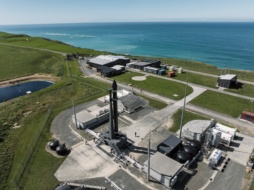
Rocket Lab CFO Adam Spice Predicts More M&A Deals on the Horizon
Iridium shareholders voted overwhelmingly to approve the company’s acquisition by Rocket Lab. According to Rocket Lab CFO Adam Spice, there’s more M&A on the horizon.
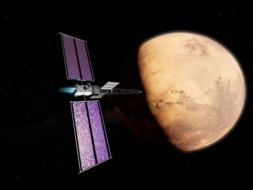
TRL11 Will Build Imaging Tech for SR-1 Freedom
TRL11 has received a NASA contract to provide imaging systems for the Space Reactor-1 (SR-1) Freedom mission to Mars.
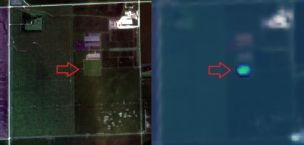
InnerPlant’s Glowing Soy Demos Hyperspectral Use Case
InnerPlant, which was founded in 2018, has enabled plants to let humans know when they’re under stress.

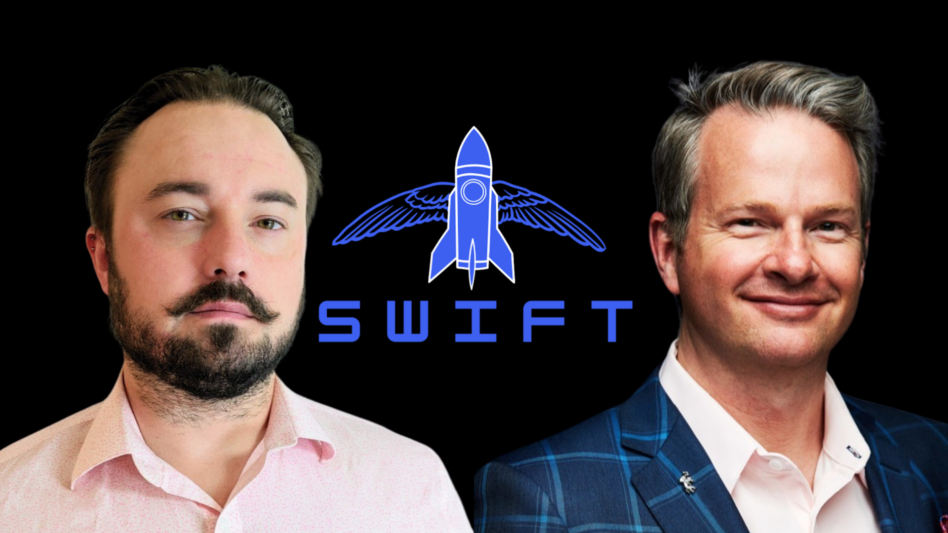
A nonprofit working to develop the space workforce pipeline in Texas has awarded its first two grants to rocket teams at Rice University and Texas A&M, the cofounders of the group told Payload.
SWIFTies: The Space Workforce Incubator for Texas, or SWIFT, which launched in September, is intended to connect technical schools, four-year universities, and space professionals for mentorship to ensure students graduate with real-world experience in the space sector that allows them to hit the ground running in the industry.
Why launch? The grant awards are part of SWIFT’s Rocket Program. One reason to focus on launch is having hands-on practice with the technical skills of welding a rocket boosts hirability, according to Leon Vanstone, cofounder of SWIFT and former founder of the Texas Rocket Engineering Lab at UT Austin.
Keep reading