


NASA is preparing to launch a dual satellite heliophysics mission designed to better understand space weather—and its growing threat to commercial infrastructure.
The Tandem Reconnection and Cusp Electrodynamics Reconnaissance Satellites, or TRACERS, will investigate magnetic reconnection—one of the driving forces behind geomagnetic storms that can disturb Earth’s upper atmosphere, and pose hazards to satellites.
“TRACERS is going to help us build better models of the upper atmosphere so that we can more accurately predict the impact of geomagnetic storms on satellite drag,” John Dorelli, a research space scientist in NASA’s heliophysics science division, told Payload.
The $115M mission will ride to orbit aboard a SpaceX rocket under the agency’s Venture-Class Acquisition of Dedicated and Rideshare (VADR) program. It’s expected to launch this month from Vandenberg Space Force Base.
What a drag: Geomagnetic storms increase atmospheric drag on satellites in LEO, complicating reentry predictions and elevating collision risks, Dorelli said. While the exact economic costs of space-weather-related disruptions can be tough to pin down, “there is a very real economic impact,” especially if satellite missions end prematurely due to decay, he said.
“Better understanding of the details of magnetic reconnection, and its impact on the upper atmosphere, is going to feed directly into better orbital drag predictions—and there’s clearly a need for these from the commercial LEO satellite operators’ perspective,” he said.
Big picture: From satellite ops and aviation to telecom and precision agriculture, space weather events pose significant business risks.
“The May 2024 G5 storm alone racked up an estimated $500M in economic losses, largely from precision GPS outages in farming,” Joe Westlake, director of heliophysics at NASA, said during a media briefing. Westlake added that Earth-based sectors are increasingly reliant on space infrastructure.
Open door: In keeping with NASA’s open data policy, TRACERS data will be publicly available in near real-time.
Exclusive: Space Cargo Unlimited Booked a Third of its Starfall Capacity
Demand appears to be skyrocketing, thanks to a new wave of pharmaceutical companies and researchers realizing that microgravity can provide benefits in drug discovery and research.

Isaacman: Commercial Won’t Solve Every NASA Problem
“If the objective is to force an economy out of every NASA endeavor, then NASA should probably sit inside the Department of Commerce,” Isaacman wrote in a lengthy post on X late Wednesday night. “But NASA is an independent agency with a broader mission.”
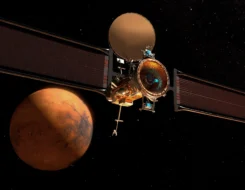
NASA Taps Blue Origin for Mars Communications Network
NASA selected Blue Origin to develop NASA’s Mars Telecommunications Network, a next-gen comms system for the Red Planet.
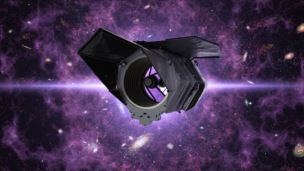
Roman Space Telescope Begins Its Journey to L2
The Nancy Grace Roman Space Telescope launched at 7:26 am ET on Sunday from KSC aboard a SpaceX Falcon Heavy rocket, starting its journey to Lagrange Point 2 and beginning a lengthy commissioning period.


After the FCC delivered the final seal of approval last week, European satellite pioneer SES completed its acquisition of US competitor Intelsat, creating a geostationary giant that looks to thrive in a new era of satcom consolidation.
Though the merger puts SES on firmer financial ground, it doesn’t solve the problem of how to compete with SpaceX’s Starlink and other LEO networks.
SpaceX’s growing power is proven by how easily the SES-Intelsat merger won regulatory approval, compared to the heavily scrutinized major satcom consolidation between Inmarsat and Viasat in 2023.
Keep reading