


It’s the biggest question left to answer in planetary science: Is there life elsewhere in the universe? And if so, where?
One of NASA’s highest-priority projects for the decade we’re in—as suggested by the National Academies’ Astro2020 decadal survey—is to build a massive space-based observatory to give scientists their first direct look at nearby potentially habitable planets. The Habitable Worlds Observatory (HWO) is the answer to this goal, and NASA just made a handful of awards to push technology closer.
“‘Are we alone in the universe?’ is an audacious question to answer, but one that our nation is poised to pursue, leveraging the groundwork we’ve laid from previous NASA flagship missions,” NASA Acting Astrophysics Director Shawn Domagal-Goldman said in a release. “With the Habitable Worlds Observatory, NASA will chart new frontiers for humanity’s exploration of the cosmos.”
Drumroll, please…the awardees are:
- Astroscale US
- BAE Systems
- Busek
- L3Harris Technologies
- Lockheed Martin
- Northrop Grumman
- Zecoat
Each of these companies was awarded a three-year fixed-price contract to advance technologies that are necessary for the future observatory. These technologies include things like a stable optical system with incredibly high resolution, and a powerful coronagraph.
Three of these companies—BAE Systems, Lockheed Martin, and Northrop Grumman—won two-year, fixed-price contracts last year worth a combined $17.5M to begin working on technology for this telescope.
NASA didn’t reveal a total value, or any individual contract value, for this round of HWO awards.
Side quest: Though the primary goal of HWO is right there in the name, NASA couldn’t let this round of contracts go out without a mention of Mars. The HWO is billed as supportive technology for understanding the Martian environment ahead of crewed missions there. That’s one way to win congressional and administrative support for a big, expensive science mission these days.
Still, HWO is a ways away from becoming a reality. These are exploratory R&D contracts. The agency doesn’t yet have a target date for deploying the telescope, but it notes on the project site that HWO will be the next flagship priority after the Nancy Grace Roman Space Telescope launches as soon as 2027. (Roman’s status is in flux during the FY2026 budget discussions, however.)
Isaacman: Commercial Won’t Solve Every NASA Problem
“If the objective is to force an economy out of every NASA endeavor, then NASA should probably sit inside the Department of Commerce,” Isaacman wrote in a lengthy post on X late Wednesday night. “But NASA is an independent agency with a broader mission.”
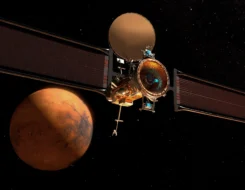
NASA Taps Blue Origin for Mars Communications Network
NASA selected Blue Origin to develop NASA’s Mars Telecommunications Network, a next-gen comms system for the Red Planet.
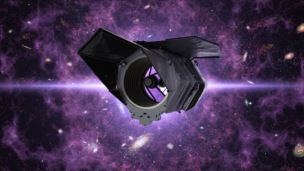
Roman Space Telescope Begins Its Journey to L2
The Nancy Grace Roman Space Telescope launched at 7:26 am ET on Sunday from KSC aboard a SpaceX Falcon Heavy rocket, starting its journey to Lagrange Point 2 and beginning a lengthy commissioning period.

Space Weather Losses to Double by 2035, Report Finds
A new report from Mission Space estimates that solar storms will cost $20.65B in 2026, rocketing to $44.27B by 2035.

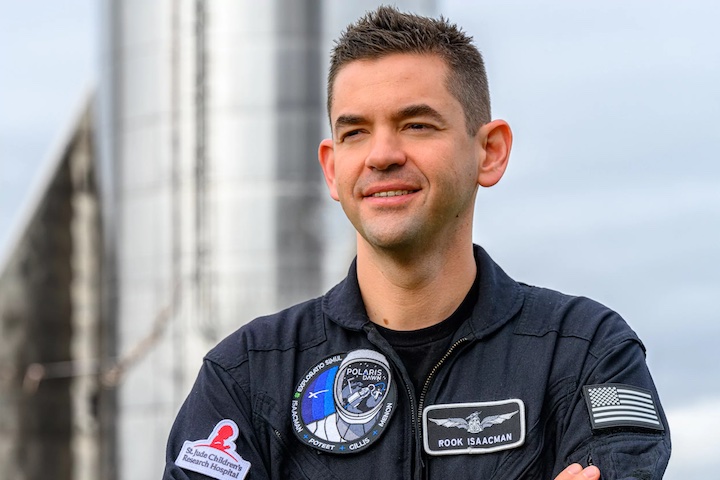
NASA is starting off the year hot, with a positive budget proposal—as well as a permanent administrator at the helm, after nearly a year of interim leadership.
Budget bonanza: On Monday, the House Appropriations Committee released a “minibus” bill that includes $24.4B for the space agency in fiscal 2026. While it’s a slight decrease from the $24.9B NASA got the two prior fiscal years, the bill contains a substantial increase over the $18.8B proposed by the Trump administration.
Within the allocation, the bill would appropriate $7.3B to NASA’s science missions—a clear rebuke of the White House’s proposal to gut the space agency’s science portfolio. That’s nearly double the $3.9B request from the Trump administration, and nearly flat with the fiscal 2025 enacted budget.
Keep reading