


It’s rare for space operators to cross their fingers, hoping a sat will get hit with a piece of space debris. But that’s exactly what Atomic-6 CEO Trevor Smith is doing.
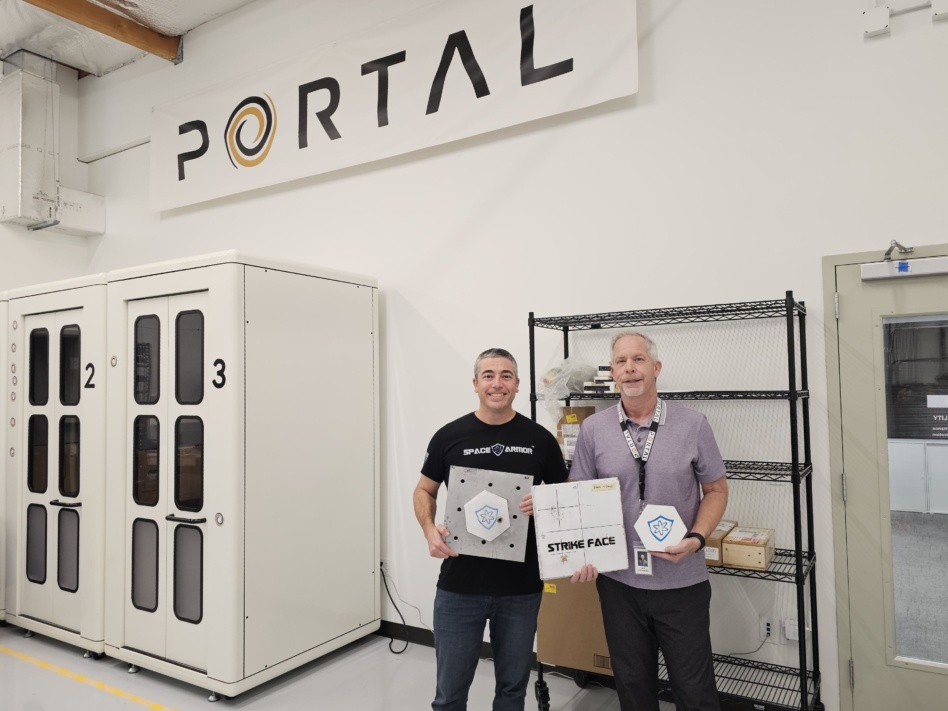
Atomic-6’s Space Armor tile system will fly to space for the first time in October on SpaceX’s Transporter-18 rideshare mission, with the goal of protecting its first paying customer: Portal Space Systems’ Starburst-1 satellite.
Smith told Payload that he hopes the tile’s first test in space will show companies that they have options for additional protection in orbit—especially as specks in space take out high-profile missions from China’s Shenzhou-20 crew capsule, to a $400M Spanish sat. But the technology can only be proven if Starburst takes a hit.
“I hope [Portal Space CEO Jeff Thornburg] gets hit in just the right spot,” Smith said. “We won’t see the impact because it’s so fast, but we will see a hole in it afterwards…Between the camera and the telemetry, we should be able to confirm it gets hit and nothing bad has happened.”
Space Armor 101: The GA-based startup’s hexagon-shaped tiles designed to protect space assets come in two levels:
- Light, designed to protect from micrometeoroids and debris 3mm or smaller. (This is what will fly on the mission with Portal.)
- Max, which is expected to protect space assets from particles up to 12.5mm, and which is designed for human-rated systems.
Smith isn’t urging companies to cover their entire spacecraft with the tiles. Instead, he said operators should think about protecting the systems that are critical to keeping the sat running, such as avionics and the fuel tank.
Risk calculus: “I presented this to 19 underwriters for Lloyd’s of London,” Smith said. “Once this is flight-qualified, they’re interested in offering a discount on the premium [if a spacecraft is protected by Space Armor] because it cuts the risk.”
The tile may also cut risk for sats in the neighborhood. If a piece of debris hits aluminum, it creates secondary debris, making popular orbits more dangerous. However, Space Armor is designed to create no secondary debris when it’s hit, Smith said.
What’s next: Smith is looking to protect more than just satellites. “We would love to implement this into astronaut suits,” he said. “It’s not huge revenue, but it is a really big thing we think we can help with—making them more lightweight, and more robust, to types of impacts you can’t track today.”
Exclusive: Loft Orbital Scales Offering with Apex Bus Purchase
Loft Orbital announced the purchase of new satellite bus inventory today designed to fly larger, more power hungry customer payloads.
Exclusive: Satellogic Expands AI Apps with SpaceKnow Partnership
Satellogic partnered with SpaceKnow, the AI-powered geospatial intelligence analysis company, to build AI applications on top of Satellogic’s growing stock of satellite imagery.
Rocket Lab Enters the Satcom Market With $8B Iridium Deal
Rocket Lab ($RKLB) has been teasing its entrance into the “space applications” market for years. Yesterday, it pulled the trigger.
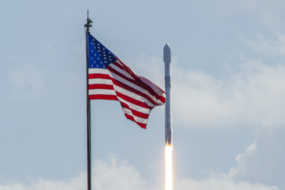
SpaceX Alum Have Raised $9.2B, New Data Shows
As an organization that’s employed thousands of engineers in its 24-year history, SpaceX has acted as both a breeding ground for high-level engineering talent, and as a launch pad for new ideas.


Hydrosat…so hot right now.
The thermal imaging company with offices in the US and Europe announced a $60M Series B today to keep up with growing demand for its EO data.
Fireworks: The company plans to use the new funds to grow its footprint beyond its two sats in orbit. The company is constructing its next block of satellites, expected to be operational next year, which aim to capture higher resolution imagery and help customers spot smaller changes in temperatures on the ground.
Keep reading