


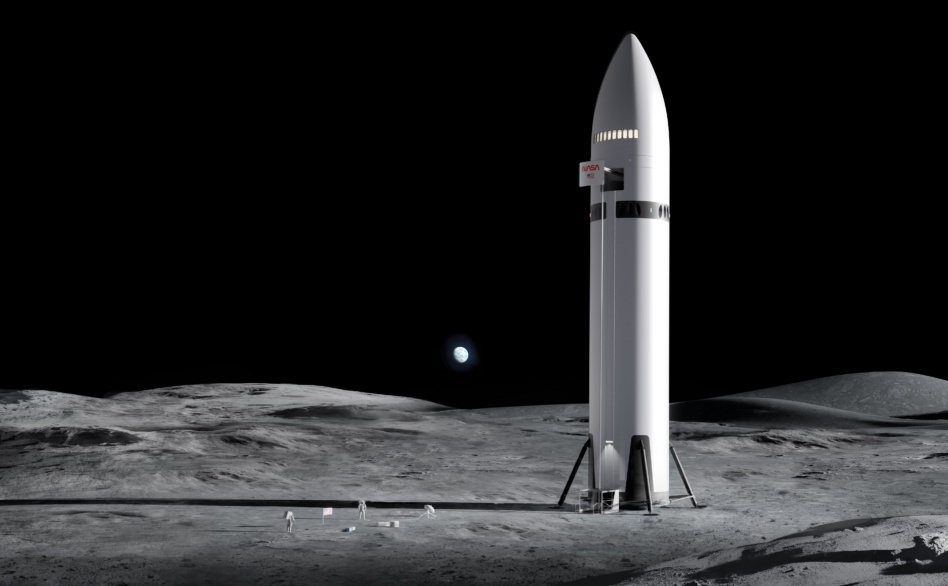
SpaceX told investors last week that it would place journeys to Mars on the back burner while it prioritizes lunar missions, according to reporting by the Wall Street Journal. The company is now targeting an uncrewed landing on the Moon as early as 2027—a first step towards future crewed landings.
The update is an about-face from previous comments made by SpaceX CEO Elon Musk, who called the Moon a “distraction” in January 2025, and suggested that the company was fully focused on making regular Mars flights possible.
Musk explains: In a post on X, Musk said the shift is driven by a few factors—the speed at which SpaceX can build on the off world real estate and the orbital mechanics of deep space launch.
- He said SpaceX “can potentially achieve” a “self-growing city on the Moon” in less than 10 years, compared to 20+ for the same end state on Mars.
- He also said that the more than two year cycle between when Mars and Earth are aligned for the shortest trip time (still six months) makes it difficult to rapidly iterate.
- A flight to the Moon, however, could launch every 10 days with just two days of travel time, Musk said.
“The mission of SpaceX remains the same: extend consciousness and life as we know it to the stars,” Musk wrote, adding that SpaceX is not abandoning its Mars plans. “SpaceX will also strive to build a Mars city and begin doing so in about 5 to 7 years, but the overriding priority is securing the future of civilization and the Moon is faster.”
Outside forces: The decision could also be driven by some external forces—namely, NASA’s desire to go faster.
In October, then-NASA Acting Administrator Sean Duffy blamed slow progress on SpaceX’s Starship program—which won a $2.9B contract to fly Artemis III astronauts to the Moon’s surface—for delaying the US timeline to return astronauts to the Moon. (The initial boots on the surface target by NASA was 2024, but a series of delays pushed the feat back, and a recent EO put the first landing at 2028.)
As a result, Duffy said the agency would open up the Artemis III contract, initially awarded in 2021, to other companies in an effort to beat China to the lunar surface.
Joining the race: Last month, Blue Origin CEO Dave Lump sent a company-wide email informing its employees that space tourism flights aboard the company’s New Shepard rocket would be placed on a two-year hold, so that Blue could focus on its lunar program.
It’s possible that SpaceX and Blue Origin are seeing dollar signs when they look at being the first to set up a successful, consistent pathway to the lunar surface.
In the weeks following Duffy’s announcement, both SpaceX and Blue Origin (selected in 2023 as a second lander option for future Artemis missions) submitted plans to NASA outlining how they could send American astronauts to the Moon before 2030—China’s target year for a crewed landing of its own.

Starliner Targets Uncrewed Flight NET December, Crewed Follow Up in 2028
NASA and Boeing officials announced Monday that they have upgraded and redesigned Starliner following a dicey crewed test flight in 2024, which left NASA astronauts Butch Wilmore and Sunita Williams stuck on ISS for nine months.
Starship Reaches Orbit on 14th Test Flight
After reaching orbit, Starship deployed 26 V3 Starlink sats over about 30 minutes using its ‘Pez dispenser’ system.

Exclusive: Meridian Space Spins Out from SpinLaunch
“Meridian will carry forward the satcom infrastructure business… SpinLaunch will continue to build on its vision for a lower-cost approach to launch, with further applications in hypersonics to support the Golden Dome program and in the lunar economy,” Meridian Space CEO Massimiliano Ladovaz told Payload.

Rocket Lab CFO Adam Spice Predicts More M&A Deals on the Horizon
Iridium shareholders voted overwhelmingly to approve the company’s acquisition by Rocket Lab. According to Rocket Lab CFO Adam Spice, there’s more M&A on the horizon.

NASA is rebalancing its workforce towards civil servants to bring more expertise in house, according to a Friday announcement from NASA Administrator Jared Isaacman.
The new workforce directive is the result of Isaacman’s surveying of the workforce over his first 50 days in the job, including visiting every NASA center and holding a dozen town halls to hear directly from staff, he wrote on X.
“Getting back to the Moon means getting back to the basics,” he wrote. “NASA must regain its core competencies in technical, engineering, and operational excellence.”
Keep reading