


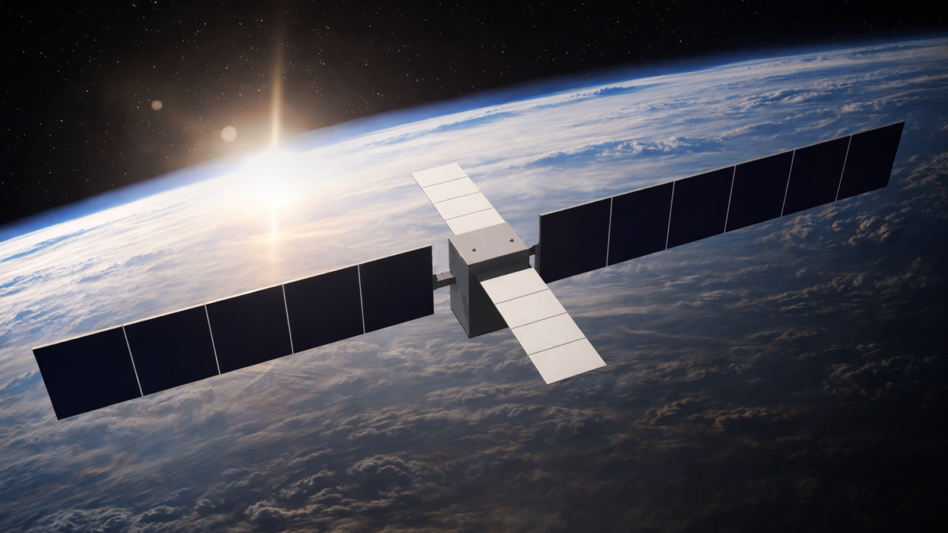
LA-based startup Orbital announced a $5M pre-seed funding round yesterday to bankroll a new orbital-data-center (ODC) constellation.
a16z’s startup accelerator Speedrun led the round, which also included participation from Basis Set, Human Element, Wayfinder Ventures, Antler, Anti Fund, Ascent Venture Partners, Rubik Ventures, Zero Knowledge Ventures, LYVC, Feld Ventures, New Legacy, FNDR, UpHonest Capital, and Asterisk.
Not another ODC: Orbital’s vision of in-space data centers was born in response to early ODC concepts that proposed large-scale satellites.
“When I heard about orbital data centers, I immediately wrote it off,” Orbital Founder Euwyn Poon told Payload. “Thinking about building a football field size [satellite]…from a maintenance standpoint, from a stress standpoint, physics standpoint, and the cost of having robots construct the thing in space, that seems like a pipe dream.”
Orbital’s ODC concept instead relies on a network of relatively smaller satellites, which can together handle large AI inference workloads, and remain in constant contact with the ground.
- Orbital’s sats will be about the size of a fridge, with tennis court-sized solar arrays, according to Poon;
- The sats are being designed around NVIDIA’s Space-1 Vera Rubin GPU;
- Each sat will be capable of generating 100 kW of power;
- The network will remain connected via optical intersatellite links.
Orbital plans to launch its first demo mission in 2027, sending an NVIDIA Blackwell chip up on a partner satellite to test the company’s thermal management and radiation shielding tech. Orbital hopes to launch its first full satellite— Orbital-1—in 2028.
Orbital’s long-term plan is to build and launch a constellation of 100,000+ satellites.
Competitive mindset: There’s no shortage of ODC companies trying to launch on the same aggressive timeline, but for Poon the main challenge ahead isn’t competition.
As terrestrial data centers are becoming increasingly constrained by the “limits of natural geography,” orbital alternatives will eventually be needed to take over the increased demand from the rise in AI workloads—and the successful companies will be the ones who can manage their costs, according to Poon.
“Our challenge as an industry right now…[is] to figure out what’s the most economically efficient answer to get to that right product,” Poon said.
Orbital is developing its first satellite production facility in LA, and plans to lean on automation as much as possible to quickly churn out low-cost satellites.
Xona Raises $250M Series D to Scale Commercial GPS Constellation
Xona’s long-term plan is to build a ~258-sat constellation to offer an upgraded commercial alternative to government GPS networks.
Hewlett Packard Enterprise to Send AI Compute Module to the Moon
Hewlett Packard Enterprise ($HPE) is taking remote working to a whole new level.
Exclusive: EraDrive Lands $13M DoD Award For Autonomy Module
EraDrive won a $13M DoD award, under which the Space Force will buy an undisclosed number of the company’s Era-Node vision-based autonomy modules.
WarpWare Closes Pre-Seed to Bring Agentic Tools to Flight Software
CO-based WarpWare closed its $1.2M pre-seed round today to expand what it calls an AI-enabled engineering platform for space missions.

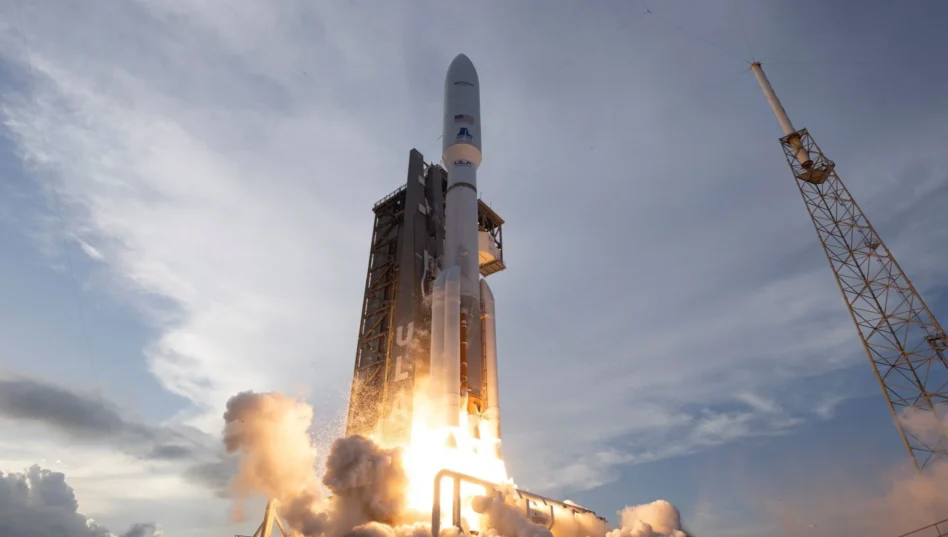
The FCC has granted Amazon Leo more time to get at least half of its constellation into orbit, but placed some restrictions on the satellite operator to encourage launching as quickly as possible.
How we got here: Following an initial approval in July 2020, the FCC authorized the launch of 3,232 Amazon Leo sats. Under the authorization for the first generation of satellites, Amazon was required to launch half of those satellites no later than July 30, 2026, with the remainder launched by July 30, 2029. The rules are intended to make sure that companies don’t have large amounts of approved spectrum that isn’t being used, because the sats have yet to launch.
Missing those deadlines typically comes with penalties, including fines and a reduction in the number of approved satellites.
Keep reading