



Get in, landers, we’re going to the Moon.
Background: NASA established the Commercial Lunar Payload Services (CLPS) program in 2018, in response to the call in Space Policy Directive-1 to return people to the Moon. Under the program, NASA awards contracts for commercial lander companies to bring space agency payloads to the lunar surface. The companies can then sell extra space on each of these NASA-subsidized missions to commercial payloads looking for a ride to the Moon.
CLPS is intended to build on NASA’s successful commercial cargo and crew programs, allowing the agency to support a still-young commercial lunar delivery economy with the goal of eventually being one customer of many.
CLPS also is working to serve goals related to astronaut landings. “The CLPS model offers a unique opportunity to test and refine technologies and integrate systems that will provide insight for future crewed missions to [the] Moon as part of NASA’s Artemis campaign,” NASA stated.
Flyers: The pool of CLPS money includes $2.6B that can be awarded through November 2028. The space agency has selected more than a dozen entities that are eligible to win a portion of that money—though only three of them have flown missions so far:
- Astrobotic Technology’s first mission with its Peregrine lander failed to reach the Moon due to a failure with the spacecraft’s propellant system. It has been awarded a second mission for its Griffin lander, and two more Peregrine missions.
- Firefly Aerospace has won six CLPS task orders. Its first mission nailed its landing on the Moon.
- Intuitive Machines has flown two landing missions (both of which toppled over after touching down). It has been awarded four other contracts for upcoming flights.
The team of Draper, ispace, and Karman Space & Defense has also been awarded a mission, but they’ve yet to fly.
In the wings: A handful of companies are eligible to receive contracts, but have not yet received a task order to fly. While some of them have gone out of business in the intervening years, some companies waiting for their first mission to be awarded include:
- Blue Origin
- Ceres Robotics
- Lockheed Martin Space
- Moon Express
- ORBITBeyond
- Sierra Nevada Corp.
- SpaceX
What’s next: NASA is already working on the next phase of the CLPS program, which will be instrumental in building its Moon Base.
CLPS 2.0 is expected to fund larger lunar landers to carry more cargo on a monthly cadence to the Moon’s surface. The second iteration of the program, which will see companies work more closely with NASA officials for development, is expected to have a pot of $6B to be awarded over 10 years, with missions scheduled over 15 years.
Read more:
- CLPS Companies Excited For NASA’s ‘Opportunity Bomb’ Lunar Plan
- NASA Awards LTV, Lunar Transport Contracts
- Bridenstine on DoD’s Cislunar Goals, CLPS, and Returning to the Moon
This article was last updated on July 1 to reflect NASA’s latest Moon Base awards.

Colorado Springs, Huntsville Team Up on Golden Dome
“It’s a transformed relationship between Colorado Springs and Huntsville,” Rep. Jeff Crank (R-CO) told Payload. “When I took office, I don’t think it was a bad relationship, but it was one where both communities were kind of looking over their shoulder at the other. That wasn’t good for America, and I don’t think it was good for Colorado Springs or Huntsville either.”

Artemis Accords To Meet on Lunar Debris, Emerging Space Help
The Artemis Accords Principals’ Meeting in Turkey will be led by NASA Deputy Administrator Matt Anderson and Maj. Gen. Roberto Melgar Sheen, director of the Peruvian Space Agency.
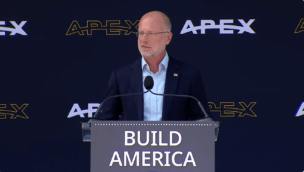
FCC to Vote on Waiving NEPA Review for Space Ops
The FCC will vote Sept. 30 on whether to narrow which commission activities face environmental review, and streamline the process for the ones that require assessment.

State Department Launches New Space-Diplomacy Effort
Alongside the announcement, Rubio also unveiled the SCP’s first project—a two-year, $6.5M effort to bring satellite internet to rural southern Peru.

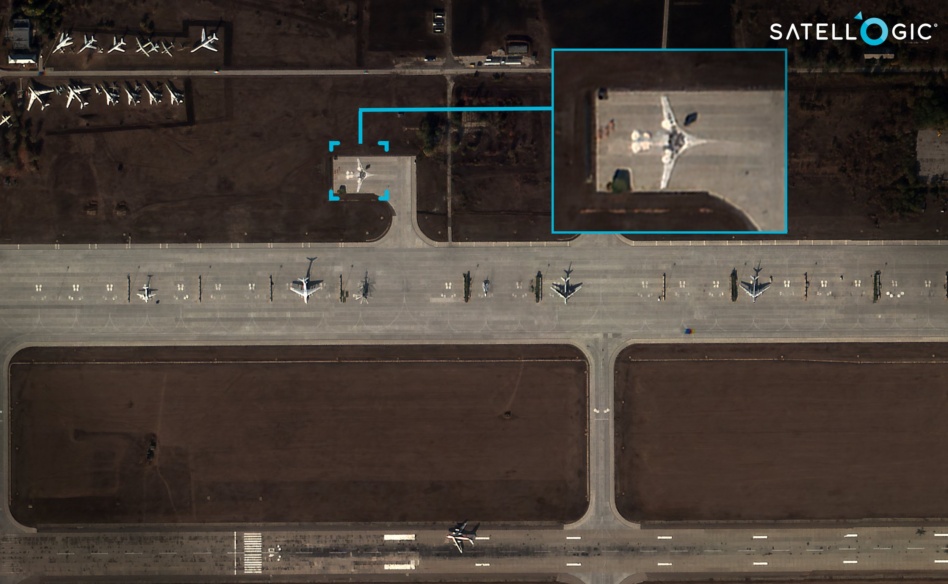
Satellogic is building an app store. The EO satellite operator today announced a partnership with SpaceKnow, the AI-powered geospatial intelligence analysis company, to build AI applications on top of Satellogic’s growing stock of satellite imagery.
The partnership reflects a fundamental shift in Satellogic’s business model, which is moving away from one-off imagery sales, and toward a data-as-a-service model. Satellogic will continue gathering EO imagery, while SpaceKnow and other partners—including SynMax—use that data to build AI applications for customers.
Like magic: The shift comes ahead of Satellogic’s planned launch of its next-gen constellation—called Merlin—which will allow the company to map the entire world at one-meter resolution. The first Merlin satellite is expected to fly in October, and the full system will come online in 2027.
Keep reading