


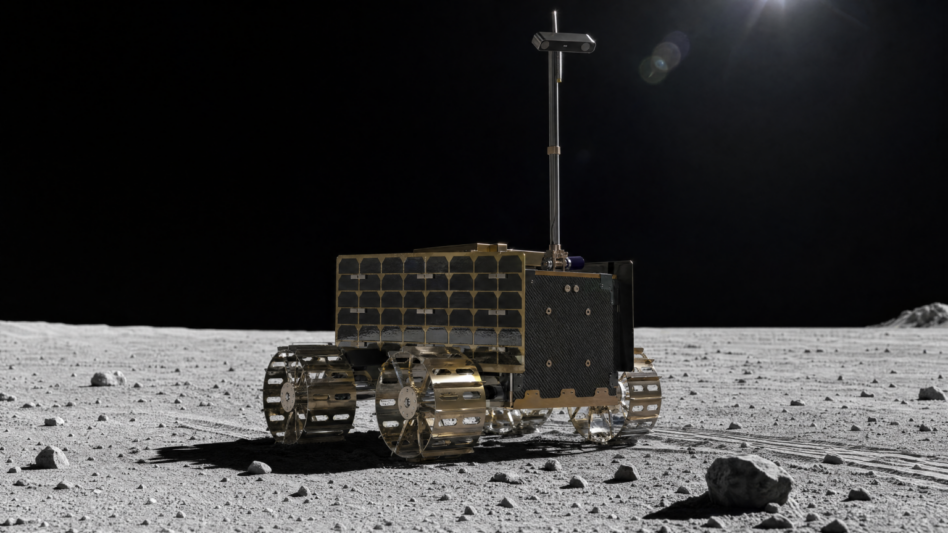
ispace-Europe is heading to the Moon following a €65M (~$74M) commitment from ESA for Europe’s first lunar polar ice exploration rover mission.
The award is a Phase 2 contract for MAGPIE—the Mission for Advanced Geophysics and Polar Ice Exploration—which will fully fund the remaining development of the rover and payload as well as manufacturing, testing, transportation, lunar surface operations, and delivery of scientific data.
“ispace-Europe is the industrial prime for ESA’s first lunar surface exploration mission—a role that would have been traditionally assigned to a large system integrator,” ispace-Europe CEO Julien-Alexandre Lamamy told Payload over email. “MAGPIE is the first mission under ESA’s Small Exploration Missions (SMEX) program, whose purpose is to perform high-impact exploration missions with a higher risk tolerance for smaller budgets and faster implementation, led by small space companies.”
Meet MAGPIE: Scheduled for launch in 2029 on ispace’s Mission 4 lunar lander (renumbered from Mission 6 in March), MAGPIE will prospect for water ice in the Moon’s south polar region, characterizing volatile stability and regolith properties to inform future resource extraction.
MAGPIE follows TENACIOUS, the first lunar rover out of ispace’s Luxembourg arm, which reached lunar orbit aboard Mission 2 in 2025 but was lost when the lander failed to touch down softly.
The MAGPIE contract is not only a scientific milestone, but a diplomatic one. European science, engineering, and mission management are flying on Japanese-funded transportation—an arrangement neither agency has tried on the Moon.
“The mission also reflects the growing cooperation between ESA and JAXA in lunar exploration, combining complementary capabilities to address common exploration challenges,” ESA Lunar Programme Manager Sara Pastor said in a statement.
Follow the money: The €65M ($73.9M) award is roughly 24x what ESA had committed to MAGPIE across the mission’s first two contracts.
- ESA awarded €2.7M (~$3M) for MAGPIE across a pre-Phase A contract in December 2024 and an extension in June 2025.
- MAGPIE’s full funding hung on last November’s ministerial in Bremen, Germany. Member states committed €22.1B ($25.2B), with just under €3B (~$3.4B) going to human and robotic exploration through 2028.
- The award is worth roughly triple ispace’s annual net sales for the fiscal year ended in March, which came in at ¥3.3B (~$20M).
Exploration-as-a-service: ispace-Europe is mission prime, a first for ESA. Rather than managing the mission itself, the agency contracted for what ispace calls an end-to-end capability spanning mission design, rover development, surface operations, and delivery of the science data.
The approach echoes NASA’s CLPS model, although ESA is buying the rover and the science data rather than just the ride.
“MAGPIE represents a major step forward for European lunar exploration,” Lamamy said in a statement. “This contract award demonstrates ESA’s commitment to a new model for small, agile exploration missions—one that combines commercial delivery, scientific ambition, and international collaboration.”
Exclusive: Exolaunch Books its first Starfall Mission
Exolaunch signed an agreement to support customer payloads on a SpaceX Starfall reentry mission scheduled to launch on a Starship NET 2029.
European Space Startups Steal the Show in Paris
European space startups have long wondered when big institutional buyers would stop handing large contracts exclusively to legacy A&D primes. During the last few weeks, it’s become clear that time is now.

Exclusive: Space Cargo Unlimited Booked a Third of its Starfall Capacity
Demand appears to be skyrocketing, thanks to a new wave of pharmaceutical companies and researchers realizing that microgravity can provide benefits in drug discovery and research.
SEOPS Books Five Launches on Isar’s Spectrum Rocket
Isar Aerospace became the first European launch startup to reach orbit less than two weeks ago, and already the market is demanding more.

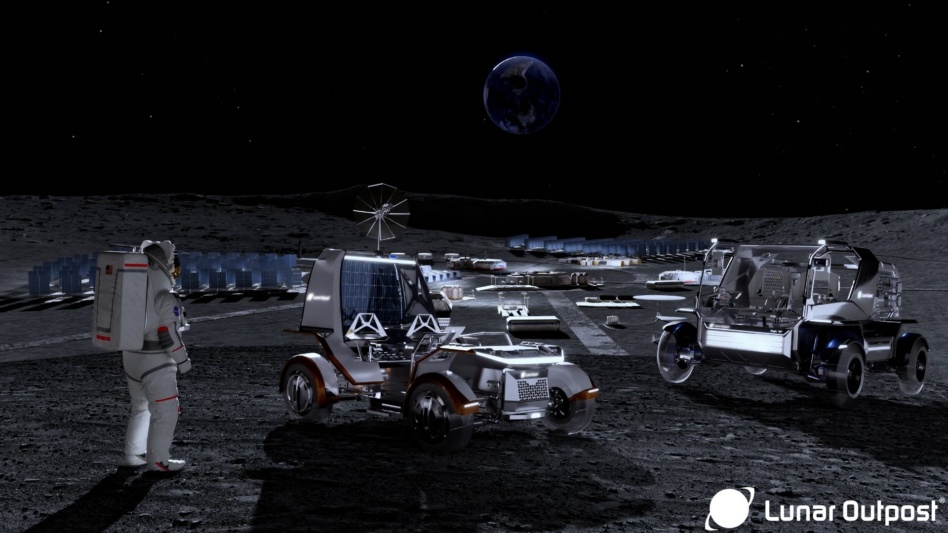
The chip race and the race back to the Moon race have just crossed paths.
Lunar Outpost, the CO-based lunar rover startup, announced plans yesterday to fly NVIDIA chips on its upcoming lunar missions.
Smart car: Lunar Outpost intends to use the AI chips to help its rovers operate autonomously on the lunar surface, and ease the communications pipeline between Earth and our nocturnal neighbor.
Keep reading