



Rocket Lab’s ($RKLB) strategy to own every aspect of the space value chain—from satellite manufacturing to launch—seems to be paying off.
The Space Force awarded Rocket Lab a $397M contract yesterday to fund the development, launch, and operations of a constellation of “Flatellites”—Rocket Lab’s latest flat-packed satellite design—under the Space Force’s Space-Based Airborne Moving Target Indicator program (SB-AMTI).
The goal of the SB-AMTI program is to complement the DoD’s terrestrial and airborne sensors. Besides Rocket Lab, other recipients of the combined $615M in new funding were Systems & Technology Research, and an unnamed third company not revealed for security reasons.
The mission: Rocket Lab’s contract tasks the company with building and launching an undisclosed number of Flatellites, each equipped with space-based sensors and low-latency, high-bandwidth comms links to enable real-time identification and tracking of airborne threats.
These satellites will launch on Rocket Lab’s yet-to-fly Neutron medium-lift launch vehicle. Once the sats are in orbit, Rocket Lab will use AI to parse the large quantities of data to spot moving targets—intel that the company will share with Space Force.
For Rocket Lab CEO Peter Beck, the contract win is the direct result of the company’s efforts to build each part of an end-to-end capability.
“Our vertically integrated, constellation-class satellite capabilities, mission operations, and launch services uniquely position us to deliver innovative solutions that meet the urgent needs of the Space Force,” Beck said in a statement.
IKEA for space: Rocket Lab unveiled its Flatellite spacecraft last year. As the company’s fifth spacecraft design, the sat is purpose-built for high-performance sensing and telecom constellations.
As the name suggests, the flats are designed to stack on top of one another inside a launch vehicle—much like SpaceX’s Starlink sats—maximizing the number of flats that can fly per launch, and lowering the total deployment cost of the constellation. The Flatellites rely on Rocket Lab’s MAX constellation flight software and InterMission ground software, making the sats capable of meeting the cyber-security needs of national security customers.
The Flatellites also rely heavily on components Rocket Lab has spent years building and acquiring, with Beck describing the new design as the “final step in Rocket Lab’s ultimate vision of being a truly end-to-end space company.”

SpaceX Reports Q2 Earnings
After SpaceX’s record-breaking June IPO, the company released its first quarterly results on Tuesday, and the headline figures beat expectations.
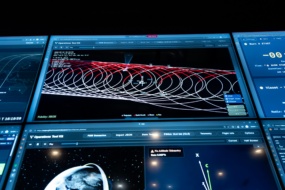
True Anomaly Chases an Evading Target
True Anomaly said it had become the first company to execute an in-space pursuit of an evading target as part of VICTUS HAZE.
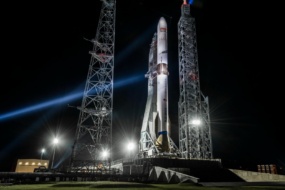
AFRL Adds $11.7M to Blue Origin’s Point-to-Point Cargo Contract
Blue Origin landed a $11.7M increase to its AFRL contract to study how its launcher can be used to complete point-to-point delivery missions.
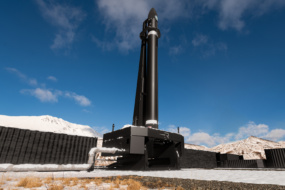
Rocket Lab Expands to Alaska with $266M Launch Contract
Rocket Lab will open up a new launch site at the Pacific Spaceport Complex-Alaska (PSCA) in Kodiak. Launches are expected to begin no earlier than the end of this year.


The numbers are in. After SpaceX’s record-breaking June IPO, the company released its first quarterly results on Tuesday, and the headline figures beat expectations: $7.8B in revenue—up 92% year-over-year—and a net loss of $541M.
However, the stock fell ~7% after hours, as investors weighed the company’s heavy spending and a share lockup set to expire this week.
It’s a fitting debut for what is now far more than a rocket company, spanning three verticals: space, connectivity, and AI.
Keep reading