


The State Department’s latest space effort puts foreign-assistance dollars behind US space companies, with Peru as the launchpad.
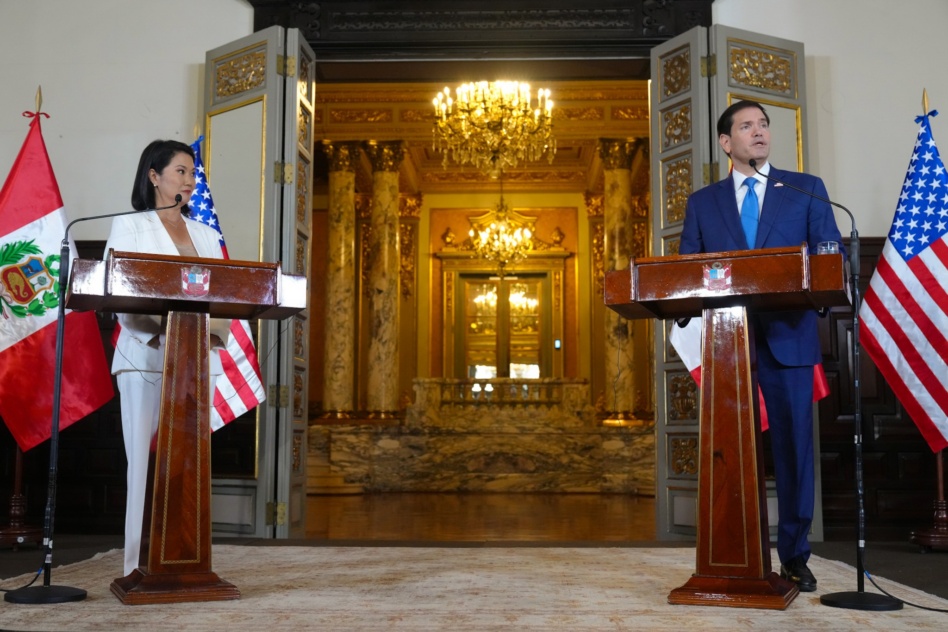
On Sept. 10, Secretary of State Marco Rubio unveiled the department’s new flagship initiative for space diplomacy—the Space Catalyst Partnership (SCP)—during an official visit to Lima. By creating new opportunities for foreign governments and space agencies to engage with the US civil and commercial space sectors, the SCP aims to deepen cooperation between the US and Artemis Accords signatories.
Alongside the announcement, Rubio also unveiled the SCP’s first project—a two-year, $6.5M effort to bring satellite internet to rural southern Peru.
The carrot: Participation is limited to Artemis Accords signatories, making access to the US commercial-space sector an incentive to sign on. Peru joined the Accords in 2024.
A senior State Department official, speaking to reporters on a background call following the launch, emphasized that what’s novel is the department itself steering foreign aid to promote US industry, a role State has not played in a coordinated manner previously.
The official also tied the launch to President Donald Trump’s December executive order on space superiority and his 2025 National Security Strategy, which calls for the US to be the hemisphere’s partner of choice.
The toolkit: SCP bundles three tools the State Department will deploy, project by project:
- Diplomatic outreach: Coordinating across US agencies to help partner countries access American space tech and financing.
- Industry engagement: Connecting US firms with new foreign customers and promoting them at international trade shows.
- Targeted foreign assistance: Deploying aid to help emerging spacefaring nations buy US space goods and services—starting with Peru—and folding space capabilities into sectors like critical minerals, agriculture, and energy.
State will also be working closely with NASA on SCP efforts, officials said, which was echoed by NASA Administrator Jared Isaacman on social media.
Countering Beijing: State officials wouldn’t explicitly call SCP a China play, but they didn’t argue too hard against it either. Beijing has spent years building a space presence across Latin America—from a deep-space tracking station in Argentina’s Patagonia, to satellites built and launched for Bolivia and Venezuela.
When asked whether SCP foreign-assistance recipients would be barred from also working with other—namely Chinese—providers, the senior official said no such limit exists, betting instead that US technology and standards make American firms the obvious pick. (Argentina is both an Artemis Accords signatory and the host of the Chinese tracking station.)
China, the official said, “overproduce[s] and then export[s] at low prices” to leave countries “dependent,” while the US offer comes with “no coercive diplomacy” and “no debt traps.”
Funding fog: Funding remains the biggest open question for SCP. Asked whether money had been appropriated for the effort, the senior official said there’s no overall program number. Instead, the department is working with Congress to pair various pots of foreign assistance with projects as they coalesce.
The SCP launch comes as State absorbs foreign-aid functions, following the dismantling of USAID in 2025 and cuts to assistance budgets. The official did not say which company will support the Peru project, or how much money beyond the initial $6.5M it expects to line up for future ones.

Schiess Becomes CSO Amid Space Workforce Shortages
Gen. Douglas Schiess became the chief of space operations on Sept. 3, following the retirement of Gen. B. Chance Saltzman, who led the almost-seven-year-old service for nearly four years.
Trump Orders Study To Establish US Space Academy
Is the US about to add a new service-academy rivalry to college football Saturdays?

White House Wants 1,000 Annual Launches and Reentries by 2030
The new National Space Transportation Policy, signed Aug. 20, which replaces the 2013 edition, asks what it would take to get to 1,000 annual launches.
Deep Dive: FY27 Defense Space Budget
The Space Force’s FY27 budget request made headlines earlier this year at a record-breaking $71.3B.

PARIS, FRANCE — Everybody’s looking for launch capacity these days, and for those who have it, the phones are ringing off the hook.
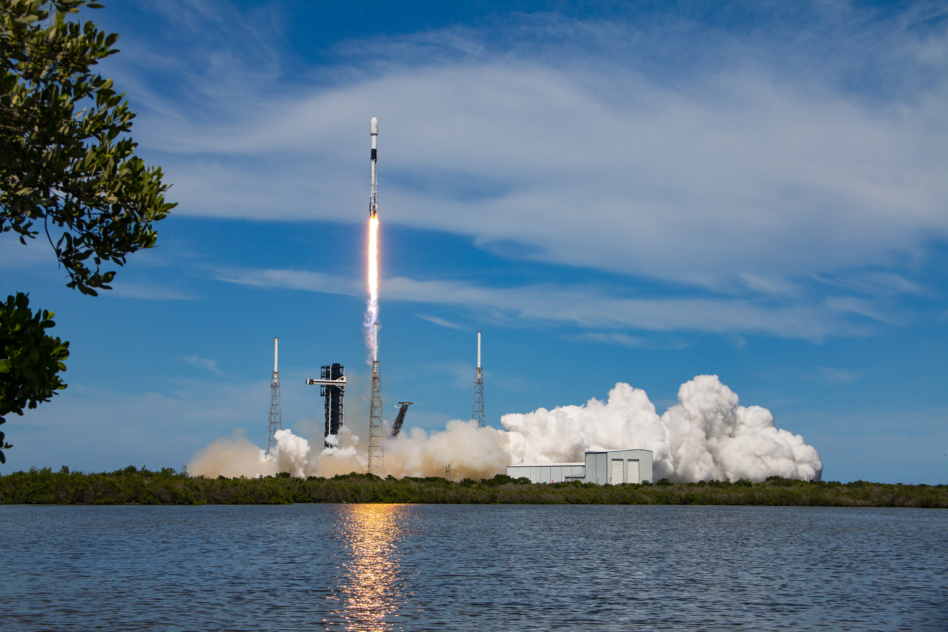
Maverick Space Systems announced yesterday it booked 10 400-kg class Kepler Communications Tranche-2 sats to fly aboard Portal Space Systems’ Motus Via Sol mission, which is expected to launch on a SpaceX Falcon 9 in mid-2028.
“Signing 10 Kepler communications Tranche-2 spacecraft to this mission fills the majority of the remaining capacity, leaving just a single half-cake-topper slot open,” Maverick COO and cofounder Vidur Kaushish told Payload. “We’re in a capacity constrained launch environment, and missions like Motus Via Sol are exactly the kind of high-density rideshare architecture the market needs more of.”
Keep reading