


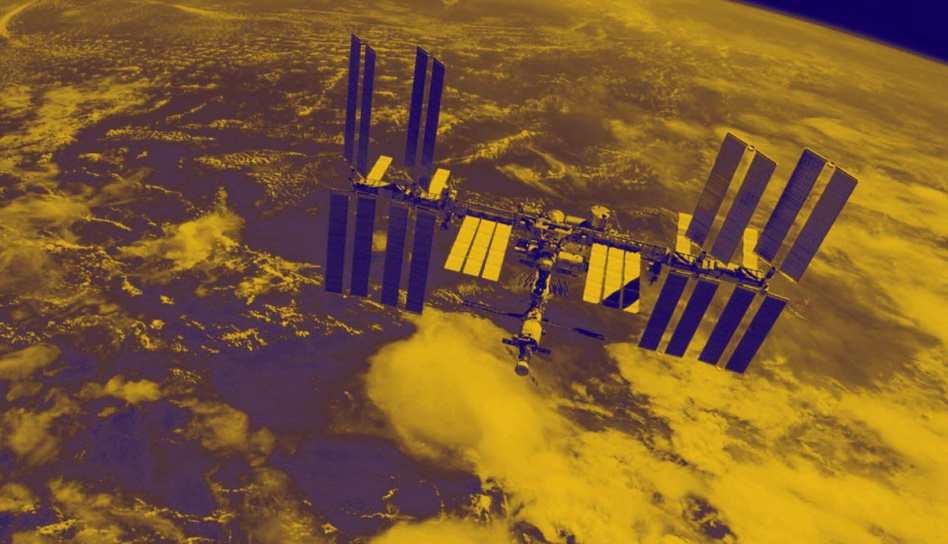
The ISS is returning to a normal configuration after two close passes with space debris, and crew initiated “safe haven” protocols. Under these procedures, astronauts treat vehicles as “lifeboats” and prepare for the possibility of an emergency departure.
- “In order to dodge the ‘space junk’, specialists…have calculated how to correct the orbit of the International Space Station,” Roscosmos said.
Early in the morning, astronauts took refuge on two spaceships docked with the ISS after close projected space debris flybys. The astronauts took the measure and prepared for a potential hazardous collision between “debris field,” “debris cloud,” and the ISS.
- Russian cosmonauts Anton Shkaplerov and Pyotr Dubrov and US astronaut Mark Vande Hei boarded the Soyuz MS-19, while NASA’s Raja Chari, Thomas Marshburn, Kayla Barron and ESA’s Matthias Maurer boarded Crew Dragon.
- Additional info on the debris’ origin isn’t known at the moment.
More details (as of 9AM EST): According to TASS, NASA and Roscsomos expected space debris to fly past the ISS at 10:06 AM Moscow time (1:06 AM in Houston), and again from 11:38–11:44 AM (2:38–2:44 AM CST).
Russian and American sources told CBS that “more encounters may be possible.” And though crews are back inside the ISS—and hatches between segments are open—some modules are still sealed off as a precaution, per CBS’s William Harwood.
Big picture: Last week, we saw a similar incident and ISS avoidance maneuver. The problem of hazardous debris is getting worse, we wrote then, increasing the risk of a collision and frequency of ISS maneuvers. We didn’t realize just how soon we’d be writing the same type of story again.
Auxilium Demos Tech To Enable Sustainable Bioprinting in Orbit
Auxilium Biotechnologies has created multiple types of organ tissues aboard the ISS, marking a milestone when it comes to the scalability and future use cases for bioprinting in orbit.

ISS Risk Margin ‘Alarming’ As NASA Nears 2030 Extension Date
Time is running out to keep the ISS in orbit, as the chair of a NASA advisory committee warned last week that risk margin for regular operations “is now reduced to an alarming level.”
Axiom Space’s Suit Set to Fly in 2027
“From a production standpoint, we’re putting together the first qualification suit,” Michael López-Alegría, the company’s chief astronaut, told Payload. “That continues regardless of what they say.”
Voyager and Icarus Team Up on ISS Robotics Demo
The pages of the ISS manifest are starting to look a lot like those of a sci-fi novel.

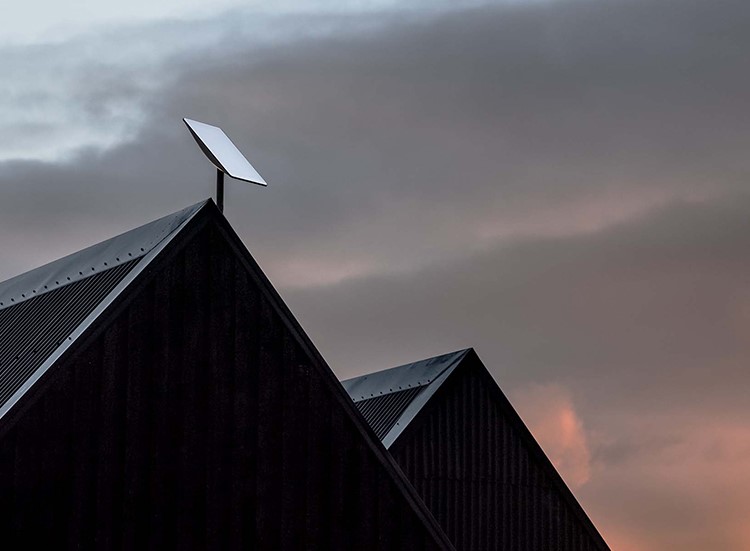
SpaceX has updated the Starlink suite with a new user terminal. The dish replaces a larger one sold to beta users.
Scaling down: The new terminal is a 19” x 12”, 9.2 lb dish that users can mount to the side of a home (like the older version), their roof, or a pole (new capability).
But users won’t get a price cut just yet. Starlink’s hardware set costs $499 upfront with a $99/month subscription. Users also can’t exchange current terminals for the new one, and silicon shortages are affecting production across the board.
Keep reading