


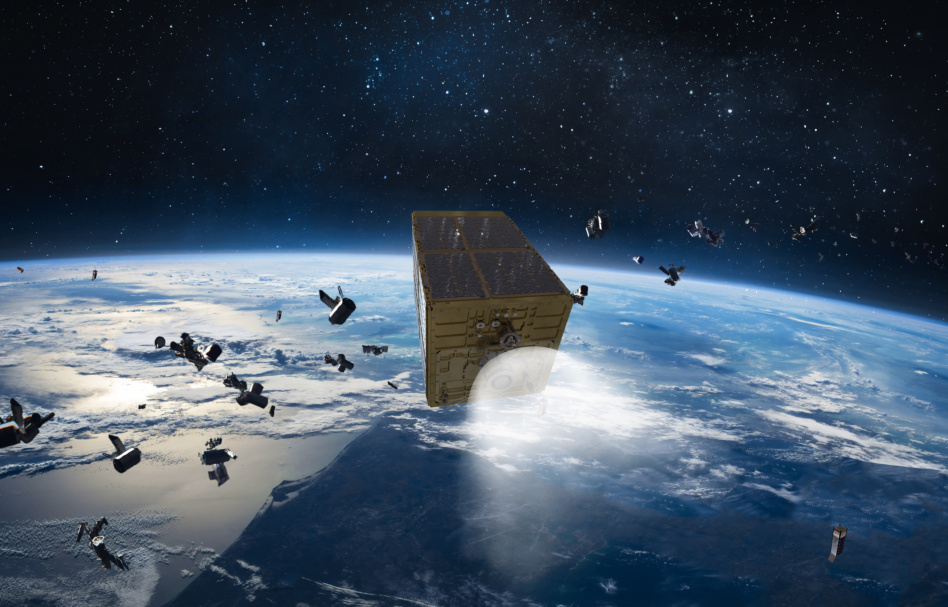
Benchmark Space Systems is ready to bring a last-minute collision avoidance kit to market, the Vermont startup said this morning. Dubbed COLA, the tiny thruster system is designed compactly so it can be retrofitted onto satellites that already have finalized designs, Benchmark EVP Chris Carella told Payload.
All that junk out there: The orbital environment is getting more crowded. More satellites in LEO = a higher chance of collisions. And any accidental collisions or deliberate debris-creating events increase the risk of further collisions and later conjunction warnings for operators. The ability to maneuver away from an unexpected close encounter or collision is “for the good of everyone in space,” Carella said.
Diet COLA: Satellites using electric propulsion need buffer time after a conjunction warning to make a maneuver, but in the future, that might not be possible. For companies who have already invested a lot of time and resources into building their birds, the solution needs to be cheap, unobtrusive, and quick to operate. “The market sees it as cheap insurance,” said Carella.
- COLA uses chemical propulsion with hydrogen peroxide as fuel, allowing thrusters to quickly fire in a pinch.
- It’s designed to make last-minute maneuvers on satellites weighing <600kg.
- The system can make 2-10 ~1km maneuvers over its lifetime, depending on the weight of the satellite and the size of the system itself.
- Benchmark will offer four sizes chosen depending on mission requirements.
Pricing: The system will cost $100-150K all in.
Coming up: Benchmark has non-exclusively partnered with SCOUT to deploy COLA, and is working on other partnerships in space situational awareness, space traffic management, and electric propulsion. COLA is built out of heritage components and is ready for production right away, with the first units expected to ship in Q1 2023.
+ While we’re here: You’re not seeing double—yesterday, Benchmark announced it’s acquiring AASC’s plasma thruster tech. Read that story here.

Europe’s Space Leaders are Unhappy with the Status Quo
ASD Eurospace released a report this week built on anonymized interviews with 15 space industry CEOs. The results showed many are disgruntled with the setup of Europe’s space sector.
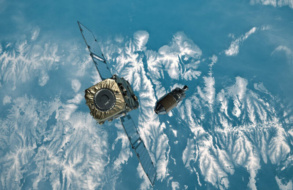
Astroscale Selects Isar to Launch Debris Removal Mission
Astroscale Japan selected Germany’s Isar Aerospace to launch its ADRAS-J2 mission to capture and remove a piece of large orbital debris.
Launch Concerns Cast a Shadow Over SmallSat 2026
Unless something changes in the launch market—and soon—the space industry might be running 100mph into a brick wall.
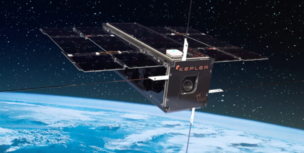
Canadian Companies Partner on SDA Sat Solution
This announcement comes as SpaceX opens its SSA catalog gratis to smallsat operators, and LeoLabs readies to demo its SDA for US national-security missions under a $20.68M Space Force Prototype OTA.

Earnings season is fully upon us, with companies from both sides of the launch and satcom aisle releasing results last week. The SPAC side of last week’s reporting left much to be desired, as companies adjust to a harsh macroenvironment, program delays, and shortening runways.
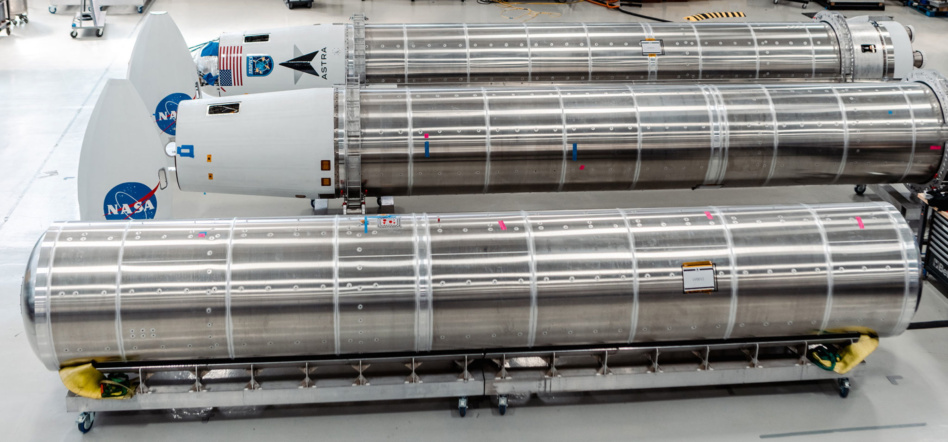
$ASTR: Astra won’t launch again this year, and is all-in on pivoting from Rocket 3.3 to 4.0. The launcher’s change of heart seems to vindicate commentators who say the smallsat market is already oversupplied. Astra reported a $82.6M Q2 operating loss on $2.7M in revenue, and ended June with ~$201M in the bank.
$SPCE: Virgin Galactic pushed back the debut of its spaceflight service further, now targeting Q2 2023 for commercial launch. It booked ~$357,000 in Q2 revenue, down 37% YoY. The company’s quarterly operating loss was $109.7M. Virgin ended Q2 with $330M in the bank.
Keep reading