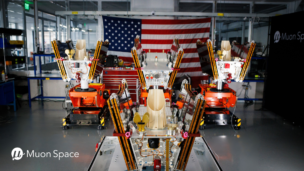

Apex is getting new digs as it preps to ramp up its satellite manufacturing.
The LA-based satellite bus startup is moving into a permanent factory space in Playa Vista in 2024. The new space, optimistically dubbed Factory One, gives the team 46,000 sq ft of space to play with—space that it plans on using to scale up to building 50 satellite buses per year by 2026.
“Scaling our satellite production capabilities is essential for meeting customer demand,” Apex CEO Ian Cinnamon said in a release. “Our customers are seeking spacecraft with shorter lead times, and Factory One will deliver.”
Bigger, better, faster: Apex emerged from stealth in October 2022 with a new vision for manufacturing spacecraft—instead of building bespoke buses for every new customer, the startup builds standard platforms that can be reconfigured to support different missions.
The company offers three bus designs:
- Aries, an ESPA-class bus capable of supporting ~100 kg of payload
- Nova, an ESPA-grande bus to accommodate payloads up to ~230 kg
- Comet, a bus designed to carry ~500 kg of payload
The first Aries satellite platform is slated to fly on Transporter-10, scheduled for no earlier than March 2024, carrying a host of customer payloads.
Factory One: Once the Apex team is all settled in, Factory One will serve as its new home base, comprising offices, warehouses, and, of course, manufacturing operations.
Cinnamon told Payload that its current facility could allow Apex to produce ~10 Aries buses max per year, and it doesn’t support manufacturing of its larger platforms at scale. Factory One allows the company to ramp up the cadence to accommodate customer demand. The target delivery timeline:
- Five platforms in 2024
- 20 platforms in 2025
- 50 platforms in 2026…and beyond
Factory One will also give Apex the room it needs to begin building its Nova platform, which it plans to begin building in Q1 2025.