



If you’re looking forward to the holidays to cozy up with a good book, we’ve got you covered.
Payload asked the ghosts leaders of Christmas space policy past and present to share the best book they read this year. Here are some of their top pics, to add to your to-be-read list for the new year.
American Contradiction: Revolution and Revenge from the 1950s to Now, by Paul Starr. Recommended by Rep. Haley Stevens (D-MI): “American Contradiction helps us make sense of the last several decades of our nation’s history, and the forces that have pushed and pulled our country in varying directions over the years. It touches on everything from the space race, to social movements, to our modern political environment. It’s a fascinating look at the ideas America was built on, and the contradictions that push our country forward today.”
Burn Book: A Tech Love Story, by Kara Swisher. Recommended by former NASA deputy and astronaut Pam Melroy: “I read it because I think the emerging space industry bears a strong resemblance to the internet revolution of 30 years ago, and I wanted to understand what a strong critic of that industry had to say about how the industry developed.”
Secret Empire: Eisenhower, the CIA, and the Hidden Story of America’s Space Espionage, by Philip Taubman. Recommended by former National Space Council executive secretary Chirag Parikh: “Secret Empire shows how President Dwight D. Eisenhower, the CIA, and a small circle of government and industry leaders overcame institutional protectionism, interagency infighting, acquisition bureaucracy, and lingering McCarthy-era distrust of science, technology, and US industry—amid profound intelligence gaps about Soviet military capabilities—to develop the first strategic reconnaissance aircrafts and spy satellites. These breakthroughs gave rise to modern strategic intelligence, and led directly to the creation of the National Reconnaissance Office and to the predecessor of today’s National Geospatial-Intelligence Agency.”
Snow Crash, by Neal Stephenson. Recommended by Audrey Schaffer, an SVP at Slingshot Aerospace and former NSC director for space policy: “It was a great reminder about how envisioning future technologies get some things right, and other things wrong—and the same for ideas about how government and society could function. Not sure I want to live in the Snow Crash world, but always a great exercise to think about what it would mean, and how to avoid ending up there!”
How Congress Can Grow the Space Supply Chain
Demand in the space industry is skyrocketing—but the supply chain isn’t keeping up. Luckily, policymakers can speed things up, according to two leading industry groups.
Commercial Space Law Takes Center Stage at DC Moot Court
Future space lawyers will gather in DC this month to debate how far federal jurisdiction extends in regulating commercial megaconstellations.
Senate Tees Up NASA Reauthorization, Deputy Hearings
The Senate Commerce, Science, and Transportation Committee is gearing up for a busy week.
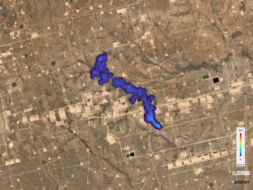
Bill Spotlight: Methane Monitoring Science Act
Two lawmakers introduced a bill that would task NASA to improve the nation’s ability to detect cow farts—and all other forms of methane leaks.
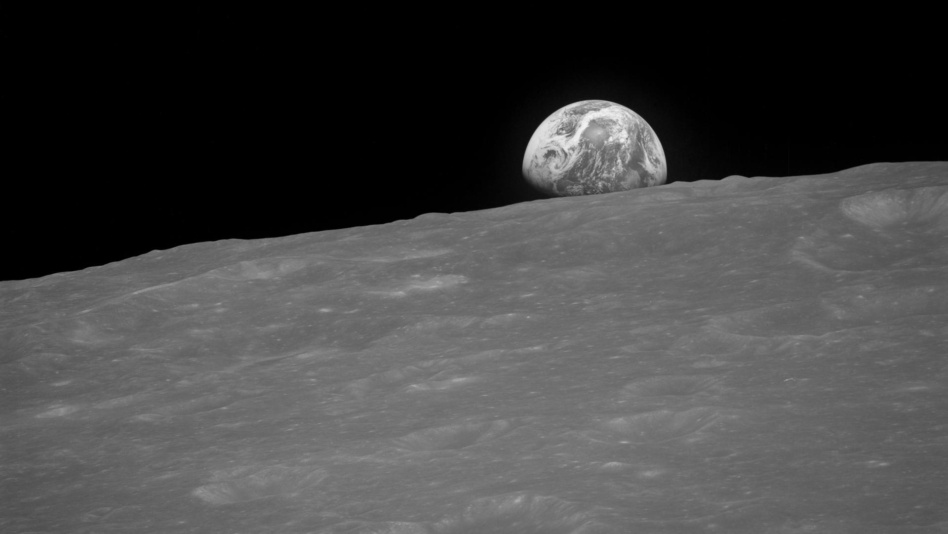
Once engineers solve the technical problems that stand in the way of a thriving lunar economy, it’s up to policymakers to set industry up for success on the Moon’s surface.
In the Moonshot Mechanics series this year, we’ve looked at the technical hurdles to a long-term lunar presence, including communications, rovers, human health, Earth return, and PNT. Today, we’re taking a more terrestrial look at the state of the lunar policy, and the open policy questions that could face industry when they arrive on the Moon’s surface.
Whose land is it anyways: If you want to mine on Earth, you must first buy the land containing the mine. This first step, while simple on Earth, is much harder on the Moon because companies’ property rights on lunar turf are unclear. Some legal experts say you can’t just claim the area where you set up shop.
Keep reading