


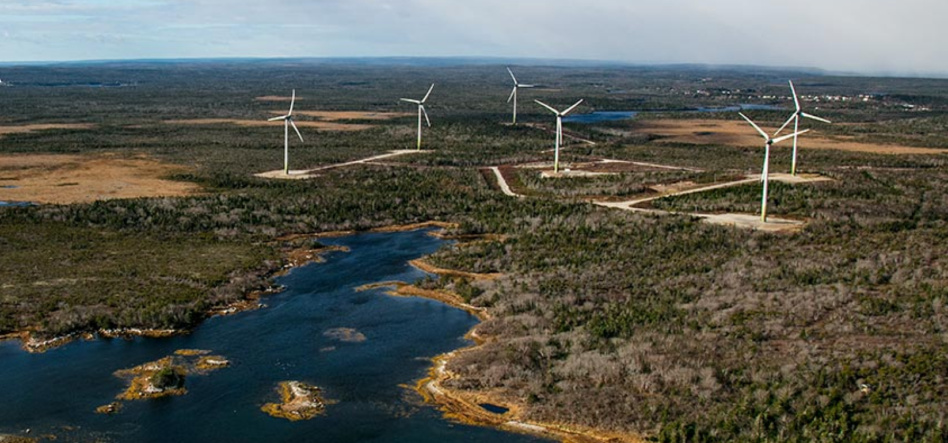
One of Canada’s spaceports received new orbital-launch funding, aimed partly at sovereign defense needs.
Maritime Launch Services ($MAXQ) will receive a senior credit facility for up to $10M CAD ($7.1M) from Canada’s government-owned export credit agency, for defense, telecommunications and weather-monitoring needs.
Spaceport Nova Scotia, which is the Atlantic launching facility for MLS, will use the money to build out infrastructure and a launch pad for orbital missions. Half of the money will be advanced immediately, with more available as construction costs arise, a press release Friday stated.
Strong and free: Canada used to have a Manitoba spaceport when the US was in a “space race” for military supremacy in the 1950s and 1960s. After hosting decades of Black Brant sounding rocket flights, officials closed the spaceport in 1985. A brief commercial phase followed with Akjuit Aerospace until May 1998, says Canadian law firm Aird & Berlis.
Canada now mainly uses foreign launchers, in part because the government deemed building sovereign capability too costly. But Canadian companies (inspired by SpaceX) are moving to build their own facilities and rockets.
Private spaceports didn’t spring up overnight—MLS was founded in 2016—but a new impetus just arrived. Companies worldwide are on fresh defense-spending sprees fueled by the US and Europe, and the CSA is among space agencies committed to stepping up.
Slow burn: There won’t be much sovereign Canadian launch activity for years. MLS and its competitor, NordSpace, are in the demonstration phases for their spaceports.
Spaceport Nova Scotia made a single suborbital launch in 2023. Progress is taking time—it’s developmental, local critics have environmental concerns, and the Canadian government is figuring out the licensing regime. Current liabilities for MLS also continue to grow, according to recent interim filings cited in the media.
But Quebec company Reaction Dynamics recently signed an agreement with MLS to launch orbital hybrid-fuel rockets at the spaceport in Q3 2028 or so, and Dutch company T-Minus Engineering plans to undertake a delayed suborbital test launch there as soon as November.
NordSpace attempted its first suborbital launch at its Atlantic Spaceport Complex, in coastal Newfoundland and Labrador, several times in August and September. But the company missed their launch windows due to technical issues, small pad fires, and tough weather. NordSpace plans to share a new launch date soon. In the meantime, officials signed a mission-control-focused MoU this month with the Canadian subsidiary of Kongsberg Defence & Aerospace.

RATLOG Wants to Cut ~90% of a Rocket Engine’s Parts
The heavy-lift rocket startup debuted on Y Combinator as part of the Fall 2026 batch.
UKSA Taps ClearSpace for Country’s First Debris Removal Mission
The UK Space Agency is dressing up as a waste-management company for Halloween.
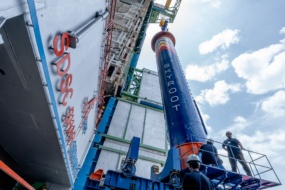
Reflect Orbital Buys Two Skyroot Aerospace Launches
Reflect Orbital announced the purchase of two launches today from Indian launcher Skyroot Aerospace.
NASA Signs Space Nuclear Pact, Says Moon Base Is Ahead of Schedule
Isaacman gave updates at the White House’s “Science: A New Golden Age Summit.”

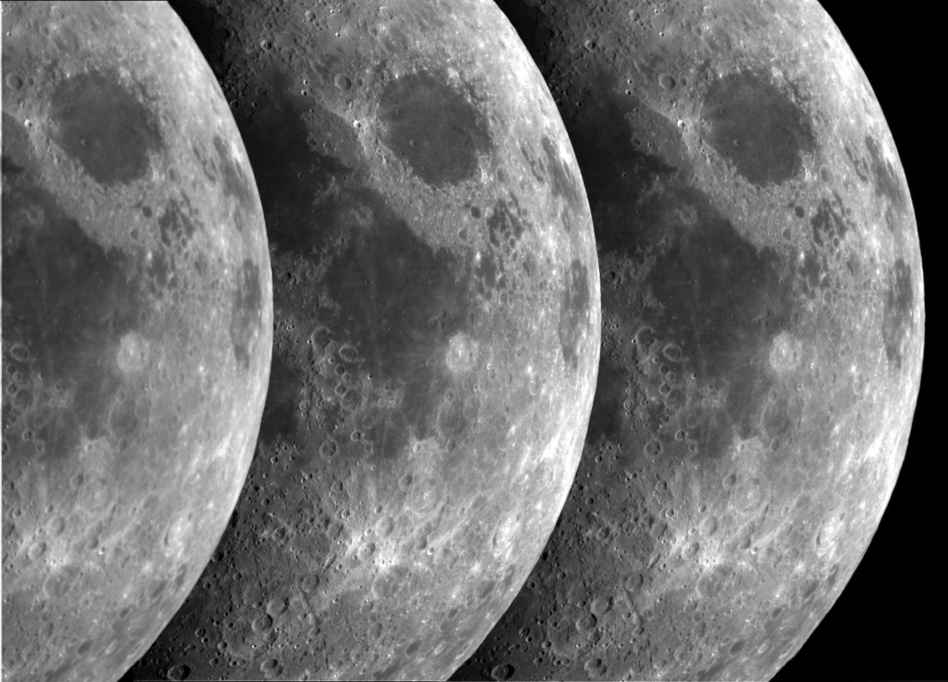
Forget boots on the Moon. China looks like it’s going to beat the US to extract water from the lunar surface.
Officials from the Chinese National Space Agency confirmed this week that its Chang’e 7 spacecraft is expected to launch in August—putting it on track to beat US lunar water ice exploration missions by a significant margin.
Shacking up: China’s track record on the Moon has improved significantly over the course of the Chang’e campaign. In 2020, as part of the Chang’e 5 mission, China returned samples from the Moon for the first time. Four years later, the country returned samples from the far side of the Moon as part of Chang’e 6.
Keep reading