Duffy’s First Days at NASA Clouded by Budget Uncertainty
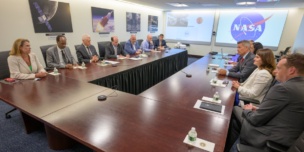
US Transportation Secretary Sean Duffy took the helm for his first full day as NASA’s interim administrator on Friday.
Stories about space regulations and policy, and what they mean for companies.
US Transportation Secretary Sean Duffy took the helm for his first full day as NASA’s interim administrator on Friday.
Buried in the hundreds of amendments approved by the committee, lawmakers asked for a number of reports or briefings on many space topics.
The commercial space economy runs on rare Earth minerals, but the rare Earths in space today have one thing in common: the vast majority come from China.
“The United States is operating in the most dangerous threat environment since World War II.”
The government could require future satellites to be ready for servicing or in-space refueling missions as a way to help the fledgling ISAM industry, according to a GAO report released Thursday.
A new professorship at the University of Colorado Boulder aims to bridge the gap between space engineering, business, and law, by emphasizing the importance of space governance to the whole industry.
TraCSS was once a signature Trump policy, stemming from Space Policy Directive-3. Now, that same directive might be the undoing of TraCSS.
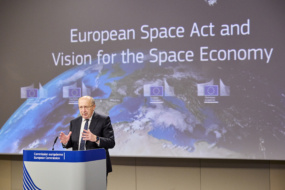
The act aims to boost the region’s space industry by cutting red tape, creating one standard for legal and technical requirements, and ensuring Europe’s space industry remains safe and sustainable.
Firefly Aerospace hit another milestone in its quest to reach orbit from Europe.
ESA is thinking big in Technology 2040, a new report that provides a roadmap for the region’s future in space over the next ~15 years.
Leaders at six of America’s biggest remote sensing firms are urging Congress to reject cuts proposed in the Trump administration’s fiscal 2026 budget plan—a proposal that would dramatically reduce the government’s purchasing of commercial EO data.
Billions of dollars have yet to buy a SpaceX competitor.