


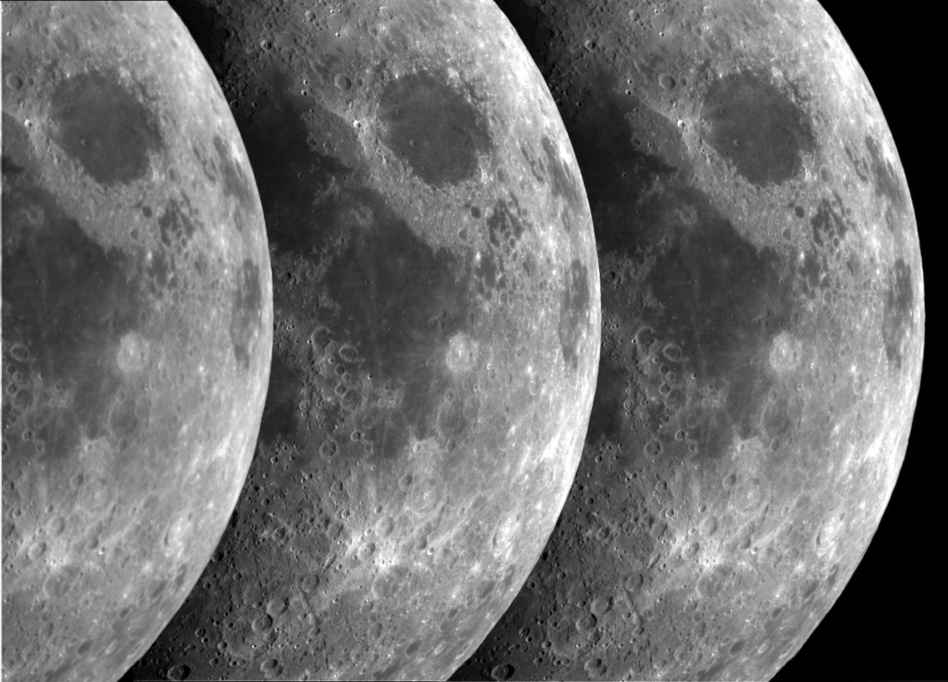
Forget boots on the Moon. China looks like it’s going to beat the US to extract water from the lunar surface.
Officials from the Chinese National Space Agency confirmed this week that its Chang’e 7 spacecraft is expected to launch in August—putting it on track to beat US lunar water ice exploration missions by a significant margin.
Shacking up: China’s track record on the Moon has improved significantly over the course of the Chang’e campaign. In 2020, as part of the Chang’e 5 mission, China returned samples from the Moon for the first time. Four years later, the country returned samples from the far side of the Moon as part of Chang’e 6.
For Chang’e 7, the technical objectives are another step change.
- Chang’e 7 is carrying a total of 18 scientific payloads: a relay satellite, an orbiter, a lunar lander, a rover, and a mini-flying probe, according to the National Science Review.
- The lander is expected to touch down on the rim of the Shackleton Crater, where it will then deploy its rover and mini flying probe, each equipped with scientific instruments to observe and study the lunar surface and subsurface.
- The mini-flying rover’s sole payload is a lunar soil water molecule analyzer, which is tasked with confirming the existence of water in the lunar soil.
China is also bringing seven international payloads: one each from Russia, Egypt, Bahrain, Thailand, Italy, and Switzerland, as well as one payload from the International Lunar Observatory Association, a Hawaii-based NGO.
Close, but no cigar: The US almost became the first country to successfully mine the lunar surface for water ice, but fell short of its goal—quite literally—when Intuitive Machines’ second lunar landing attempt toppled over shortly after touching down on the Moon.
The landing mishap made it impossible for NASA’s PRIME-1 drill to excavate the lunar surface for lunar water, and it doesn’t look like the US will be able to try again before China’s August launch.
NASA does have two CLPS missions targeting a 2026 launch, including Firefly’s Blue Ghost Mission 2 and Intuitive Machines’ IM-3 mission, though it is unclear if those missions will carry payloads to confirm the existence of water ice in the lunar regolith.
JAXA Taps ArkEdge for Two Lunar Navigation Demos
Today’s Moon explorers won’t have the luxury of GPS-like tech for navigation. But JAXA is trying to change that for future lunar visitors.
Europe’s Space Defenses Fall Just Shy of Weaponization
Europe doesn’t have any weapons in space—but that doesn’t mean the region is comfortable flying around in orbit defenseless.
ArbaLabs Launches AI Verification Demo On South Korea’s Nuri Rocket
“In short, tons of companies are looking at the latest and greatest physical AI deployments,” ArbaLabs CEO Ashley Reeves told Payload. “Nobody is really thinking about putting some checks and balances on what these AI models are doing.”

Turkey Uses IAC Stage to Pitch Peace & Homegrown Hardware
During the 2026 IAC in Antalya, representatives from Turkey are leveraging the opportunity to showcase the country’s prgoress in space.

It’s earnings season for Q3.
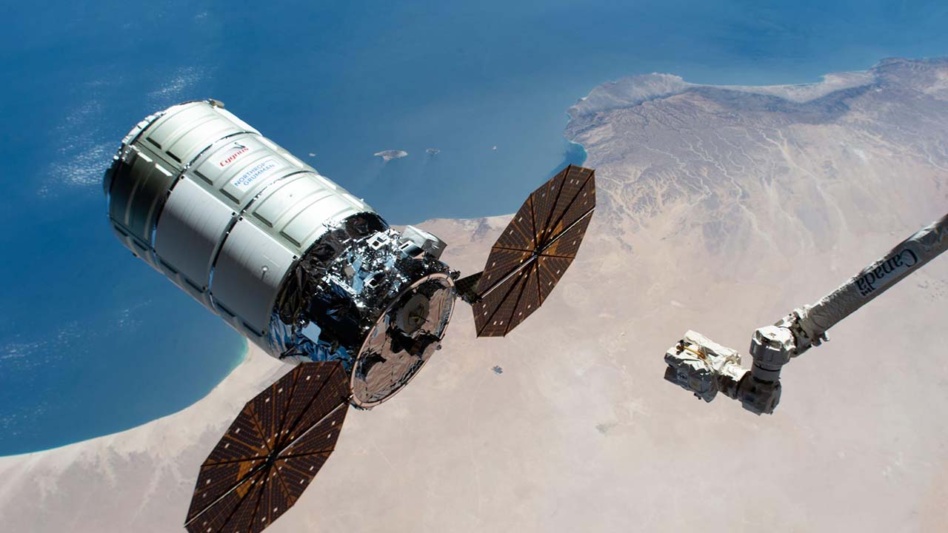
This week, a pair of primes—Lockheed Martin ($LMT) and Northrop Grumman ($NOC)—and satcom operator Iridium ($IRDM) reported their revenues for the third quarter. We’ve got the roundup of all the space-related tidbits inside.
Lockheed Martin: Lockheed’s overall earnings are up and beating projections for the year, and its space business line is no exception.
Keep reading