


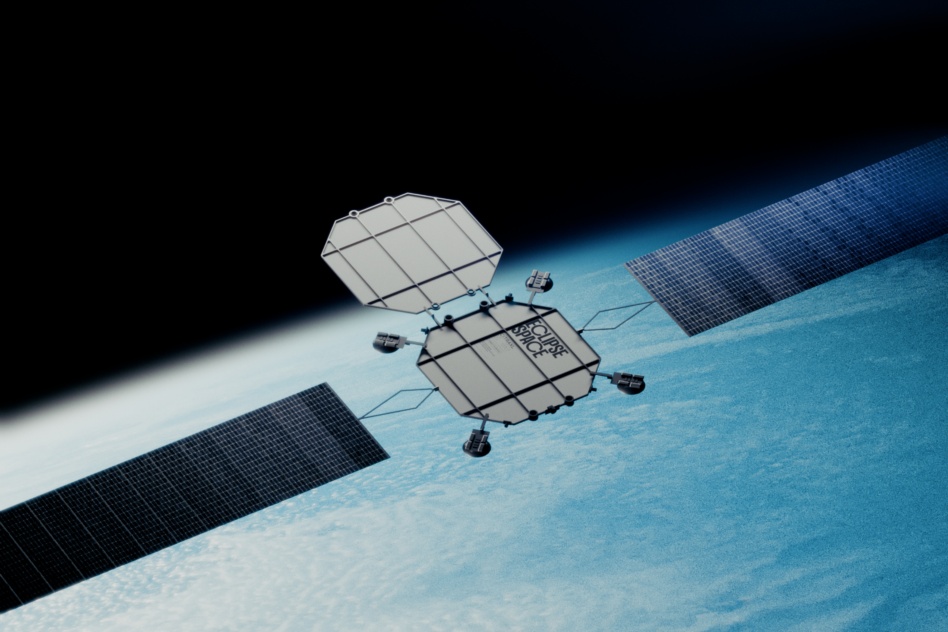
Eclipse Space, a startup building satellite platforms for constellations, unveiled details of its first three satellite platforms today, each targeting a different in-space capability—direct-to-device comms, high-throughput broadband connectivity, and in-orbit compute.
The announcement comes just three months after Eclipse emerged from stealth with plans to launch its first demo mission in 2027—now 2028, according to CEO Derek Huerta.
Meet Eclipse: Like many space startups, its founders are former SpaceX engineers with a different take on the industry’s traditional product development roadmap. But instead of centering the business around a piece of novel technology, the company is attempting to build a way for companies to launch and operate satellite constellations with ease.
“Most customers usually say something to the effect of ‘We’re looking for a Starlink,’” Huerta told Payload. “Starlink isn’t a satellite…It’s a total system, and that’s really what we’re looking to deliver: an end-to-end system, full turnkey, and the ability to operate the network, operate the system, and own the infrastructure around it.”
Huerta added that Eclipse is uniquely qualified for the job, as many of Eclipse’s engineers had a hand in building the OG Starlink.
But while SpaceX’s Starlink is famously vertically integrated, Eclipse is taking the opposite approach—developing partnerships with suppliers in a setup similar to how Apple designs iPhone and tasks Foxconn with the manufacturing and assembly, according to Huerta. For example, Eclipse announced a partnership today with the French space company, Gama, to develop a power system for its spacecraft capable of scaling to 100+ kW.
Three’s company: With its first three spacecraft designs, Eclipse is betting big on the flat-satellite design, as all three are built to fold flat into a rocket fairing to maximize the number of sats per launch.
- CitraSat is a D2D comms platform designed to connect to mobile devices without a dedicated user terminal. It includes an S-band phased array antenna, multi-GPbs E-Band backhaul, and V-band intersatellite links. Its dual solar arrays are capable of generating 6 kW of peak power.
- SliceSat is a high-throughput broadband platform designed for high-speed connectivity. It integrates Ku-band phased array antennas, multi-Gpbs V/E-band backhaul links, and V-band intersatellite links. Its dual solar arrays are capable of generating 8 kW of peak power.
- SurgeSat is built for the future of in-orbit compute. Built on the same platform as CitraSat and SliceSat, SurgeSat comes equipped with dual solar arrays that can generate 100 kW of peak power, as well as an additional 400 sq m radiator to dispel heat on orbit.
The three satellites won’t hit the market all at once. Huerta told Payload that the company is focusing first on the D2D market with plans to apply lessons learned there to the broadband and in-orbit compute markets.
And while the company has billed itself as a builder of commercial and sovereign constellations, its focus—at least in the short term—is weighted more heavily on the commercial front.
“We’re steering clear of US government work,” Huerta said. “In part because we view the overhead and effort that’s required to do business with the government as something that kind of slows you down—something that gets imparted in your DNA and precludes you from being as competitive as we think that we need to be in the commercial world.”

Exclusive: Hop Aero Raises $11M for Suborbital Point-to-Point Delivery
The suborbital point-to-point logistics company announced $11M in funding today following its participation in the summer Y Combinator batch.
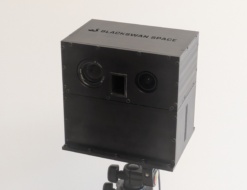
Blackswan Space Raises €2.5M Seed to Fund RPO Kit Demo
The round comes as Blackswan gears up for its first in-orbit mission of its RPO Kit payload.

Exclusive: Meridian Space Spins Out from SpinLaunch
“Meridian will carry forward the satcom infrastructure business… SpinLaunch will continue to build on its vision for a lower-cost approach to launch, with further applications in hypersonics to support the Golden Dome program and in the lunar economy,” Meridian Space CEO Massimiliano Ladovaz told Payload.
Star Catcher’s Orbital Power-Beaming Demo is Ready for Launch
Star Catcher announced today that its prototype power node is prepped and ready for launch NET Oct. 1.
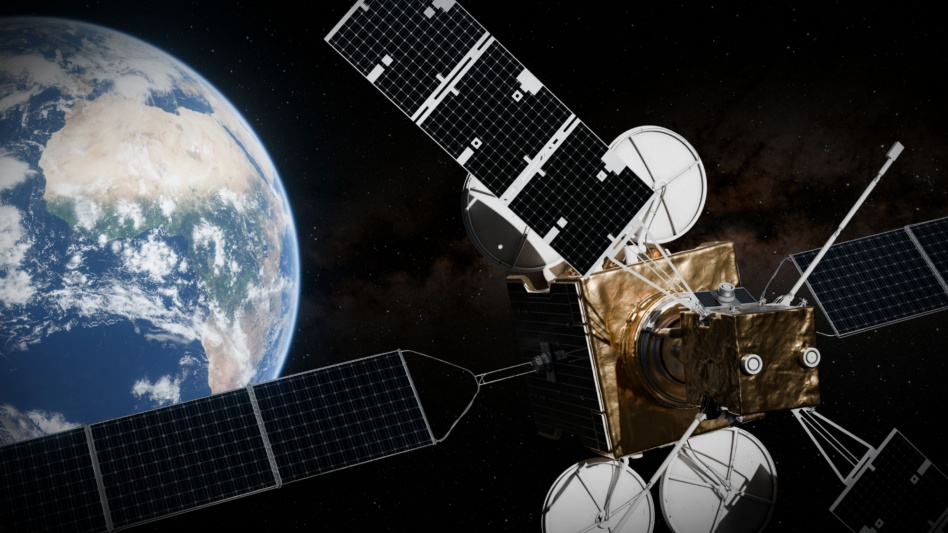
Eutelsat and Infinite Orbits announced an agreement today—on the sidelines of the International Space Summit in Paris—paving a pathway for the French satellite-servicing company to increase the life span of at least one of Eutelsat’s GEO satellites.
The mission is yet another example of the increasing demand from satellite-servicing missions from GEO operators. It is the third order for a life-extension mission for Infinite Orbits, following last year’s agreement with SES, and a similar agreement with Hispasat in 2024.
“GEO operators now—all of them—understand what life extension is, what it can bring,” Infinite Orbits’ CEO Adel Haddoud told Payload. “From an industrial point of view we are ready to scale, and also from a commercial point of view, our customers are also ready to order more.”
Keep reading