

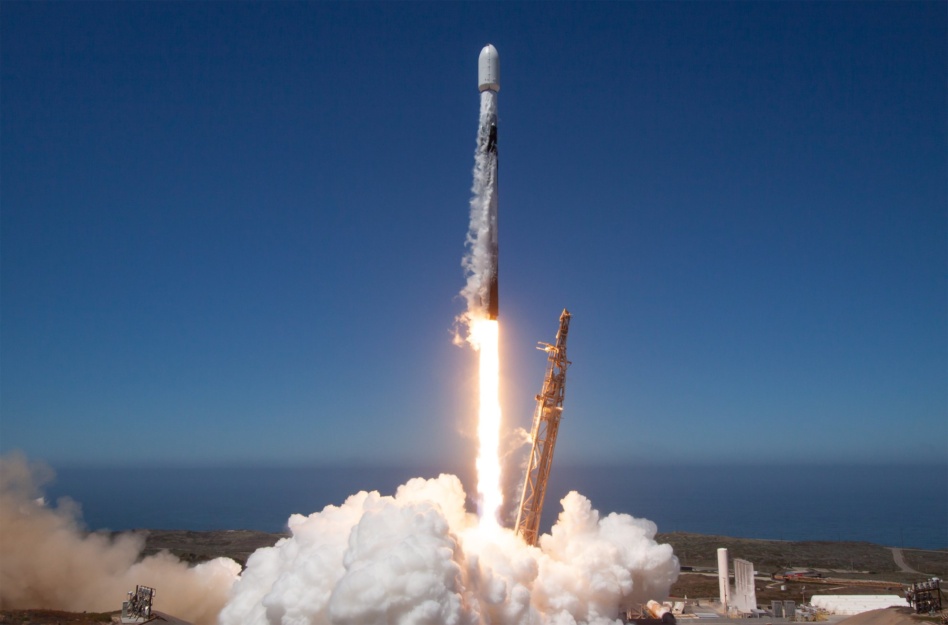
SpaceX launched its 11th dedicated rideshare mission Friday afternoon that sent 116 satellites into orbit, including some for customers making their first trip to space.
Transporter-11 launched from Vandenberg Space Force Base in California with spacecraft on board intended to conduct missions ranging from EO to in-space manufacturing to student research projects, SpaceX announced. Here are some of the highlights:
First timers: Transporter launch days are always exciting for the entire community, but especially for those companies flying milestone missions:
- Sateliot, a Spanish IoT startup, launched its first four operational satellites, adding to its existing prototype capabilities in orbit.
- Kuva Space, a Finnish startup, launched Hyperfield-1, its first hyperspectral sat in a planned 100-sat constellation.
- The UAE launched its first SAR satellite in partnership with ICEYE.
EO in the spotlight: The Earth imaging community in LEO got a serious boost on Transporter-11:
- Planet deployed 36 of its SuperDove imaging sats in addition to its first hyperspectral imaging sat, Tanager-1, to help track greenhouse gas emissions.
- Umbra launched its ninth and 10th satellites, which quickly sent back 35-cm imagery.
- Satellogic added three satellites to boost its imaging constellation’s capabilities.
- Spire sent up seven birds to monitor soil moisture and improve weather forecasting.
Around the world: Exolaunch—a key integrator who supported 42 sats on the flight—said it helped to fly missions from government entities, commercial companies, and academia from nations across the globe, including Argentina, Denmark, Finland, France, Indonesia, Germany, Lithuania, Poland, Spain, Taiwan, Turkey, United Kingdom, and United States.
Government customers: US and domestic governments hitched a ride on Transporter-11, including:
- NASA launched two tech demo satellites to test new deployable solar array capabilities and UV and infrared optical sensing.
- ESA launched one satellite to improve Arctic weather forecasting and another to demonstrate how AI can be used on EO missions, the latter in partnership with Open Cosmos.
- The UK military launched its first Earth imaging sat.
- The Taiwan Space Agency launched two cubesats to monitor ocean color changes and test IoT comms.
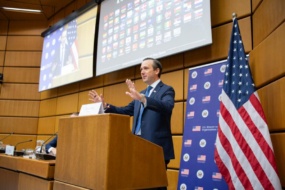
State Department Taps Trio for $5M Space Diplomacy Push
At last week’s second annual US Space Forum, the US Mission to the International Organizations in Vienna launched Project Constellation, a $5M effort to build international space partnerships.
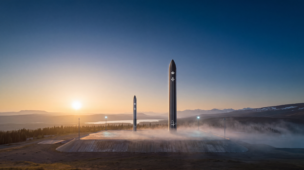
Reaction Dynamics Targets 2031 for Borealis Medium-Lift Launch
In the contest to build up commercial launch capabilities in Canada, Quebec-based startup Reaction Dynamics has entered a new weight class.
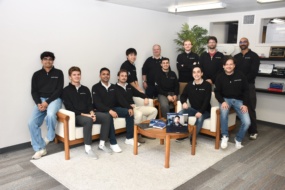
Exclusive: EraDrive Lands $13M DoD Award For Autonomy Module
EraDrive won a $13M DoD award, under which the Space Force will buy an undisclosed number of the company’s Era-Node vision-based autonomy modules.
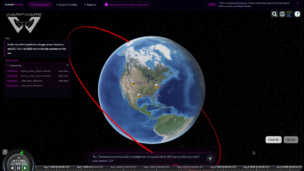
WarpWare Closes Pre-Seed to Bring Agentic Tools to Flight Software
CO-based WarpWare closed its $1.2M pre-seed round today to expand what it calls an AI-enabled engineering platform for space missions.

While regular cargo deliveries of dehydrated meals have kept astronauts well fed on the ISS, extended trips in space will require astronauts to grow their own food.
NASA and CSA joined together to address this problem with The Deep Space Food Challenge, a competition that’s tapped industry to put forward novel ideas and new technologies to keep astronauts fed on extended journeys to the Moon, Mars, and beyond.
A team from Interstellar Lab won the top US prize of this challenge on Friday, taking home $750,000 for their Nutritional Closed-Loop Eco-Unit System (NUCLEUS) self-sustaining food production system.
Keep reading