


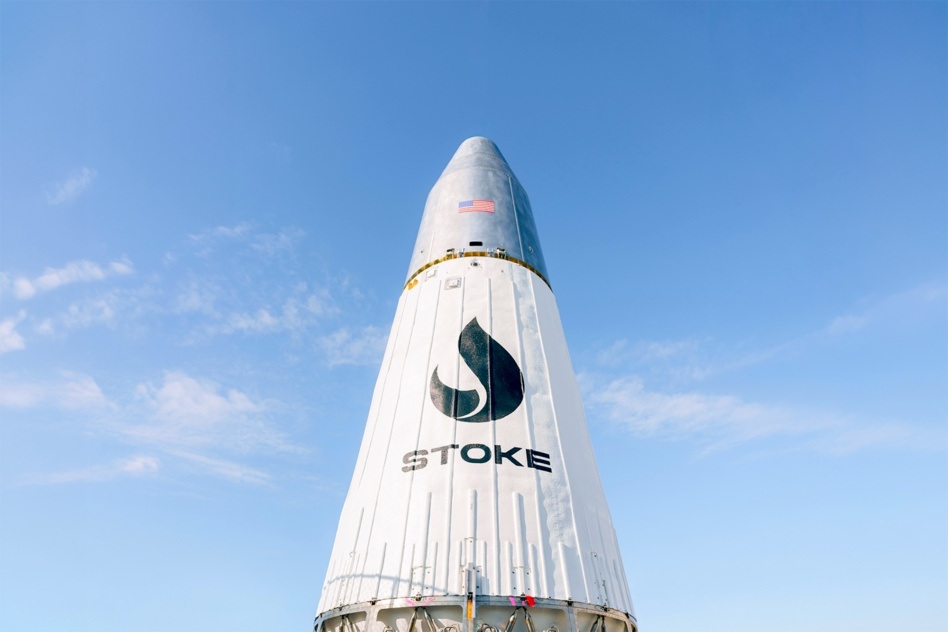
Stoke Space’s investors keep coming back, and so, eventually, should its rockets.
The company announced today that it has closed an initial $1B tranche of a Series E round, bringing the company’s total capital raised to $2.3B.
The funds will scale manufacturing, test, launch, and recovery infrastructure as the company preps for the first flight of its Nova Pathfinder rocket, which has slipped from late 2026 to early 2027.
Full tank: Point72 Ventures and Spark Capital co-led the round. Both firms have invested in Stoke since its 2021 Series A. Returning investors General Innovation, Glade Brook Capital, US Innovative Technology Fund, Washington Harbour Partners, Woven Capital, and Y Combinator also participated alongside new ones.
Roughly $2.1B of that funding has come since January 2025, across a Series C, Series D, Series D extension, and now an initial Series E—all before Nova has flown. By comparison, Rocket Lab had raised $148M when it closed its Series D in March 2017, with Electron reaching orbit the following January.
Return policy: Stoke has been focused on full reusability since its founding, and intends to prove out the tech over a series of Pathfinder flights, which Stoke plans to fly through 2027 and 2028.
- The rocket sports a liquid-hydrogen-cooled metallic heat shield the company says will allow 100 reuses.
- Pathfinder is designed to carry 3,000 kg to LEO fully reusable or 7,000 kg expendable.
Just add rocket: Stoke wrapped proto-qualification of Pathfinder’s first stage in June, running it through 46 structural tests at its Moses Lake, WA test facility, which it’s expanding sevenfold to 550 acres. Its rebuild of LC-14 at Cape Canaveral—the pad that sent John Glenn to orbit in 1962—is all but finished too. It just needs a rocket.
Nova’s first flight will also unlock Stoke’s national security work. The company joined the Space Force’s NSSL Phase 3 Lane 1 pool in March 2025, but can’t compete for task orders until Nova flies successfully. The Space Force tripled the Lane 1 ceiling to $17B in July, expanding the program to roughly 170 expected missions.
Block party: New funding will also help Stoke expand its roadmap toward the higher-capacity Nova Block 2, which the company disclosed publicly for the first time Tuesday. Stoke says it has been developing the vehicle in parallel for years, targeting a 2029 first launch.
- Block 2 is designed to deliver 15 metric tons to LEO in a fully reusable configuration and a 5m payload fairing—slotting it between Rocket Lab’s Neutron and Relativity’s Terran R.
- The upgraded vehicle features 14 Zenith engines on its first stage, doubling Pathfinder’s seven.
- Its upper stage swaps Pathfinder’s shared turbopumps for 12 independent engines, which Stoke says lets the stage keep flying if one fails.
“Pathfinder allows us to learn quickly, reduce risk, and prove the hardest parts of a fully reusable architecture in flight,” Stoke CEO and cofounder Andy Lapsa said in a statement. “Nova Block 2 scales those lessons into the capacity and cadence our customers are asking for.”
WarpWare Closes Pre-Seed to Bring Agentic Tools to Flight Software
CO-based WarpWare closed its $1.2M pre-seed round today to expand what it calls an AI-enabled engineering platform for space missions.

RATLOG Wants to Cut ~90% of a Rocket Engine’s Parts
The heavy-lift rocket startup debuted on Y Combinator as part of the Fall 2026 batch.
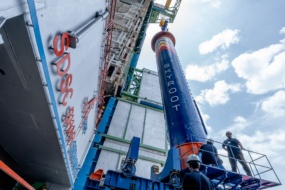
Reflect Orbital Buys Two Skyroot Aerospace Launches
Reflect Orbital announced the purchase of two launches today from Indian launcher Skyroot Aerospace.
Balerion Surpasses $200M Goal for Fund II
Dallas-based Balerion Space Ventures has surpassed its $200M target for its second fund, the firm announced Thursday.

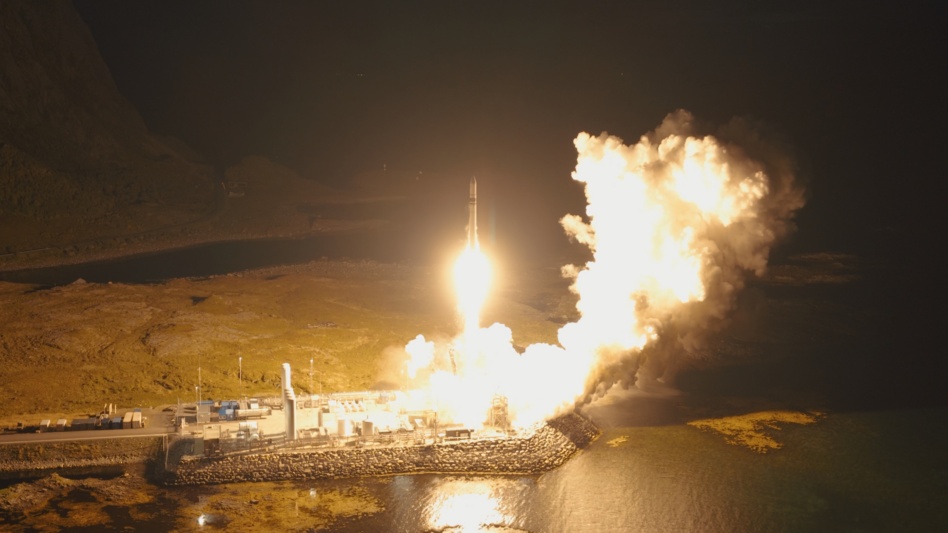
German launcher Isar Aerospace became the first European Launcher Challenge (ELC) startup to reach orbit this weekend, succeeding during the second launch attempt of its Spectrum rocket.
“Launch continues to be the largest bottleneck for the global space industry and from today on, there is a true alternative for commercial and institutional customers,” Isar CEO and cofounder Daniel Metzler said in a statement. Pointing to the company’s founding in 2018, he added, “We achieved within a few years what had taken the European space industry decades before. Europe now has sovereign access to space.”
Flight plan: Spectrum lifted off the pad at 4:12pm ET Saturday from Norway’s Andøya spaceport—in a mission dubbed, fittingly, Onward and Upward.
Keep reading