

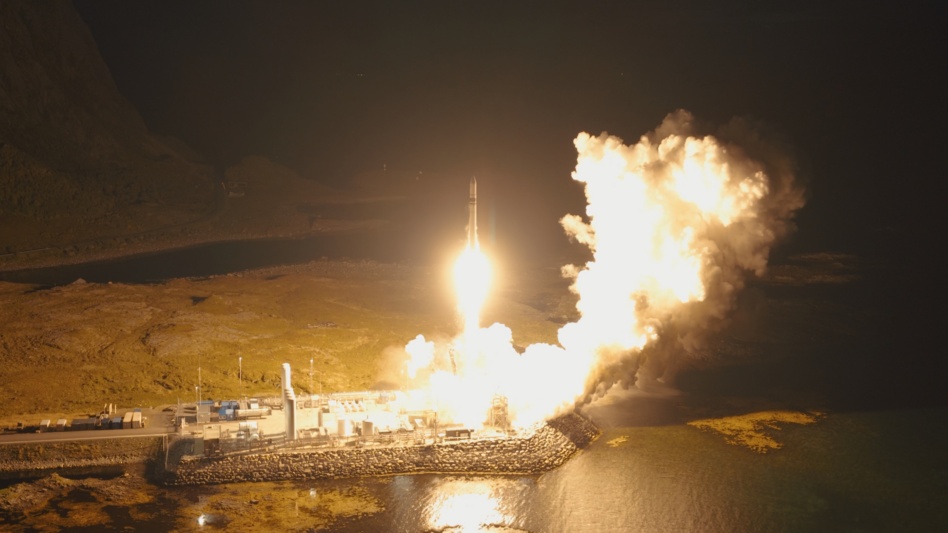
German launcher Isar Aerospace became the first European Launcher Challenge (ELC) startup to reach orbit this weekend, succeeding during the second launch attempt of its Spectrum rocket.
“Launch continues to be the largest bottleneck for the global space industry and from today on, there is a true alternative for commercial and institutional customers,” Isar CEO and cofounder Daniel Metzler said in a statement. Pointing to the company’s founding in 2018, he added, “We achieved within a few years what had taken the European space industry decades before. Europe now has sovereign access to space.”
Flight plan: Spectrum lifted off the pad at 4:12pm ET Saturday from Norway’s Andøya spaceport—in a mission dubbed, fittingly, Onward and Upward.
The flight came about 18 months after Isar’s first attempt to reach orbit ended in a fiery crash off the coast of Andøya, just 30 seconds after liftoff. Before its second attempt, Isar experienced a series of delays, which included weather holds, multiple scrubs for technical issues, and at least one scrub when a boat entered the rocket’s exclusion zone. But the wait paid off.
The two-stage rocket, fueled by liquid oxygen and liquid propane, delivered all six of its payloads to orbit. The payloads come from a mix of academic and commercial customers, including cubesats from TU Berlin, University of Maribor, TU Wien Space Team, NTNU, and EnduroSat, as well as one in-orbit experiment payload from Dcubed.
Onward and upward: Isar’s next task is to prove it can fly repeated missions to stand out from a crowded field of European launchers. The company has five Spectrum rockets in production at its new facility outside of Munich, Germany, where it plans to increase its production capacity to support up to 40 launch vehicles annually.
Isar is also expanding its launch footprint, and signed an agreement with Maritime Launch Services to explore the possibility of launching Spectrum from Spaceport Nova Scotia, on Canada’s East coast.
This expansion is funded, in part, by ELC funds set aside by ESA member states in November. In August, Isar secured ~€200M (~$232.3M) of these funds to support its rocket development.
Under the ELC, ESA funds for selected launch startups come with strings attached. The funds are split into two components:
- Component A requires that launch startups reach orbit by the end of 2027—check for Isar;
- Component B funds the development of an upgraded, higher-lift launch vehicle, which must fly a demo mission by the end of 2028.
The company is already working toward its higher-lift follow-up to Spectrum, as well as on technologies for reusable capabilities, according to Metzler.
RATLOG Wants to Cut ~90% of a Rocket Engine’s Parts
The heavy-lift rocket startup debuted on Y Combinator as part of the Fall 2026 batch.

Seraphim Space Investment Trust Doubled its Value in 2026
Seraphim’s major holdings—ICEYE, ALL.SPACE, D-Orbit, HawkEye 360, and Xona Space Systems, which together represent more than 75% of the firm’s portfolio—all had a great year, and that success has trickled upwards.
UKSA Taps ClearSpace for Country’s First Debris Removal Mission
The UK Space Agency is dressing up as a waste-management company for Halloween.
Reflect Orbital Buys Two Skyroot Aerospace Launches
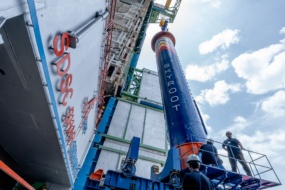
Reflect Orbital announced the purchase of two launches today from Indian launcher Skyroot Aerospace.

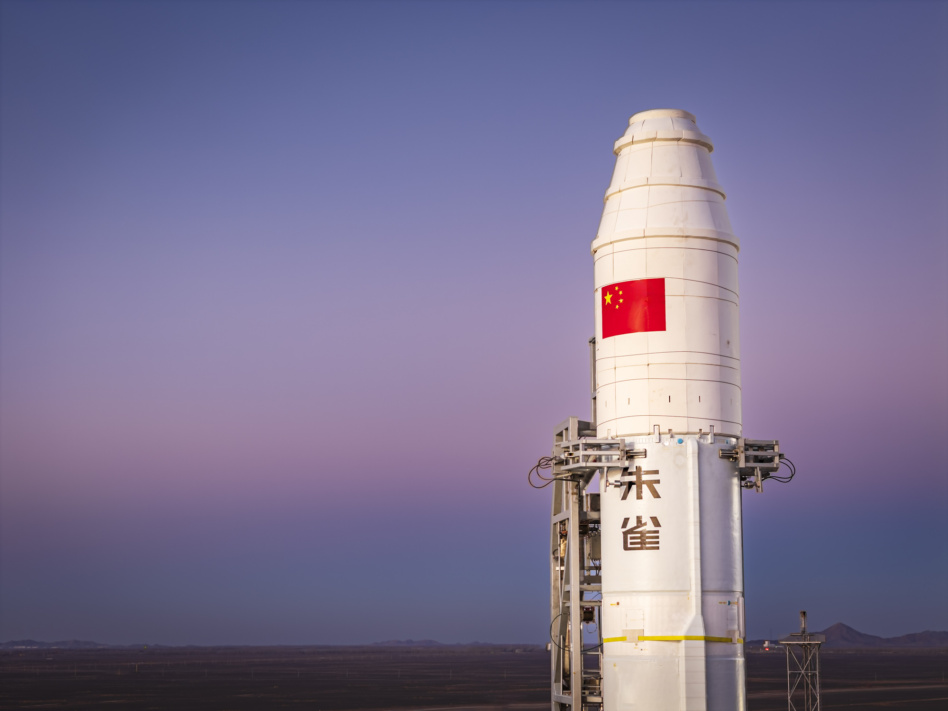
To go public as a rocket company in China, you first have to fly one.
That’s roughly the effect of a rule the Shanghai Stock Exchange issued in December, as part of a set of market reforms that has a handful of Chinese space startups lining up for listing on the STAR Market—the country’s Nasdaq alternative for domestic tech.
By transforming a technical accomplishment into a securities-compliance event, China has built a queue of companies where their progress on the pad tracks their progress toward a listing.
Keep reading