



SWISSto12 closed €73M in non-dilutive funding from ESA under the agency’s Advanced Research in Telecommunications Systems (ARTES) program, the Swiss satellite manufacturer announced this week.
Member states who committed the funding at ESA’s ministerial meeting in November include Switzerland, Germany, Austria, Sweden, Norway, and (associate member) Canada.
The new capital—combined with a series of private investments secured in the latter half of 2025—gives the company €100M+ to complete the development of the company’s HummingSat small GEO satellite platform for an inaugural launch scheduled for 2027. The funding also supports SWISSto12’s development of its phased-array antenna tech designed to improve the connection between satellites and ground stations.
Spend that money: Surprise, surprise: SWISSto12 plans to use the new funds to increase its production capacity. In practical terms, this means expanding its facilities, automating engineering and manufacturing, standardizing the HummingSat platform, and growing its team, according to founder and CEO Emile de Rijk.
SWISSto12 is already building five HummingSats ordered by SES/Intelsat, Viasat/Inmarsat, and Astrum Mobile, which it expects to launch in 2027 and 2028. The long-term target is to grow SWISSto12’s production rate to 10 HummingSats annually by 2030, according to de Rijk.
And there’s no shortage of demand to soak up the new capacity. The company claims to have the world’s largest backlog for small GEO sats, and has plans to roll out its ground user terminals at scale for a mix of commercial and government customers around the world.
Smaller is better: SWISSto12 is betting that the days of exquisite, multi-ton GEO comms sats is ending. HummingSat has a mass of approximately 1,000 kg, and relies on a patented 3D printed RF payload to potentially allow for more compact, lightweight, and capable sats than those traditionally flying in GEO.
As the need for sovereign satcom infrastructure increases, SWISSto12 is in the unique position of offering lower-cost access to GEO, the company argues. The ESA funding provides an extra stamp of approval for SWISSto12 to capitalize on the growing momentum in Europe, de Rijk said.
“We are living through a period of heightened geopolitical turbulence,” de Rijk told Payload via email. “This has added a certain degree of urgency to the discussion on digital sovereignty, to which small GEO satellites like HummingSat can bring a strong value proposition. It has accelerated a shift toward more resilient, sovereign space infrastructure—which has always been a point of discussion, but that now has become the point of discussion.”
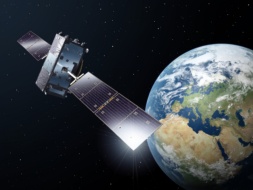
Europe’s Space Defenses Fall Just Shy of Weaponization
Europe doesn’t have any weapons in space—but that doesn’t mean the region is comfortable flying around in orbit defenseless.

Skyrora Shifts Orbital Launch Timeline to 2030
First-mover advantage isn’t all it’s cracked up to be—at least, that’s the thought process for UK launcher Skyrora.
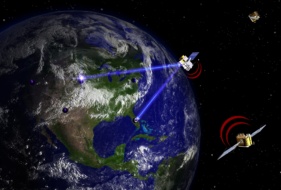
Foundational Raises £8.2M for Satellite Laser Ranging
Foundational emerged from stealth today with Europe’s largest space tech pre-seed round.
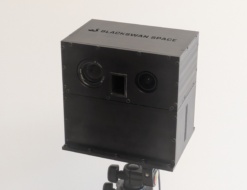
Blackswan Space Raises €2.5M Seed to Fund RPO Kit Demo
The round comes as Blackswan gears up for its first in-orbit mission of its RPO Kit payload.

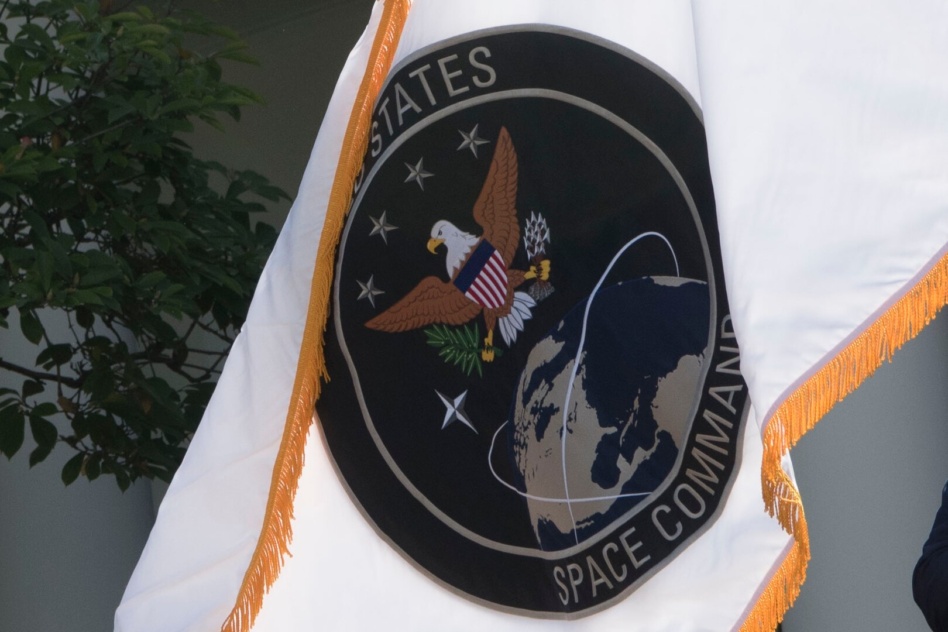
It’s time for the tug of war over the location of US Space Command headquarters to end for the sake of America’s military space mission, according to multiple Colorado Springs, CO-based groups.
The Colorado Springs Chamber & Economic Development Corporation is preparing to file a brief that opposes the state’s lawsuit concerning the Trump administration’s decision to move the combatant command from Colorado Springs to Huntsville, AL.
Two other groups—the El Paso (CO) County Board of County Commissioners and the Colorado Springs City Council—have already co-signed the decision to move on, in the name of protecting the nation’s national security space readiness.
Keep reading