


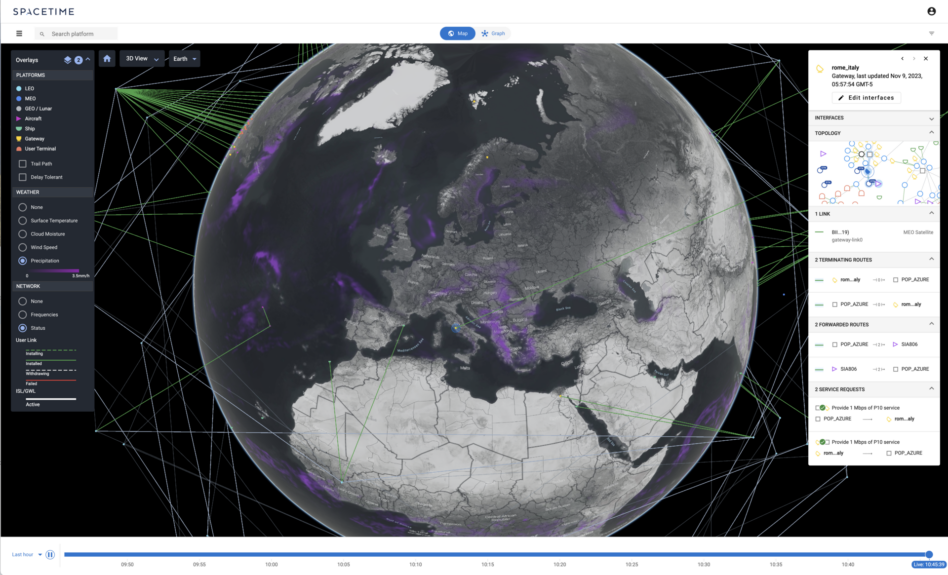
ESA has tapped Aalyria to build a piece of the internet’s off-world extension: a network-operations center that allows spacecraft, lunar missions, and ground stations to share data reliably across the solar system.
The center will run delay-/disruption-tolerant networking (DTN), which is a store-and-forward protocol built for space when a constant, instant connection is often impossible.
“What’s new here is our combination of that implementation at the protocol level with the [Aalyria] Spacetime orchestration, so that we’re directing antennas where to point when—and when to establish links,” Aalyria CEO and cofounder Brian Barritt told Payload.
Cornwall calling: The Alphabet ($GOOG) spinout, valued at $1.3B following a February Series B, will give ground station operators standards-based DTN services they can resell commercially—without building bespoke systems.
The system will deploy at Cornwall, UK’s Goonhilly Earth Station, which operates the first privately owned deep space antenna. Aalyria did not disclose the contract’s value or term.
Aalyria’s network management protocol will sit within LunaNet, the interoperability framework that NASA, ESA, and JAXA are building for the return to the Moon, alongside other operators.
Patience protocol: The internet we use usually assumes users will always have an instant connection, but spacefarers don’t have that same luxury.
- Signals to the Moon take ~2.5 seconds round trip;
- Comms latency to Mars can exceed 40 minutes;
- And links can easily drop as spacecraft move.
Rather than requiring an uninterrupted path from source to destination, DTN parks data at each node and forwards it when the next link opens.
On its own, DTN reacts, waiting to see which link opens next. But Spacetime tracks moving spacecraft and forecasts when their links will open, allowing Aalyria to tell each node when the next window will open and which path to take, moving more data through the same sparse links. That capability is what operators would package and resell.
Government space agencies are the primary users today, but future commercial operators off-world, such as lunar rovers and regolith miners, will need the same reliability.
In other orbits: ESA is not the only agency relying on Aalyria’s capabilities. It was selected in June to support the agency’s Polylingual Experimental Terminal demonstration, which tests spacecraft roaming between government and commercial networks.
Both efforts feed a larger bet on interoperability. “Now that you have enough people talking a common language and talking common APIs to operate their networks, it starts unlocking networks of networks,” Barritt said.
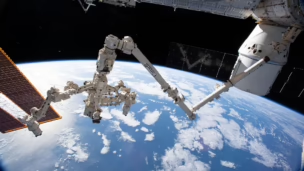
MDA Space Will ‘Repurpose’ Canadarm3 For Lunar Surface
MDA Space will “repurpose” its microgravity robot-arm tech for lunar surface operations after the US space agency put the Gateway plans on hold.
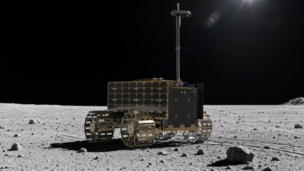
ESA Puts €65M Behind Europe’s First Lunar Ice Rover
ispace-Europe is heading to the Moon following a €65M commitment from ESA for Europe’s first lunar polar ice exploration rover mission.
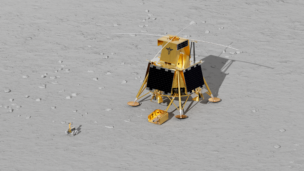
Firefly Acquires Autonomous Space Ops Company
Firefly Aerospace announced yesterday that it acquired Space-ng, which is an AI-powered vision navigation and autonomous guidance systems provider.
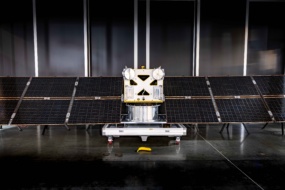
AstroForge Completes its DeepSpace-2 Spacecraft
DeepSpace-2 will aim to demonstrate the company’s ability to rendezvous with an asteroid and set the stage for future asteroid mining missions before the end of the decade.

This content is restricted to subscribers
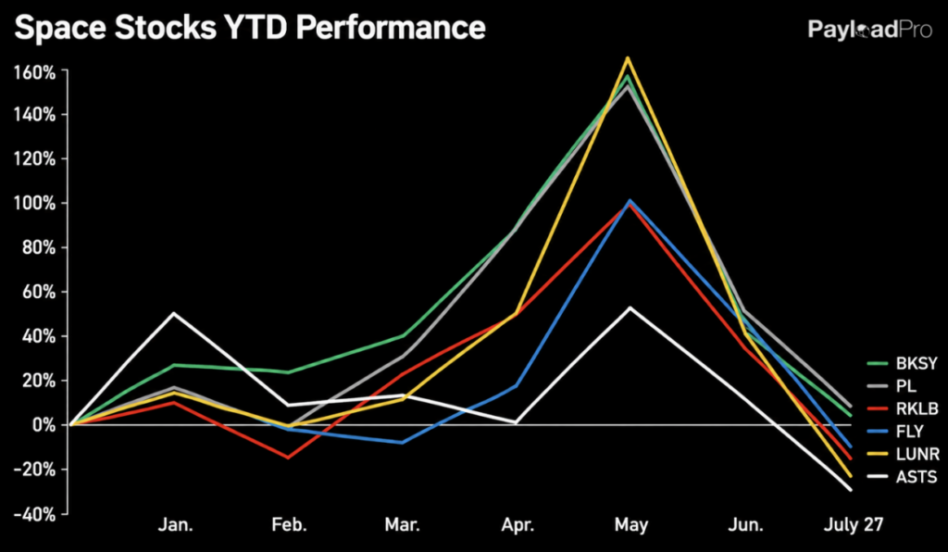
The post Space Stocks Plunge 60%+ in Just Two Months appeared first on Payload Pro.
Keep reading