



European launch demand just got a boost.
ESA and the European Commission (EC) released a two-part call for proposals yesterday—through the European Flight Ticket Initiative—extending opportunities for institutional launch contracts to a wider array of European-built launchers.
- The announcement invites European launchers to submit proposals for framework contracts, which will allow companies to compete for new missions under the Initiative.
- ESA and the EC will also assign launch contracts for the fifth batch of Flight Ticket Initiative missions, six of which are ready to go, according to the announcement.
Matchmaking: The Flight Ticket Initiative connects satellite and payload operators looking to fly in-orbit demonstration missions with viable launchers able to take those missions to orbit.
So far, four launch companies have been provided framework contracts to compete for these missions: Avio, Isar Aerospace, PLD Space, and Rocket Factory Augsburg. For the most part, these companies are already reaping the rewards of their selection.
- Avio secured three mission contracts for its Vega C launcher;
- Isar Aerospace has locked down two missions to fly on its Spectrum rocket;
- Rocket Factory Augsburg won contracts for two missions through its RFA ONE launcher.
Filling the pipe: The new launch contracts come at a vital point in the trajectory of Europe’s efforts to stand up sovereign launch capabilities. While many of the companies who will bid on this program have yet to reach orbit, ESA and the EC seem confident that Europe’s launch market is on the verge of a new operational era. The proposal encourages companies to apply if they can achieve launch by 2028.
Once these new launchers come online—the thinking goes—rapid increases in launch cadence won’t be hampered by available demand.
“We expect this opportunity to attract companies developing launch capabilities in Europe, creating more flight opportunities for in-orbit demonstration and validation,” EC Director Catherine Kavvada said in a statement.
US vs them: While the Flight Ticket Initiative is a valiant attempt by ESA and the EC to wean the region off of US launcher dependence, the program also highlights how much the European launch market remains subsidized by pan-European governments.
It’s not clear if European launchers can secure commercial demand from within Europe to satisfy future launch goals. The US dominates the commercial launch market on both sides of the supply-and-demand equation. The vast majority of European satellites still begin their journeys to space with a trip across the pond, with companies on the continent opting to fly on available, low-cost, and reliable rideshare flights with SpaceX instead of waiting around for European alternatives.
Even European launchers—built under the guise of “sovereignty”—are finding themselves more attracted to US customers. All three Arianespace Ariane 6 flights this year, for example, have taken satellites for the Amazon Leo constellation to orbit.

RATLOG Wants to Cut ~90% of a Rocket Engine’s Parts
The heavy-lift rocket startup debuted on Y Combinator as part of the Fall 2026 batch.

Seraphim Space Investment Trust Doubled its Value in 2026
Seraphim’s major holdings—ICEYE, ALL.SPACE, D-Orbit, HawkEye 360, and Xona Space Systems, which together represent more than 75% of the firm’s portfolio—all had a great year, and that success has trickled upwards.

UKSA Taps ClearSpace for Country’s First Debris Removal Mission
The UK Space Agency is dressing up as a waste-management company for Halloween.
Reflect Orbital Buys Two Skyroot Aerospace Launches
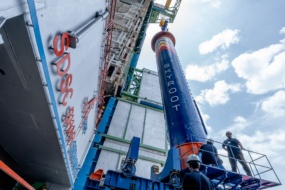
Reflect Orbital announced the purchase of two launches today from Indian launcher Skyroot Aerospace.
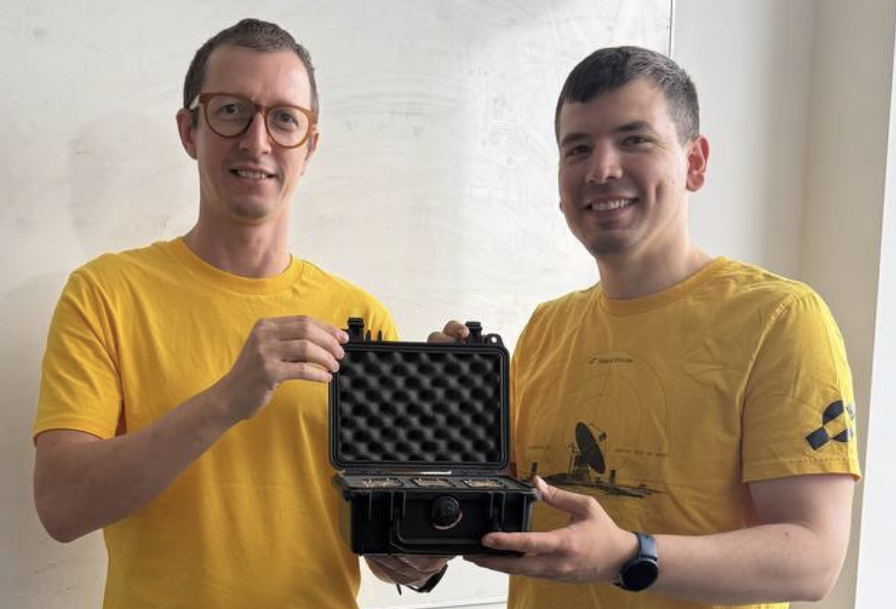
Digital security startup SpaceComputer will fly a demo mission of its secure compute architecture on a Spacemanic satellite in 2027.
The architecture—dubbed Space Fabric—is SpaceComputer’s solution not only for the growing hacking threats on-orbit, but also for the increasing number of shared-compute modules operating on rideshare sats. In its demo mission, Space Fabric aims to validate two novel security features that offer assurance and protection to virtual payloads.
How it works: Space Fabric is an open-source architecture—think Red Hat Enterprise Linux—and company officials say the tech offers a huge improvement to current systems, which are often bespoke, closed-source creations.
Keep reading