


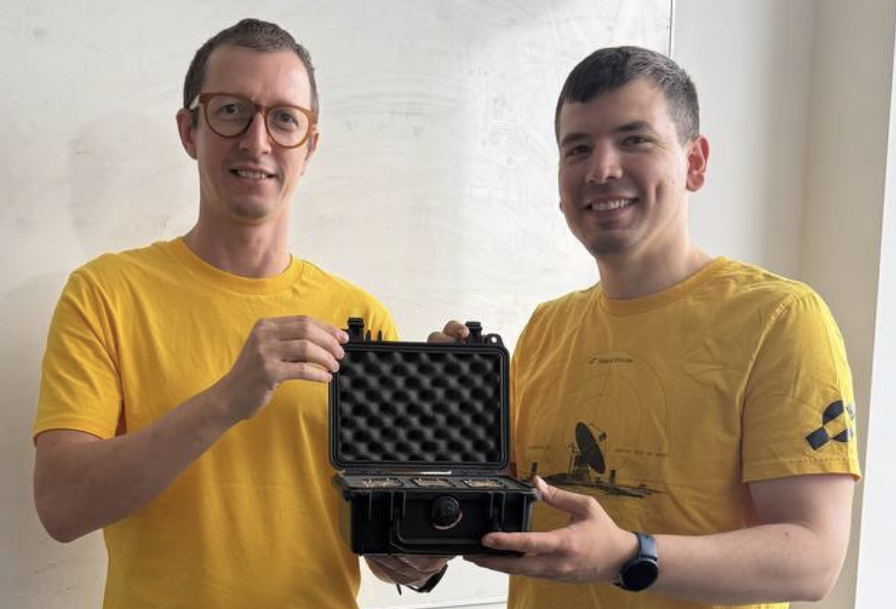
Digital security startup SpaceComputer will fly a demo mission of its secure compute architecture on a Spacemanic satellite in 2027.
The architecture—dubbed Space Fabric—is SpaceComputer’s solution not only for the growing hacking threats on-orbit, but also for the increasing number of shared-compute modules operating on rideshare sats. In its demo mission, Space Fabric aims to validate two novel security features that offer assurance and protection to virtual payloads.
- Space Fabric creates a physical barrier between different payloads on-board the same satellite, by setting up a wall within shared systems to ensure orbital compute operations aren’t tapped or altered.
- Space Fabric also provides cryptographic proofs to confirm that processes run in orbit were, in fact, run in orbit.
How it works: Space Fabric is an open-source architecture—think Red Hat Enterprise Linux—and company officials say the tech offers a huge improvement to current systems, which are often bespoke, closed-source creations.
“You have a lot of very old school players that are still, in some regard, operating on a ‘Trust me, bro’ model,” SpaceComputer CEO and Cofounder Daniel Bar told Payload. “The more these things become sophisticated, the more it’s obvious that you want to be able to verify, and not just trust.”
Space Fabric is a mix of hardware and software created using cryptographic methods. It sits on top of a satellite’s compute module, offering users verifiable proof of security, without impacting the satellite’s on-board computer. The system is also designed to be application-agnostic, meaning it can provide security for AI inference models, image-processing applications, and comms networks.
By generating cryptographic keys on board the satellite, Space Fabric ensures that sensitive information doesn’t touch terrestrial systems—or other payloads—and you don’t need to take anyone’s word for it.
“There is no part in the process that needs to be trusted,” Bar said. “Essentially you have the cryptographic proofs to verify that the compute workload actually took place in-orbit, and there is no way to tamper with it. It’s confidential.”
Why it matters: While the risks of hacking in space are well understood, the true scale of a satellite’s exposure to nefarious activity goes beyond managing the communications freeways, according to SpaceComputer officials.
Satellites are moving away from siloed infrastructure, so risks are starting to pop up within the supply chain—and on-board satellites themselves. As more operators begin to rely on partners for compute components, the need for security between subsystems is paramount to maintaining security.
“Rideshare options, where you have maybe 20 to 30 different payloads sitting on the same bus…the attacker can be sitting in one of the other payloads on the same bus,” SpaceComputer CTO and Cofounder Filip Rezabek told Payload. “It’s very important to look into the solutions that actually can be accommodating for these types of scenarios.”
Correction: This story was updated to correct the timing of Spacemanic’s launch. It’s expected to launch in 2027.

Fortastra Raises $30M Series A to Fund its Next Security Spacecraft
The US military has weapons in space, and—with the orbital arsenal expanding—security is becoming a top priority.
Exclusive: Xona Ramps Up Production Ahead of Pulsar Launch
With FCC approval in hand and six sats ready for the pad, Xona is turning to its next challenge: building the next 250.
ArbaLabs Launches AI Verification Demo On South Korea’s Nuri Rocket
“In short, tons of companies are looking at the latest and greatest physical AI deployments,” ArbaLabs CEO Ashley Reeves told Payload. “Nobody is really thinking about putting some checks and balances on what these AI models are doing.”
HawkEye 360 Turns its RF-Sensors to Orbital Targets
The DoD wants to better understand what’s going on in orbit. HawkEye 360 ($HAWK) has the inside scoop.

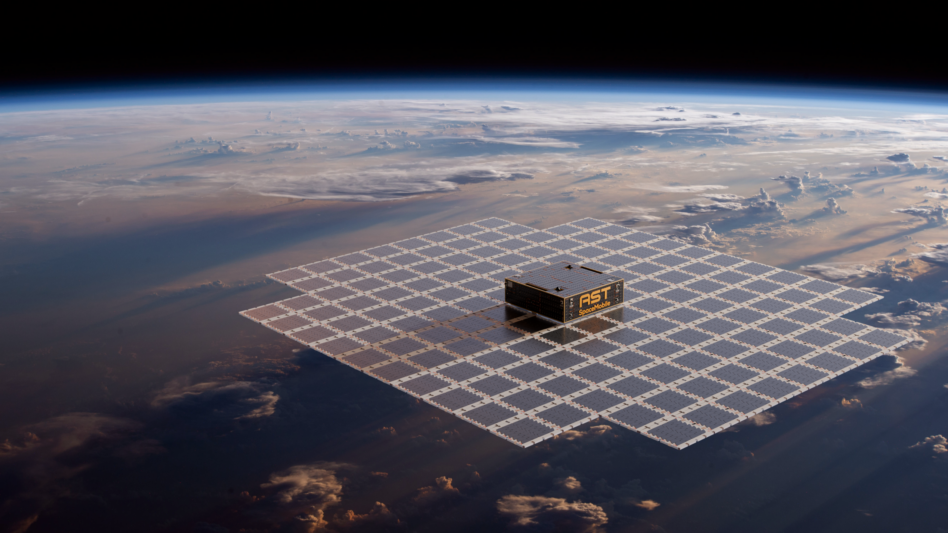
Japan plans to select a proposal this month for its domestically owned and operated D2D satellite network, called J-LEO.
The Ministry of Internal Affairs and Communications (MIC) has already allocated ~$1B in subsidies, covering up to half the total project cost. The winning operator will be required to match that investment with private funds—meaning the full build-out could run to ~$2B.
The autonomy argument: As an archipelago vulnerable to natural disasters, Japan has a clear rationale for pursuing D2D capabilities. Multiple Japanese mobile network operators (MNOs)— including KDDI, SoftBank, and NTT DOCOMO—already provide D2D services in partnership with SpaceX’s Starlink.
Keep reading