


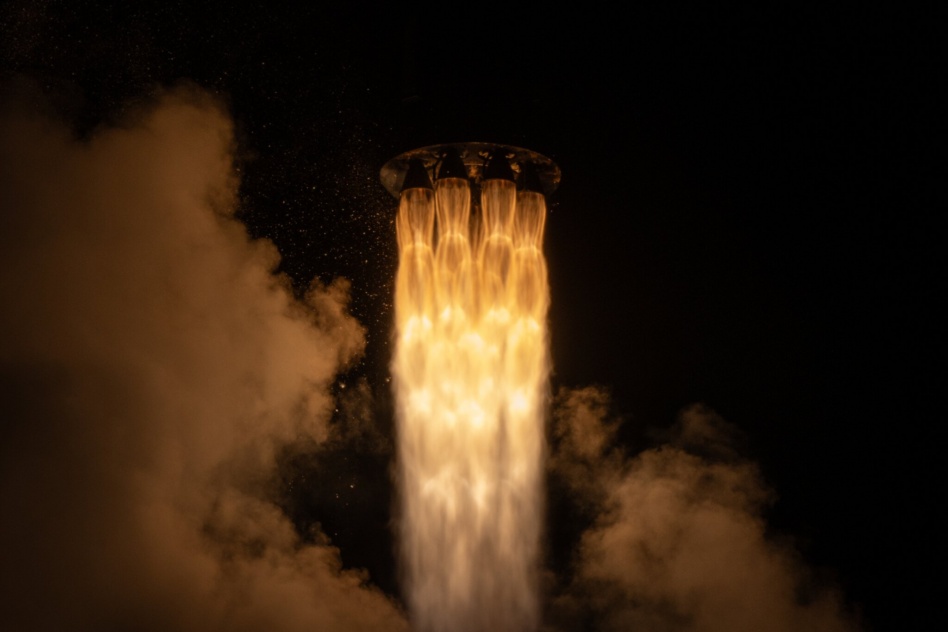
European launch companies are in for a surprise next month when they get back from holiday. While they were out, Rocket Lab ($RKLB) moved into their turf.
During its Q2 earnings call this week, Rocket Lab unveiled the establishment of a new German subsidiary—Rocket Lab Germany GmbH—which is “intended to not only enable scaled domestic production of satellites and their critical components, but also [deliver] launch services on Electron and Neutron,” according to the announcement.
Soft launch: The news comes as at least a dozen companies in Europe attempt to debut new launch vehicles before the end of the decade. The shared goal of these efforts is twofold:
- Build up Europe’s sovereign launch capabilities, and
- Establish a globally competitive European launch sector.
Both propositions will likely be harder with Rocket Lab hiring and firing (engines) down the street.
Despite Europe’s operational launchers—Arianespace’s Ariane 6 and Avio’s Vega-C—making strides to increase their cadence, the stats pale in comparison to Rocket Lab’s tempo. Between Electron and its suborbital HASTE variant, Rocket Lab has launched 13 times this year. In the same time period, Arianespace and Avio have held just four launches combined.
For much of the rest of Europe’s launch community, delays in launch pad construction and availability—as well as more than one on-the-pad anomaly—have cast doubt on when rockets expected to make their first flight this year will debut.
Spawn camping: Rocket Lab isn’t just joining the fray before these companies get off the ground. It’s doing so with a lot more progress under its belt—and using a comparatively bottomless war chest for expansion.
In November, ESA member states set aside a combined €902.2M for five launch startups as part of the European Launcher Challenge (ELC). These funds are intended to help launchers notch a first flight in 2027, and also to pay for upgrades as these companies attempt to build heavier launch vehicles—though companies will still likely need outside funding to keep growing.
For comparison, Rocket Lab ended Q2 2026 with $2.13B (€1.85B) in cash and cash-equivalents on hand, more than double the value of ELC’s allocation last year.
With Rocket Lab on the scene, the stage is being set for a price war in the European launch market. While ELC awardees are expected to get priority access to institutional launch contracts, Europe’s commercial launch market may be more price sensitive, and companies not prepared to compete with Rocket Lab on price may lose out.
While the bulk of Europe’s launch startups didn’t respond to Payload’s request for comment, German launcher HyImpulse sounded ready for the challenge.
“We welcome every contribution to Europe’s space ambitions,” a HyImpulse spokesperson told Payload. “HyImpulse’s business model is based on highly competitive and responsive launch services, addressing a market with very strong demand across Europe for the foreseeable future.”
For French launch startup HyPrSpace, there’s no guarantee that a price war would benefit Rocket Lab.
“Today, Rocket Lab is not a low-cost launch provider. Electron is a relatively expensive solution on a per-kilogram basis, and virtually every new European launcher is targeting a lower cost base,” HyPrSpace CSO Sylvain Bataillard told Payload via email. “Price competition will come, and we fully expect it.”
Without a PADdle: One area that may be central to this competition: launch pads. While the continent is pushing hard to stand up new launch technologies, the liftoff locations have proved to be a tough bottleneck.
Without available infrastructure to rock up to, more than a few launch startups have been forced to build their own launch pads.
- PLD Space is building its own pad at Europe’s Spaceport in French Guiana, and in June announced a €35M investment in the site.
- Isar Aerospace secured a 20-year lease at Norway’s Andøya Spaceport, and financed the construction of its launch facilities in part through €18.2M in grants from the Norwegian government.
- Rocket Factory Augsburg is building a custom launch pad at the UK’s SaxaVord Spaceport, which has been funded by a mix of RFA and UK government funds.
Rocket Lab, however, doesn’t need all this permanent infrastructure. During its earnings call this week, the company unveiled a new deployable launch system—called GHOST—which is designed to enable Electron and HASTE vehicles to launch anywhere in the world.
The system will allow Rocket Lab to send its launch vehicles and pad infrastructure inside shipping containers, and be ready to fly after a short setup. For European nations looking to rapidly set up launch capabilities, the choice to build one locally or order-in just got a lot harder.

Seraphim Space Investment Trust Doubled its Value in 2026
Seraphim’s major holdings—ICEYE, ALL.SPACE, D-Orbit, HawkEye 360, and Xona Space Systems, which together represent more than 75% of the firm’s portfolio—all had a great year, and that success has trickled upwards.
UKSA Taps ClearSpace for Country’s First Debris Removal Mission
The UK Space Agency is dressing up as a waste-management company for Halloween.
Reflect Orbital Buys Two Skyroot Aerospace Launches
Reflect Orbital announced the purchase of two launches today from Indian launcher Skyroot Aerospace.
Europe’s Space Defenses Fall Just Shy of Weaponization
Europe doesn’t have any weapons in space—but that doesn’t mean the region is comfortable flying around in orbit defenseless.

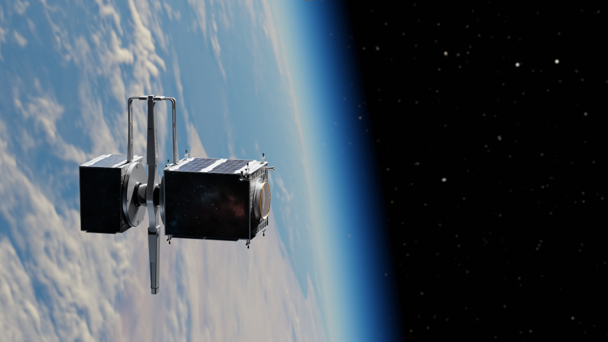
Cheap, swarming, and potentially disposable—all words used in drone economics and now one startup wants to apply them to space.
On Thursday, Space Kinetic announced a $50M OTA award from the Space Force to develop Whirlwind—its space maneuverability and deployment system. It’s the largest award yet for the company, which raised a $12M seed round in 2025.
“Our specific thesis is that the third space age demands better maneuverability, scalability, and marginal economics,” Space Kinetic cofounder and CEO Ryan Sullivan told Payload. “Space Kinetic is building an architecture where one space vehicle can enable a lot of different missions and allow for capabilities to be distributed where and when they’re needed.”
Keep reading