


When FUSE was founded in 2020, the goal was to bring the Bay Area VC experience to software firms in Seattle, WA. However, the VC firm has since found success among the stars and broadened its reach across the US, announcing its eighth space investment this week.
The firm led the seed round for Pluto Aerospace, an Indiana-based reusable launch company working to allow the industry to get components and hypersonics flight time for rapid testing and iteration, Brendan Wales, a founding partner at FUSE VC and the leader of the firm’s growing space portfolio, told Payload.
Wales said this investment was led by his fellow cofounder Cameron Borumand—a far cry from the company’s first space investment in 2024.
The Emerald City: Three years into investing in software companies in Seattle, Wales said he and his cofounders were seeing weekly pitches from space companies.
In January 2024, FUSE dipped its toe into the space industry for the first time, leading the $6M seed round for Quindar. The company—which develops mission management software for spacecraft—allowed investors to fall back on their software background while exploring space.
“We had a massive argument in the partner meeting about, should we even be doing Quindar,” Wales said. “Sure enough, it ended up opening into a much bigger market.”
FUSE later joined the seed round for Starcloud, making its second space investment.
And—while FUSE’s space investments now stretch beyond Seattle—the firm is still working to grow the space ecosystem around its home base. FUSE will host its annual Seattle Space Superiority Summit next month, bringing together top space voices from the region, including some of its portfolio companies.
Build out: After their first two investments gave FUSE cofounders a sense of the space industry, the firm turned its attention to building a cohesive space portfolio of infrastructure companies. FUSE, however, has found success despite those challenges. FUSE has now made investments worth a combined $45M+ into eight space companies, and 25% of its overall investment portfolio goes to space, robotics, and data center infrastructure companies.
FUSE recently invested in power-beaming startup Mantis Space Systems. In the few weeks since he’s officially joined FUSE’s portfolio, Mantis CEO Eric Truitt said he’s already received helpful introductions.
“What we loved about FUSE was their thesis around this ecosystem where all of the companies they’re working with add value to each other,” Truitt said. “It’s like a VC version of a private equity play.”
Already, those partnerships are coming together off paper.
Portal Space Systems—another FUSE portfolio company—has both concrete and notional partnerships with other companies in the firm’s orbit, according to Portal CEO Jeff Thornburg. That includes:
- Discussing with Starcloud about how Portal can protect and defend orbital data center infrastructure;
- Working with FUSE portfolio company Icarus Robotics on a robotic effector for Portal’s Supernova spacecraft;
- Partnering with Quindar on ground mission support.
“A space company that’s just starting up now has access to a whole ecosystem in FUSE to help them accelerate faster,” Thornburg said. “There is a lot of experience within a lot of those companies that I’ve already tapped into looking at future capabilities.”
Fostering those relationships is an intentional piece of FUSE’s approach to investing, Wales said.
“They all sort of benefit from each other,” he said. “Why couldn’t some of these companies be using Portal’s bus? Can sat companies be using compute from Starcloud? Every bus will want to be in touch with Mantis.”

Balerion Surpasses $200M Goal for Fund II
Dallas-based Balerion Space Ventures has surpassed its $200M target for its second fund, the firm announced Thursday.

Exclusive: Kapta Space Raises $24M Series A to Build Moving Target Radar Payload
Seattle-based Kapta Space announced a $24M Series A to build next-gen radar payloads designed to track moving targets.

Satlyt Raises $8M Seed to Expand Its Virtual ODC Network
Satlyt was founded in 2024 by Afullo, an alum of SpaceX and Google who spent years trying to convince both companies to invest in in-space edge computing opportunities.
Space Insurer Charter Space Raises $5M Seed Round
You can bundle your home and auto insurance with the click of a button, but covering your spacecraft has traditionally been a little trickier.

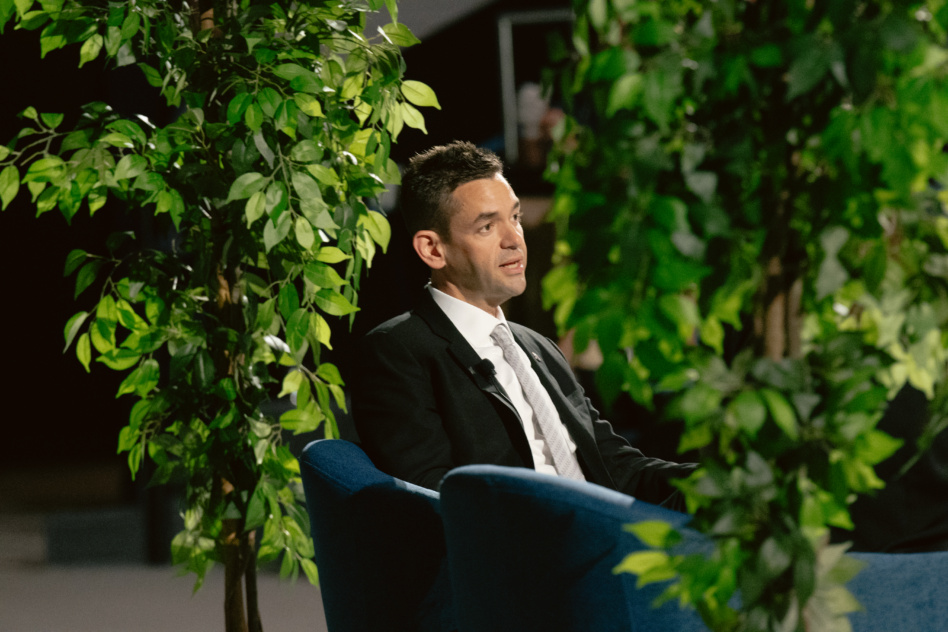
HOUSTON, TX — NASA Administrator Jared Isaacman is less than a year on the job, but he’s already upended the way the agency interacts with the rest of the world.
NASA doesn’t want to go it alone as it drives a US-led effort to return American astronauts to the Moon. But the agency is done “stitch[ing] together coalitions for the sake of coalitions,” Isaacman said at Payload’s Off World event in Houston on Wednesday.
The comments come one week after Isaacman made similar remarks at AFA’s Air, Space & Cyber Conference, saying that NASA was only interested in international partnerships that were “good deals” for the US.
Keep reading