


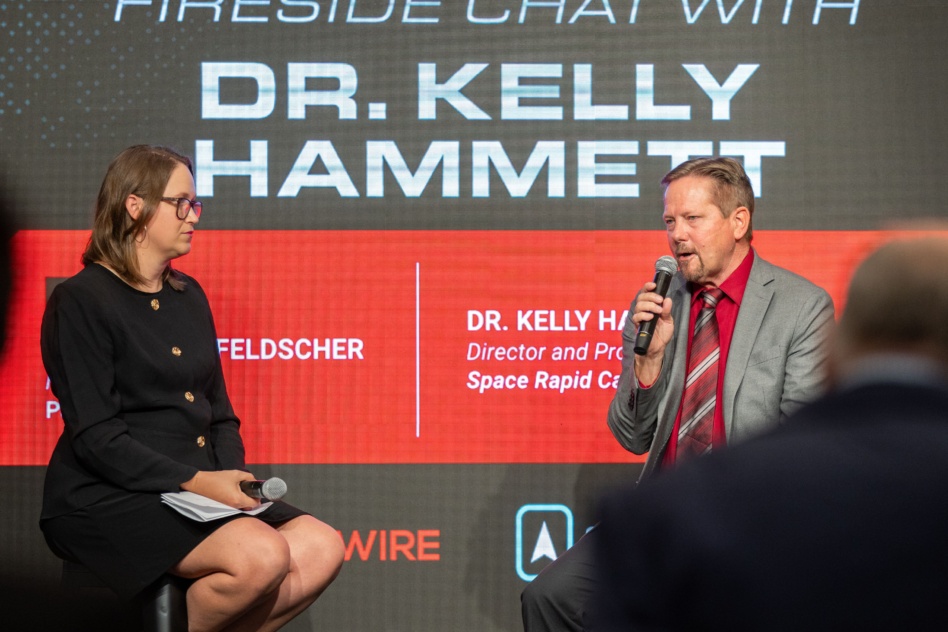
The Space Force’s Space Rapid Capabilities Office (Space RCO) was established in 2018 to buy space tech and get it into troops’ hands as fast as possible—but according to its director, it’s not going fast enough thanks to barriers outside the organization.
“Internally, down and in, we go as fast as is humanly possible,” Space RCO Director Kelly Hammett said last week at the Spacepower Conference in Orlando. “Where we have run into trouble, quite frankly, is in external interfaces…They’re not as rapidly minded as we are.”
Hammett, who has led the Space RCO since June 2022, said processes can get bogged down when working on agreements with international partners, and when partnering with DoD organizations, including SSC and Space Operations Command.
Here are some other highlights of Payload’s conversation with Hammett at the conference:
Trendsetter: Hammett said his office is all too happy to act as a guide for other organizations looking to speed up their acquisition processes, as suggested by an April executive order that encouraged DoD offices to adopt RCO policies.
“We’re telling everybody how we do things, and that they should adopt these types of practices,” he said.
One of his top recommendations for the broader DoD acquisition process is asking commands what capabilities they need, then quickly figuring out what tech can meet those needs. He urged other acquisition offices to keep operations internal—something that keeps processes moving during disruptions, including government shutdowns or CRs.
Eyes open: Some Space RCO procurement efforts are in limbo because whether Congress will vote to extend SBIR funding in fiscal 2026 is still up in the air, Hammett said. However, he said the office can award previously announced contracts to add threat-tracking radars to sats, because the project (and the funds attached to it) began in 2025.
“We have notified, actually, three companies…of intent to award SBIR contracts for these threat-awareness sensors,” Hammett said. “What the service really needs to do is proliferate indications, and warning threat awareness sensors, across their whole constellation.”
First mover: Hammett also pushed to give his organization the opportunity to get involved with technology earlier in the procurement process. Space RCO is tasked with bringing existing tech into the military, rapidly. Being able to work with engineers whose tech is still being designed and matured, however, can help bridge the gap between idea and procurement.
“We don’t have a funding line to go do [technical maturation] or risk reduction, which is something I would change if I could, but I haven’t been able to crack that nut,” he said.
- Want more? You can watch my whole conversation with Hammett here.

How Congress Can Grow the Space Supply Chain
Demand in the space industry is skyrocketing—but the supply chain isn’t keeping up. Luckily, policymakers can speed things up, according to two leading industry groups.

Commercial Space Law Takes Center Stage at DC Moot Court
Future space lawyers will gather in DC this month to debate how far federal jurisdiction extends in regulating commercial megaconstellations.

Senate Tees Up NASA Reauthorization, Deputy Hearings
The Senate Commerce, Science, and Transportation Committee is gearing up for a busy week.

Bill Spotlight: Methane Monitoring Science Act
Two lawmakers introduced a bill that would task NASA to improve the nation’s ability to detect cow farts—and all other forms of methane leaks.

By Retired Navy Admiral Patrick Walsh, former vice chief of Naval Operations, co-founder of The First Watch Group, and advisor to Amazon Leo for Government
“When Thomas Paine published his original work in January 1775…he initially planned to call his pamphlet The Plain Truth but his editor, Benjamin Rush…persuaded the author to name the work Common Sense, because the phrase fit Paine’s most important notions: that Americans should trust their feelings, rather than get bogged down in abstract political debates.”
— Patrick Kiger, How Thomas Paine’s Common Sense Helped Inspire the American Revolution
Keep reading